

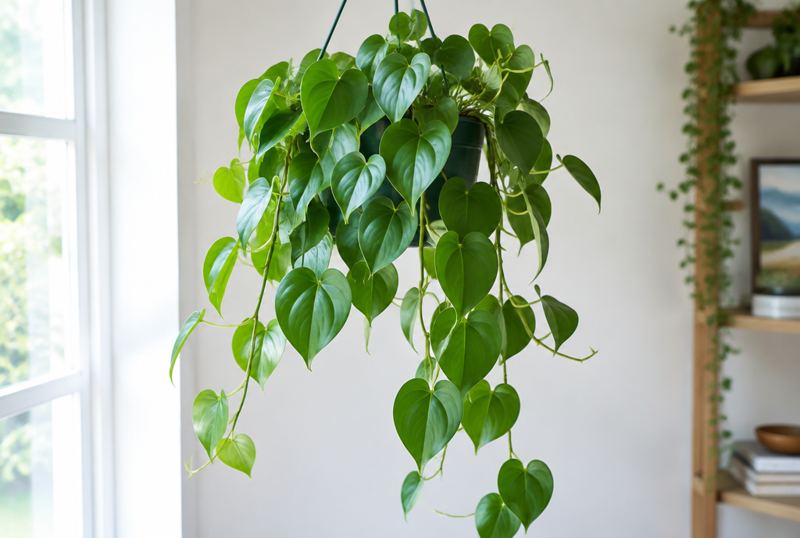
Philodendron is an easy houseplant for medium to bright indirect light, with soil that gets watered when the top inch is dry. South Dakota State University (SDSU) Extension describes it as an upright, trailing or climbing plant with hundreds of species, and says it is mostly pest free. This page is about the trailing heartleaf type (Philodendron hederaceum), and the care advice comes from SDSU’s guide to philodendrons in general. The ASPCA lists heartleaf and horsehead philodendron as toxic to dogs and cats, but its entries cover only those two plants.
Light
SDSU says bright light, diffused sunlight or partial shade is best. Light changes how the plant looks: SDSU says poor light will reduce leaf and plant size, while too much light will cause leaves to turn yellow. It also says variegated cultivars can handle a bit more indirect lighting. For plants that share this window, see our list of bright indirect light plants and medium light plants.
Water
SDSU says to water when the top inch of soil is dry, and to reduce watering during the winter months. It notes that both overwatering and underwatering will tend to make the leaves droop, so a drooping plant is a prompt to check the soil, not to water automatically. SDSU also says to keep the base of the pot out of standing water to prevent root rot. Our guide to watering houseplants compares watering rules across plants.
Soil and repotting
SDSU recommends a well-drained potting mix. It also says it is nice to replace the soil every two years to eliminate salt or chemical build-up. Our repotting guide covers the steps.
Temperature
SDSU says normal household temperatures of 65 to 75°F are fine, with night temperatures of 62 to 65°F. For a short period, it says the plant can handle 55°F.
Feeding
SDSU says philodendron is a fast grower during the growing season, and to use a balanced fertilizer monthly then. It says to reduce feeding during the dormant winter months. Our guide to fertilizing houseplants has more on schedules.
Propagation
SDSU says philodendron is easily propagated by stem cuttings, and to place the cutting in water until roots begin to form. Pothos roots in a similar way, and our pothos propagation guide shows the steps.
Types and containers
SDSU says there are hundreds of philodendron species, some with variegated forms, and that they can be upright, trailing or climbing. If you have a non-climbing variety, it says, it makes an excellent container plant. It also says that non-climbing cultivars tolerate drier soil.
Common philodendron problems
SDSU also says philodendron is prone to mosaic virus, which is spread by tools and insects, and to isolate infected plants.
Pets
The ASPCA lists heartleaf philodendron (Philodendron hederaceum) and horsehead philodendron (Philodendron bipennifolium) as toxic to dogs and cats, naming insoluble calcium oxalates and oral irritation. It also lists heartleaf as toxic to horses. These entries cover those two plants. Philodendron is a large group, and a different species needs its own check before you assume the same status. Our guide to pet-safe houseplants covers more plants and how we cite pet information.
A simple routine
- Medium to bright indirect light. Poor light shrinks leaves and too much turns them yellow (SDSU).
- Water when the top inch is dry. Reduce in winter, and keep the pot out of standing water (SDSU).
- Feed monthly in the growing season. A balanced fertilizer, reduced in winter (SDSU).
- Refresh the soil every two years. It helps avoid salt build-up (SDSU).
- Root cuttings in water. SDSU says to place stem cuttings in water until roots begin to form.
Grow these next
If you like philodendron, pothos is another easy trailing plant, and spider plant is another that trails from a pot. For a bolder leaf, try monstera.
More houseplant care guides
For side-by-side comparisons, see easy houseplants, humidity for houseplants and low-light plants.
Frequently asked questions
How often should I water a philodendron?
South Dakota State University (SDSU) Extension says to water when the top inch of soil is dry, and to reduce watering in winter. It notes that both overwatering and underwatering tend to make the leaves droop.
How much light does a philodendron need?
SDSU says bright light, diffused sunlight or partial shade is best, and describes philodendron as a medium to bright indirect light houseplant. It says poor light reduces leaf and plant size, and too much light turns leaves yellow.
Is philodendron toxic to cats and dogs?
The ASPCA lists heartleaf philodendron (Philodendron hederaceum) and horsehead philodendron (Philodendron bipennifolium) as toxic to dogs and cats, citing insoluble calcium oxalates. Those entries cover those two plants only, so check the species name for any other philodendron.
How do I propagate a philodendron?
SDSU says philodendron is easily propagated by stem cuttings. It says to place the cutting in water until roots begin to form.
What temperature does philodendron like?
SDSU says normal household temperatures of 65 to 75°F are fine, with night temperatures of 62 to 65°F. It says the plant can handle 55°F for a short period.
Sources
- Philodendron Houseplant How-To, South Dakota State University Extension
- Heartleaf Philodendron, ASPCA Animal Poison Control
- Horsehead Philodendron, ASPCA Animal Poison Control
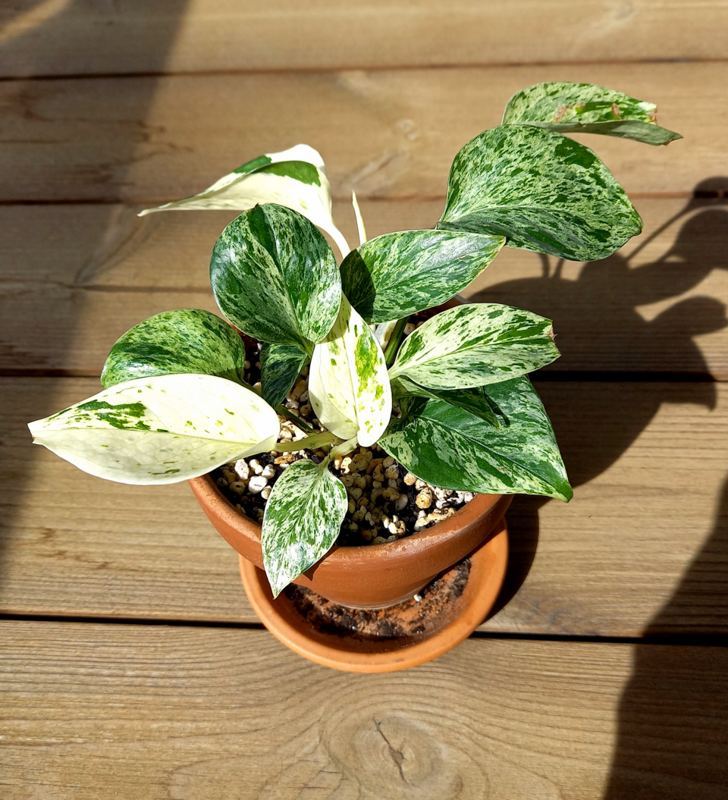 Pothos
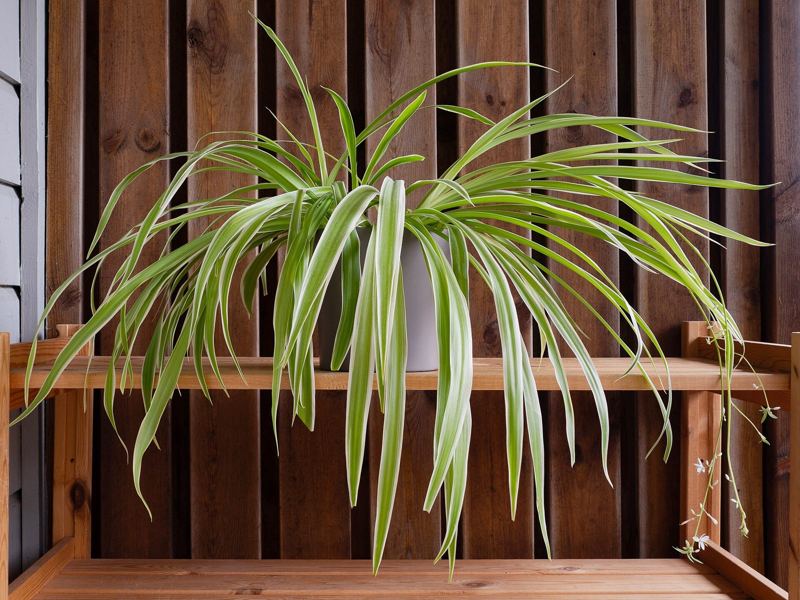 Spider Plant
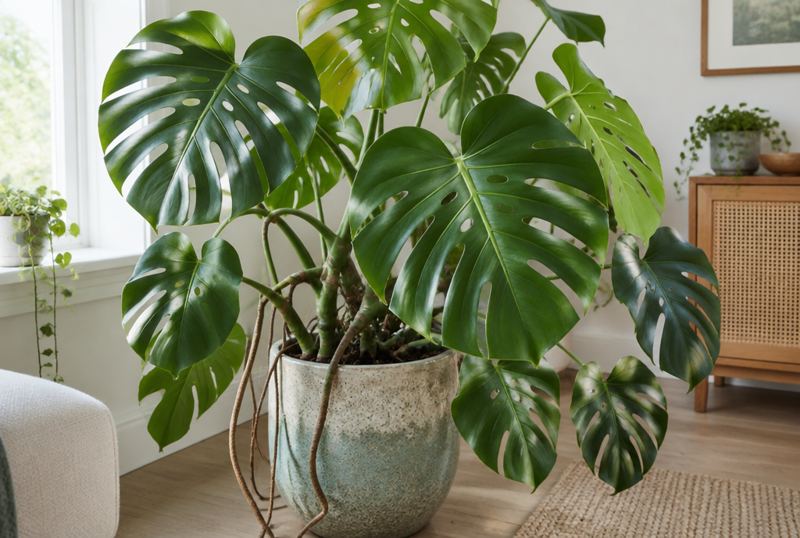 Monstera