

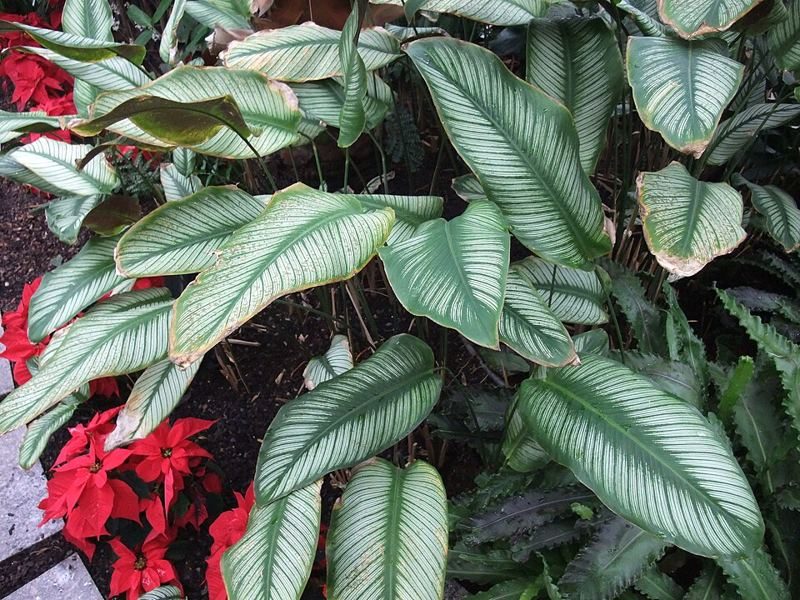
Calatheas want bright indirect light or partial shade, soil kept moist but never soggy, high humidity of at least 60%, and a warm room without drafts (NC State). They are sensitive to tap water, which can brown the leaf edges, and the ASPCA lists Calathea as non-toxic to dogs and cats. “Calathea” covers many plants, and NC State now files them under Goeppertia. The figures below come from four NC State profiles, and we name the species whenever the numbers differ.
Which calathea?
The sources are species pages, not a generic “calathea” page. NC State covers the network prayer plant (Goeppertia kegeljanii), the rose-painted calathea (G. roseopicta), the majestic prayer plant (G. majestica) and the Alberta prayer plant (G. albertii). The rose-painted calathea grows 1 to 2 feet tall and wide, and the majestic prayer plant up to 3 feet tall and wide as a houseplant. Where the numbers differ, the species is named. The photo above is a pinstriped calathea, which is none of the four, so treat the figures as a guide to the group, not a guarantee for your plant. The label that came with it is the best way to know which one you have. The ASPCA page uses the older genus name, Calathea, which is why this guide uses both names and why the pet rating is cited as Calathea spp. rather than for a named Goeppertia species.
Indoors or outdoors?
Our sources treat these as houseplants. NC State says the network prayer plant requires temperatures between 60 and 80°F and “is intolerant to sudden temperature changes and drafts.” None of the four pages gives a USDA zone, so we give none. Keep calatheas indoors, away from vents and cold windows.
Light
NC State says the rose-painted calathea “prefers bright, indirect light,” the network prayer plant “prefers partial shade,” and direct sun harms them: “direct sunlight can cause leaf burn” (network) and “direct sunlight will damage the leaves” (Alberta). The sources agree on what to avoid, and they differ only in wording for the preferred level. Our indoor light guide sets the four pages side by side.
Water
NC State says to keep the soil moist but not wet or soggy. For the majestic prayer plant it gives a season: from April to August, water regularly and apply a balanced fertilizer each month, then reduce watering and fertilization in winter. For the Alberta prayer plant it says “keep the soil moist by watering regularly but avoid soggy soils.” No page gives a day count, so judge by the soil. NC State says goeppertias “may be susceptible to root rot and bacterial and fungal spot if they are overwatered.”
Humidity and temperature
Humidity
Raising humidity
Temperature
Drafts
Species side by side
| Rose-painted | Network | Majestic | Alberta | |
|---|---|---|---|---|
| Light | Bright, indirect | Partial shade | Not stated | Direct sun damages leaves |
| Humidity | Above 60% | At least 60% | 60% | Up to 60 to 70% |
| Temperature | 65 to 75°F | 60 to 80°F | 65 to 80°F | Not stated |
| Size | 1 to 2 ft tall and wide | Not stated | Up to 3 ft tall and wide | Not stated |
| Propagation | Division | Division | Not stated | Division |
A blank in the table means the page we read does not say, not that the plant does not need it.
Tap water and brown tips
Brown leaf edges are the one calathea problem NC State describes in some detail. It says “brown leaves and tips can result from low humidity or fluoride in the tap water.” For the network prayer plant it adds: water regularly with distilled water or rain water, because the fluoride in tap water can cause brown edges. It also says “underwatering and tap water can cause brown leaf edges and brown leaf tips,” while overwatering can cause root rot. The three causes pull in different directions, so check the humidity and the water source before you change the watering. NC State does not say whether a filter removes fluoride, so we do not either.
Soil
NC State describes a moist, well-drained, peaty potting mix with a slightly acidic pH for the rose-painted calathea, and a moist, well-drained mix with an acidic to neutral pH for the network prayer plant. For the network plant it recommends incorporating perlite or vermiculite for drainage. None of the pages gives a repotting interval or a pot size.
Feeding
Fertilize the rose-painted and network calatheas once a month during the growing season, spring through summer, with a balanced houseplant fertilizer (NC State). The majestic prayer plant gets the same, monthly from April to August, with less in winter.
Propagation
NC State says the best method for the rose-painted calathea is division of its rhizomatous roots, recommends division for the network plant, and says the Alberta plant may be propagated by division. We found no cutting method. Our propagation guide covers what is sourced.
Pets
The ASPCA lists Calathea spp. (Marantaceae) as non-toxic to dogs and cats. NC State says the network plant is “non-toxic to pets and humans; however, the sap can cause skin irritation.” ASPCA’s separate “red-veined prayer” page had no toxicity line when we fetched it, so we cite only the Calathea page. Our calathea pet-safety guide gives the exact wording and general advice for a pet that chews a leaf.
Common calathea problems
NC State gives no cause of yellow leaves or leaf drop for these species, so we do not diagnose them.
What our sources do not tell you
The four NC State pages give no repotting schedule, no yellow-leaf diagnosis, no leaf-drop cause, no support advice and no stem or leaf cutting method. They are profiles of four species, not of every calathea. If your plant has a different name, check its label and your state extension office.
Grow these next
For another foliage plant that likes steady warmth, the monstera is a larger choice and needs a climbing support. The ZZ plant goes to the opposite extreme on watering and humidity.
More houseplant care guides
For side-by-side comparisons across all our plants, see how often to water houseplants, repotting houseplants, low-light plants and which houseplants are safe for pets.
Frequently asked questions
How much humidity does a calathea need?
NC State says at least 60% for the network prayer plant and 60% for the majestic prayer plant, and up to 60 to 70% for the Alberta prayer plant. For the majestic prayer plant it suggests a bed of wet pebbles or a humidified room.
Why do calathea leaves get brown edges?
NC State says brown leaves and tips can result from low humidity or fluoride in tap water, and that underwatering can also cause brown leaf edges and tips. It suggests distilled or rain water for the network prayer plant.
Is calathea toxic to cats and dogs?
The ASPCA lists Calathea spp. as non-toxic to dogs and non-toxic to cats. NC State says the network prayer plant is non-toxic to pets and humans, though its sap can cause skin irritation.
How often should I water a calathea?
No source gives a day count. NC State says to keep the soil moist but not wet or soggy, to avoid overwatering because it can cause root rot, and to reduce watering in winter.
Can I propagate a calathea from cuttings?
Our sources name division only. NC State says the best method is division of the rhizomatous roots. It gives no stem or leaf cutting method.
Sources
- Goeppertia kegeljanii (network prayer plant), NC State Extension Plant Toolbox
- Goeppertia roseopicta (rose-painted calathea), NC State Extension Plant Toolbox
- Goeppertia majestica (majestic prayer plant), NC State Extension Plant Toolbox
- Goeppertia albertii (Alberta prayer plant), NC State Extension Plant Toolbox
- Toxic and Non-toxic Plants: Calathea, ASPCA
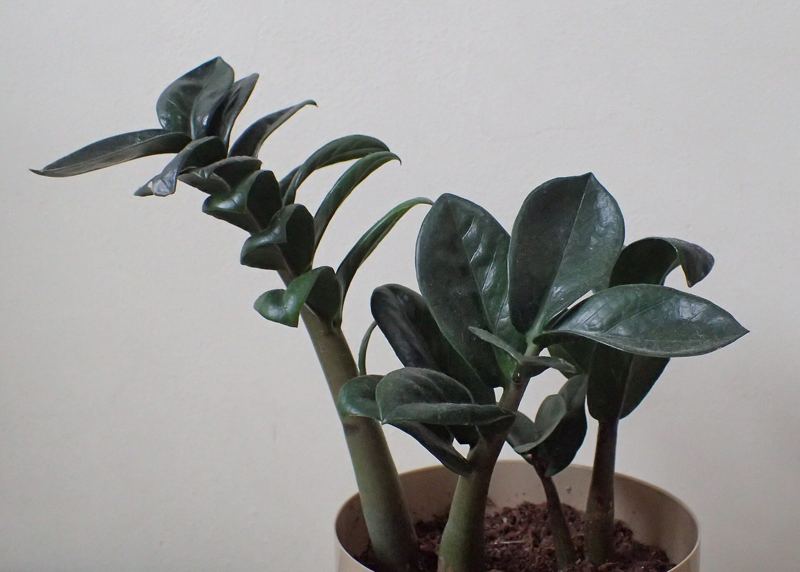 ZZ Plant
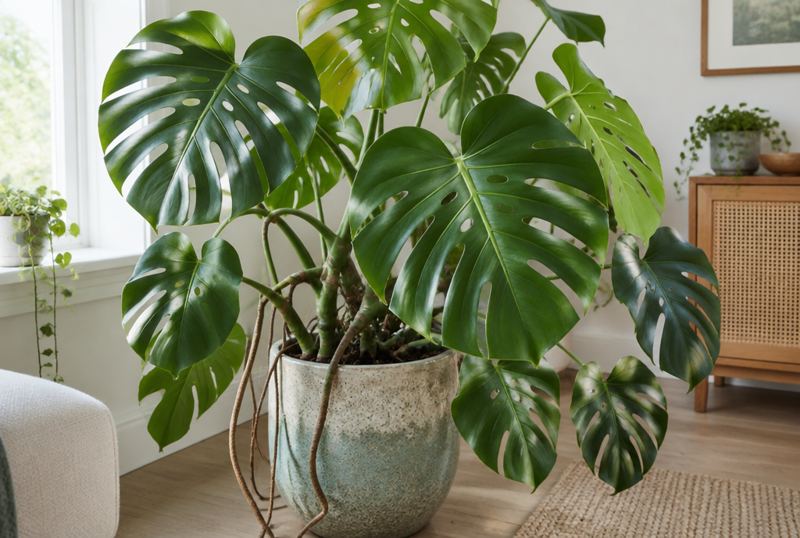 Monstera