

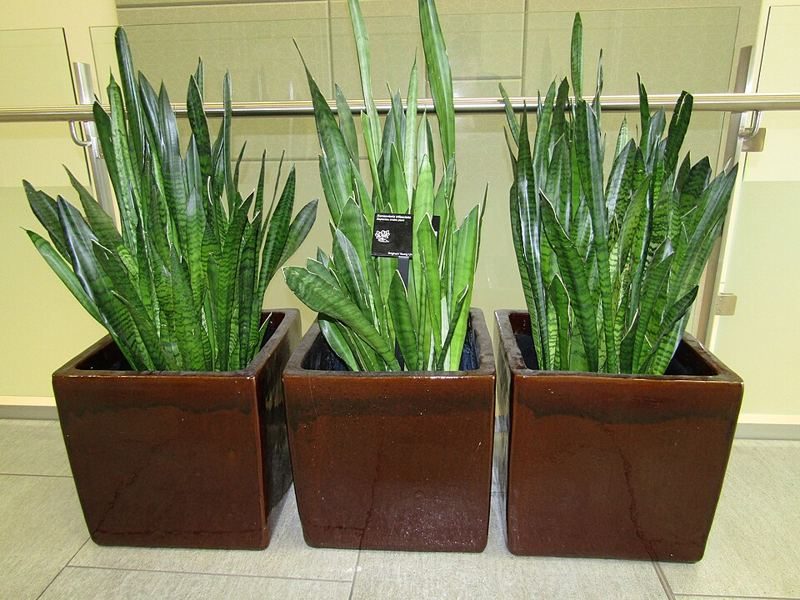
Of the 10 houseplants we cover, our sources say five tolerate low light: snake plant, ZZ plant, pothos, peace lily and spider plant. None of them says low light is ideal. Each source that allows it also names a brighter preference, so “tolerates” is the honest word. Three more plants (calathea, rubber plant, fiddle leaf fig) are described as happy in partial shade or bright indirect light, and two (aloe vera, monstera) lose out in dim rooms.
What “low light” means
Our sources do not give a number. None of them states a light level in foot-candles or lux, or a distance from a window. They use phrases instead:
- “Very low levels of light.” NC State’s ZZ plant page says the plant “will grow in very low levels of light, even in areas with only fluorescent light,” then adds that it does best with bright indirect sunlight.
- “Low-light areas.” Penn State says snake plant “enjoys bright indirect light but tolerates low-light areas very well.”
- “Deep shade.” NC State says spider plant “prefers medium light levels yet can tolerate deep shade.”
- “Partial shade.” NC State uses this for rubber plant, fiddle leaf fig and calathea, alongside bright indirect light. That is a brighter spot than the first three phrases suggest, which is our reading.
So treat “low light” as a plain-English label for a room with little daylight, not a measured spec. For a quick test of how your own room compares, see our guide to easy houseplants, which sorts the same ten plants by how forgiving they are.
Plants our sources say tolerate low light
| Plant | What the source says | Source |
|---|---|---|
| Snake plant | “Tolerates low-light areas very well”; NC State says it “will tolerate very low light” | Penn State, NC State |
| ZZ plant | Grows in “very low levels of light, even in areas with only fluorescent light” but does best in bright indirect sunlight | NC State |
| Pothos | “Prefer bright, indirect light but will tolerate lower lighting conditions” | Clemson |
| Peace lily | “Will tolerate low light conditions but grow best in bright indirect light” | Clemson |
| Spider plant | “Prefers medium light levels yet can tolerate deep shade” | NC State |
What you give up in dimmer light
The sources name a few costs. NC State and Clemson both say lower light can make variegated pothos lose some of its coloring. NC State says spider plant is intolerant of direct sun, so deep shade is easier on it than a hot window.
Peace lily is a case where the sources are not consistent. Clemson says peace lilies will tolerate low light, and our notes record that the same factsheet says both that the plant flowers in low light and that flowering is lacking in insufficient light. We cannot reconcile those two statements, so do not count on flowers in a dim spot.
Snake plant also has a conflict worth knowing. Penn State says to keep it out of direct sun because it can burn. NC State says to place it where it receives direct sunlight only part of the day, 2 to 6 hours, “as it will tolerate very low light.” Those two readings are about the same plant, so the safe overlap is bright indirect light.
Plants for partial shade or bright indirect light
These three are not described as low light plants by our sources, but they are described as shade-friendly or protected from afternoon sun.
| Plant | What the source says | Source |
|---|---|---|
| Calathea | Bright indirect light or partial shade; “direct sunlight can cause leaf burn” | NC State |
| Rubber plant | “Bright indirect light or partial shade and protection from the afternoon sun” | NC State |
| Fiddle leaf fig | Bright indirect light or partial shade with afternoon sun blocked (NC State); full sun to partial shade (UF/IFAS EDIS) | NC State, UF/IFAS |
Rubber plant has a second reading. Texas A&M’s reference guide says “medium light or some daily sun,” which is brighter than NC State’s partial shade. Fiddle leaf fig gets the same Texas A&M wording, so the three sources span a wide range.
Plants that need brighter light
Aloe vera. Penn State says full sun to bright indirect light when grown indoors near sunny windows, and NC State says full sun to partial shade. UF/IFAS adds that aloe can sunburn when moved from low to bright light too quickly, so any change needs to be gradual. Aloe is the plant on our list least suited to a dim corner.
Monstera. Penn State says bright light but not direct sun, and NC State says variegated types need more light. Wisconsin Extension says it can be grown under fluorescent light but will not develop the leaf perforations when light is inadequate. Wisconsin also differs from the others on direct sun, saying the plant takes direct sun in winter and bright light in summer, according to our notes. If you want the split leaves, give it more light than the plants in the table above.
Direct sun is the other half of the story
Low light is only one end of the range. Our sources warn about direct sun for most of these plants:
- ZZ plant: “Scalding and browning of leaves can occur if the plant is placed in direct sunlight” (NC State).
- Peace lily: “Should not be placed in direct sun as the heat will scorch the foliage” (Clemson).
- Pothos: “Direct sun will lead to the yellowing of leaves” (Penn State).
- Spider plant: NC State says intolerant of direct sun, while Clemson says it can tolerate some, but midday light may scorch leaves.
A spot that suits a low light plant is therefore usually a bright room back from the window, not a sunny sill. How often to water in that spot is a separate question, covered in how often to water houseplants.
How to choose
- Pick from the five if the room is dim. Snake plant, ZZ plant, pothos, peace lily and spider plant are the only ones our sources describe with tolerance wording.
- Expect slower, plainer growth in less light. That is our reading. The sources only say “tolerate,” not how much the plant grows.
- Move a plant in stages. UF/IFAS says aloe can sunburn when moved quickly from low to bright light, and Wisconsin says monstera moved outdoors for summer must be acclimated to higher light gradually or the leaves will sunburn.
- Check pet status before you choose. Several of the low light plants are toxic to cats and dogs per the ASPCA. See pet safe houseplants for the full table.
Short version
Snake plant, ZZ plant, pothos, peace lily and spider plant are the ones our extension sources say tolerate low light or shade. All of them prefer brighter indirect light, and most dislike direct sun. Aloe vera, monstera, fiddle leaf fig and rubber plant want a brighter room. For the other three levels, see medium light plants, bright indirect light plants and direct sun plants.
Frequently asked questions
What is the best houseplant for a low light room?
Our sources do not rank plants. NC State says the ZZ plant will grow in very low levels of light, even in areas with only fluorescent light, and says the snake plant will tolerate very low light. Both sources add that these plants do best, or ideally sit, in brighter indirect light.
Can a plant live with no natural light?
Our sources do not say. The closest wording is NC State's, which says the ZZ plant grows in very low levels of light, even in areas with only fluorescent light. None of our sources test a plant in a windowless room.
Do low light plants still need some light?
Yes. Every source that says a plant tolerates low light also names a brighter preference. Clemson says peace lilies grow best in bright indirect light, and Clemson says pothos prefer bright, indirect light.
Which of these plants should I keep out of direct sun?
Our sources say direct sun can scorch or burn the ZZ plant, peace lily, pothos, spider plant and calathea. Penn State says to keep snake plant out of direct sun, while NC State allows 2 to 6 hours of it.
Sources
- Dracaena trifasciata (Mother-in-law's tongue), Plant Toolbox, NC State Extension
- Snake plant, a forgiving low-maintenance houseplant, Penn State Extension
- Zamioculcas zamiifolia (ZZ plant), Plant Toolbox, NC State Extension
- Peace lily, Clemson Home & Garden Information Center
- How to grow pothos indoors, Clemson Home & Garden Information Center
- Chlorophytum comosum (spider plant), Plant Toolbox, NC State Extension
- Goeppertia kegeljanii (network plant), Plant Toolbox, NC State Extension
- Ficus elastica (rubber plant), Plant Toolbox, NC State Extension
- Ficus lyrata (fiddle-leaf fig), Plant Toolbox, NC State Extension
- Aloe, a hardy houseplant, Penn State Extension
- Monstera deliciosa (Swiss cheese plant), Plant Toolbox, NC State Extension
- Monstera deliciosa, University of Wisconsin-Madison Extension
- Monstera as a houseplant, Penn State Extension
- Aloe vera, UF/IFAS Gardening Solutions
- Ficus lyrata, fiddle leaf fig, UF/IFAS EDIS
- Rubber plant, Texas A&M AgriLife, Aggie Horticulture