

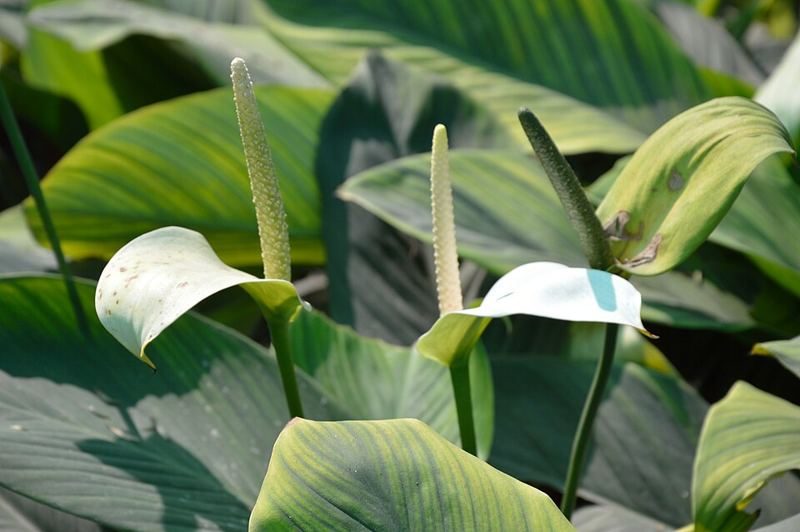
There is no single watering schedule for houseplants in our sources; the answer depends on the plant, and every source ties it to the soil, not the calendar. Snake plant and ZZ plant can go weeks between drinks. Aloe vera and pothos are watered once the soil is dry. Peace lily and calathea are kept moist but not soggy. This guide gives the rule for each of our 10 plants, shows where sources disagree, and covers how to check the soil and what overwatering looks like.
Watering rule for each plant
| Plant | Rule | Source |
|---|---|---|
| Snake plant | Let the soil dry between waterings from spring to autumn; every one to two months in winter. Clemson: every 2 to 4 weeks in the growing season, every 4 to 6 weeks in fall and winter | NC State, Clemson |
| ZZ plant | Let soil dry between waterings; up to twice a month in summer and about once a month in winter, only when fully dry | NC State |
| Pothos | Let the soil dry between waterings and water thoroughly; water when the soil surface is dry; “better kept too dry than too wet” | Clemson, Wisconsin, Penn State |
| Spider plant | Let the soil dry briefly between waterings; water when the top 1 to 2 inches are dry | Clemson, UF/IFAS |
| Aloe vera | Soil completely dry between waterings (NC State); top inch dry (UF/IFAS); surface dry in the growing season (Penn State) | NC State, UF/IFAS, Penn State |
| Peace lily | Keep soil moist but not soggy and let it dry slightly between waterings; never let it sit in water | Clemson, UF/IFAS EDIS |
| Calathea | Keep soil moist but not wet or soggy; reduce watering in winter | NC State |
| Monstera | Water thoroughly, then let the top quarter to one-third (NC State) or top 1 to 2 inches (Penn State) dry | NC State, Penn State |
| Rubber plant | Water regularly but avoid overwatering; reduce watering when dormant (fall to late winter) | NC State |
| Fiddle leaf fig | Regular watering in well-drained soil (UF/IFAS EDIS); sensitive to overwatering (NC State) | UF/IFAS EDIS, NC State |
Our sources give no numeric schedule for peace lily, calathea, rubber plant or fiddle leaf fig. That is a gap in what we can state, not a hidden rule.
Where the sources disagree
ZZ plant. NC State says up to twice a month in summer and once a month in winter. Illinois Extension says once a month in fall and winter. UF/IFAS says the plant can survive periods of drought but “will perform better with moderate watering every week or two.” Taken together, the sources agree on dry soil before watering and differ on how often that is. Our reading is that the soil, not the date, should decide.
Snake plant. The winter figures differ: NC State says every one to two months, Clemson every 4 to 6 weeks in fall and winter.
Aloe vera. “Completely dry” (NC State) is a stricter test than “top inch dry” (UF/IFAS). Penn State reduces watering from fall through winter, until the soil is barely moist and the leaves do not shrivel.
Monstera. NC State and Penn State measure dryness differently, a quarter to a third of the soil versus the top 1 to 2 inches. Both say water thoroughly.
Fiddle leaf fig and rubber plant. “Regular” or “routinely” without a number is as far as the sources go.
How to check the soil
Our sources describe checking the soil rather than watering by the calendar, and name no tool. The wording they use:
- Top inch dry to the touch. UF/IFAS, for aloe vera: “only water your plant when the top inch of soil is dry to the touch.”
- Top 1 to 2 inches dry. Clemson for spider plant, Penn State for monstera.
- Soil surface dry. Wisconsin for pothos, Penn State for aloe vera in the growing season.
- Soil completely dry. NC State for aloe vera and ZZ plant (ZZ only “if the soil has dried out completely”).
- Water thoroughly. Clemson for pothos, NC State and Penn State for monstera.
None of these sources prescribes a particular method or tool, so we do not add one.
Reading the signs of overwatering
Root rot is the problem most of the sources name. The wording by plant:
- Snake plant. “Overwatering may cause root rot” (NC State). Clemson says the leaves can turn soggy if watered too often.
- Aloe vera. NC State says overwatering can lead to the roots rotting, and Penn State says never let the plant sit in water.
- Pothos. Clemson lists root rot from overwatering or poorly draining soil, and yellow leaves often caused by overwatering or low fertility. NC State adds blackening leaf margins, and Wisconsin says blackening can come from overwatering, inadequate watering or excess fertilizer.
- ZZ plant. UF/IFAS EDIS says root rot comes from poorly drained soil with excessive water over an extended period.
- Peace lily. Clemson names root and stem diseases, usually from overwatering.
- Calathea. NC State says overwatering can cause root rot.
- Monstera. Wisconsin says leaves “sweat” when the medium is too moist, and to reduce watering. Penn State says overwatering can result in root rot.
- Fiddle leaf fig. Penn State lists brown spots as a sign of root rot, and NC State says leaf drop may come from too much or too little water.
- Rubber plant. NC State says overwatering, temperature drops or cold drafts can cause loss of leaves.
Underwatering signs
The sources name these too:
- ZZ plant. In drought the leaflets and upper part of the petiole fall off, leaving the swollen petiole base (UF/IFAS EDIS).
- Peace lily. The plant wilts and the leaves and edges turn yellow if the soil dries out excessively (Clemson).
- Calathea. Underwatering and tap water can cause brown leaf edges and tips (NC State).
- Spider plant. Brown tips can come from dry soil, low humidity, or fluoride and chlorine in tap water (Wisconsin, NC State).
Brown or yellow leaves alone therefore do not tell you which way you erred. Look at the soil first. Constantly wet mix is also what fungus gnat larvae thrive in, as our fungus gnats guide explains.
Short version
Water by the soil. Snake plant, ZZ plant, aloe vera and pothos wait for dry soil; peace lily and calathea stay evenly moist without sitting in water; monstera wants a thorough soak and then a partly dry top layer. Cut back in winter for snake plant, ZZ plant, aloe vera, rubber plant and calathea. For the rest of care, see low light plants, easy houseplants and repotting houseplants, which covers the soil mixes behind these watering rules. Two other care questions have their own guides: humidity for houseplants and how to fertilize houseplants.
Frequently asked questions
How often should I water houseplants?
There is no single schedule in our sources. The rule is by plant and by soil. Snake plant and ZZ plant can go weeks between waterings (Clemson says every 2 to 4 weeks in the growing season for snake plant), while peace lily and calathea are kept moist but not soggy.
How do I know when a houseplant needs water?
Our sources describe checking the soil. UF/IFAS says to water aloe only when the top inch of soil is dry to the touch, Clemson says to water spider plant when the top 1 to 2 inches are dry, and Penn State gives 1 to 2 inches for monstera.
Do houseplants need less water in winter?
Several sources say so. NC State says snake plant needs water every one to two months in winter, ZZ plant about once a month, and rubber plant less from fall to late winter. Penn State says to reduce aloe watering until the soil is barely moist and the leaves do not shrivel.
What are the signs of overwatering?
Our sources list root rot for snake plant, aloe vera, pothos, ZZ plant, peace lily, calathea, monstera and fiddle leaf fig. Other signs include soggy leaves on snake plant (Clemson), yellow leaves on pothos and leaf loss on rubber plant (NC State).
Sources
- Dracaena trifasciata (Mother-in-law's tongue), Plant Toolbox, NC State Extension
- Exciting houseplant selections for beginners, Clemson Home & Garden Information Center
- Zamioculcas zamiifolia (ZZ plant), Plant Toolbox, NC State Extension
- ZZ plant, houseplant spotlight, University of Illinois Extension
- ZZ plant, houseplants, UF/IFAS Gardening Solutions
- ZZ plant, EDIS, UF/IFAS EDIS
- Peace lily, Clemson Home & Garden Information Center
- Spathiphyllum, EDIS, UF/IFAS EDIS
- Spider plant, Clemson Home & Garden Information Center
- Spider plant, houseplants, UF/IFAS Gardening Solutions
- Spider plant, Chlorophytum comosum, University of Wisconsin-Madison Extension
- Aloe vera, Plant Toolbox, NC State Extension
- Aloe vera, UF/IFAS Gardening Solutions
- Aloe, a hardy houseplant, Penn State Extension
- How to grow pothos indoors, Clemson Home & Garden Information Center
- Pothos, Epipremnum aureum, University of Wisconsin-Madison Extension
- Epipremnum aureum (pothos), Plant Toolbox, NC State Extension
- Pothos as a houseplant, Penn State Extension
- Ficus elastica (rubber plant), Plant Toolbox, NC State Extension
- Ficus lyrata (fiddle-leaf fig), Plant Toolbox, NC State Extension
- Ficus lyrata, fiddle leaf fig, UF/IFAS EDIS
- Fiddle leaf fig (Ficus lyrata), Penn State Extension
- Goeppertia kegeljanii (network plant), Plant Toolbox, NC State Extension
- Monstera deliciosa (Swiss cheese plant), Plant Toolbox, NC State Extension
- Monstera deliciosa, University of Wisconsin-Madison Extension
- Monstera as a houseplant, Penn State Extension