

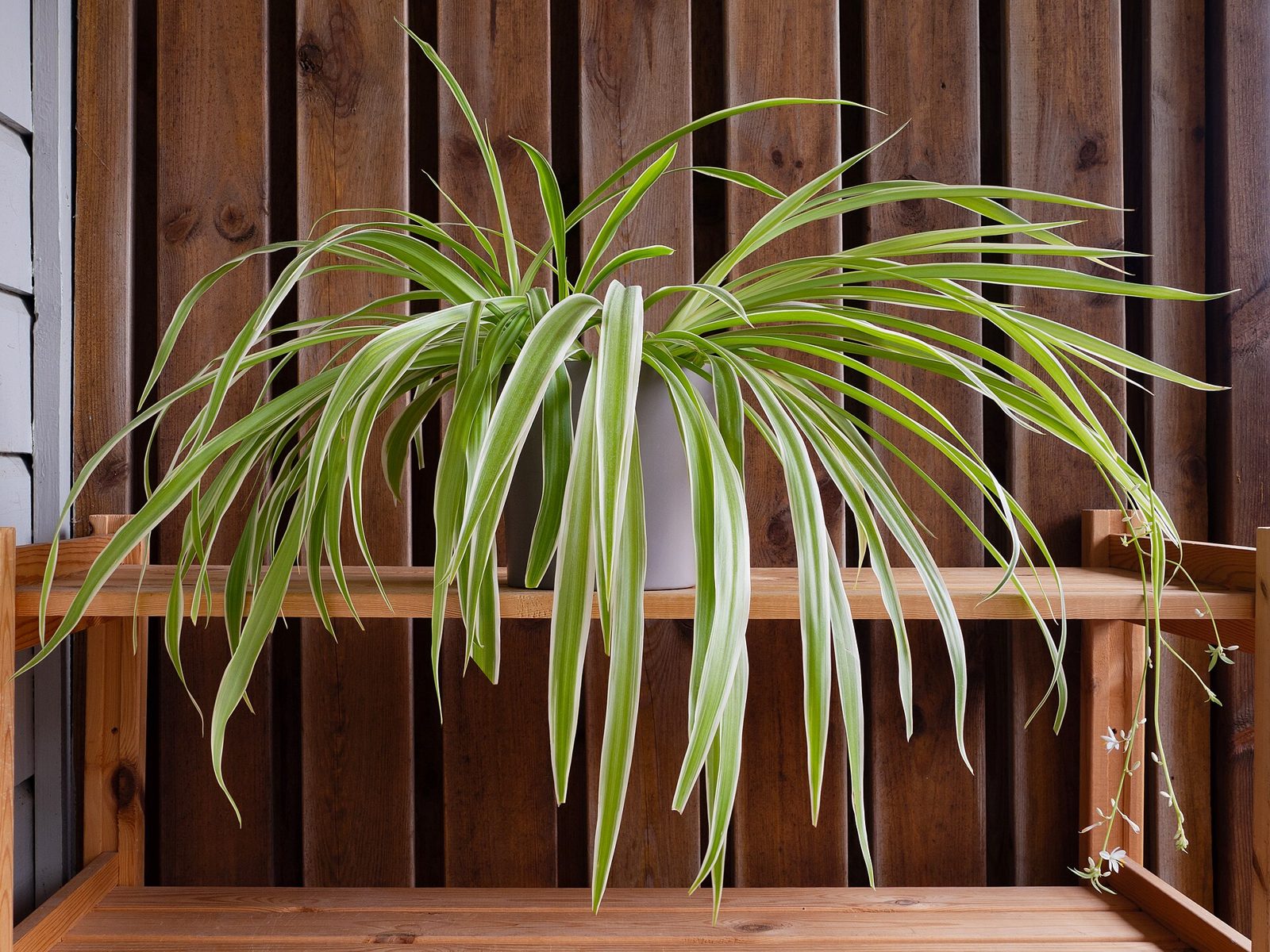
The spider plant is an easy trailing houseplant: bright indirect light, soil that dries briefly between waterings and average room conditions are enough. It sends out long stems with baby plantlets that you can pot up for free. On pets, the ASPCA is not consistent: its plant page lists the spider plant as non-toxic to dogs and cats, but its 2019 houseplant article calls it mildly toxic, so we report both and suggest keeping it out of reach. The one thing to watch is brown leaf tips, which several sources link to water quality, humidity or feeding.
Light
Clemson says spider plants grow best with bright indirect light. The University of Wisconsin says medium to bright light throughout the year. NC State says it prefers medium light levels yet can tolerate deep shade.
Direct sun is where the sources part. NC State calls the plant intolerant of direct sunlight. Clemson says they can tolerate some direct sunlight, but midday light may scorch the leaves. The cautious reading is the one both agree with: bright light with the midday sun kept off the leaves.
Water
Clemson says spider plants should be allowed to dry out briefly between waterings, and to water when the top 1 to 2 inches are dry. UF/IFAS gives the same idea: the upper inch of soil should be allowed to dry out briefly. Wisconsin says to allow the soil to dry slightly between thorough waterings. NC State says it grows best in moist soil but is tolerant of drought and dry soil.
That is a plant that forgives some dryness and dislikes constant sogginess. Clemson says root rot usually results from a soil mix that does not drain quickly or from excessive watering.
Humidity and temperature
Humidity
Temperature (ideal)
Temperature (minimum)
Soil and repotting
Clemson says a general-purpose potting soil is suitable. Wisconsin says a general-purpose potting soil or a soilless medium.
Repotting advice differs by source. UF/IFAS says a potted spider plant will thrive with repotting once a year while the plant is young and then every other year once it matures. Clemson says to divide and repot plants before the roots expand enough to crack the container. Wisconsin says that because spider plants grow quickly and roots can easily become too crowded, they need frequent repotting to do their best. A crowded pot is the signal, and these three sources agree on that.
Feeding
Wisconsin says fertilizing every 3 to 4 months is usually sufficient, or feed more often at half strength. Clemson says to feed plants during periods of active growth with a water-soluble or time-release houseplant fertilizer. Do not overdo it. Wisconsin says heavily fertilized plants may not form as many plantlets and excessive fertilizer may lead to tip browning, and NC State says overfertilizing decreases plantlet formation.
Plantlets and propagation
Spider plants make new plants on their own. Wisconsin says you can set a plantlet, still attached to the mother plant, on the surface of a pot filled with soilless potting medium and let it root before cutting the stem. Clemson says to detach them once roots have formed and pot them directly into moist growing mix. UF/IFAS says simply to remove and pot the plantlets. Larger plants can also be divided (Wisconsin, NC State). Our plantlet propagation guide covers each method.
NC State adds an interesting detail: stolons and plantlets are light dependent and develop when the mother plant receives short days.
Flowers
Wisconsin says the spider plant produces small white, star-shaped flowers at the ends of the stems, and that grown indoors they may appear at any time of year.
Water quality
Spider plants are known for brown tips, and the sources point at the tap. NC State says to avoid watering with tap water because the chlorine and fluorides can cause leaf tip burn. Wisconsin lists the same chemicals, fluoride and chlorine in tap water, among the possible causes of brown leaf tips, together with salt accumulation, low humidity and excessively dry soil. Clemson says leaf tip burn is caused by too much fertilizer or by water that is high in soluble salts.
The sources do not say what water to use instead or how to treat tap water, so we will not make up a method. If tips keep browning after you have checked feeding and humidity, water quality is the next thing to rule out. Our brown tips guide goes through each cause.
Plantlets: what helps and what does not
Plantlets are the plant’s signature feature, and the sources give two clues about getting them. Over-fertilizing reduces them: Wisconsin says heavily fertilized plants may not form as many, and NC State says not to over-fertilize because this decreases plantlet formation. NC State also says stolons and plantlets are light dependent and develop when the mother plant receives short days. Our sources do not say how many hours of light or what day length that means in practice, so treat it as a clue rather than a recipe.
A simple routine
- Put it in bright light with the midday sun kept off. Bright indirect light is best (Clemson), and midday light may scorch the leaves.
- Water when the top inch or two has dried. Clemson says 1 to 2 inches, and UF/IFAS says the upper inch.
- Feed lightly. Wisconsin says every 3 to 4 months is usually enough, or half strength more often.
- Watch the tips. Brown tips point to humidity, dry soil, salts, tap water chemicals or too much fertilizer (Wisconsin, NC State, Clemson).
- Repot or divide when the roots crowd the pot. UF/IFAS says every other year once mature, and Clemson says before the roots crack the container.
Common spider plant problems
Clemson says too much or too little water, along with insects and mites, are the primary problems. Wisconsin says spider plants generally have few pest problems other than scale insects and mealybugs, while Clemson names whiteflies, spider mites, scales and aphids as the most common insect pests. The sources give no treatments.
Pets
The ASPCA gives two different answers. Its plant page says non-toxic to dogs and non-toxic to cats. Its 2019 article Is That Houseplant Safe for Your Pets? lists the spider plant as mildly toxic to dogs and cats, with a risk of mild gastrointestinal irritation from small ingestions. Our spider plant pet safety page gives both statements. If you have pets that chew plants, keep it out of reach, and call your vet or the ASPCA Animal Poison Control Center if a pet seems unwell.
Size
Clemson says spider plants grow quickly to 2 to 2½ feet wide and 2 to 3 feet long in a hanging basket. NC State gives a height of 1 to 1½ feet.
What our sources do not tell you
The sources give no USDA zone and no rule for how often to feed beyond the ranges above. They do not name cultivars, and they do not say how many plantlets to leave on a plant. If a detail matters and is missing here, ask your state extension office.
Grow these next
If you like a trailing plant, the pothos grows as a long vine and roots easily from cuttings. For a plant that tolerates even more neglect, try the snake plant.
More houseplant care guides
For side-by-side comparisons across all our plants, see how often to water houseplants, repotting houseplants, low-light plants and which houseplants are safe for pets.
Frequently asked questions
How often should I water a spider plant?
Clemson says to let it dry out briefly between waterings, and to water when the top 1 to 2 inches are dry. UF/IFAS says the upper inch of soil should dry out briefly. NC State says it grows best in moist soil but tolerates drought.
How much light does a spider plant need?
Clemson says bright indirect light is best, and Wisconsin says medium to bright light. NC State says medium light, deep shade tolerated, and not direct sun. Clemson adds that some direct sun is tolerated but midday light may scorch the leaves.
Is a spider plant toxic to cats and dogs?
The ASPCA says two different things. Its plant page lists the spider plant as non-toxic to dogs and cats, while its 2019 houseplant article calls it mildly toxic to dogs and cats. Our pet safety page gives both statements.
Why are my spider plant tips brown?
Wisconsin lists low humidity, excessively dry soil, salt buildup and chemicals such as fluoride or chlorine in tap water. Clemson adds too much fertilizer. See our brown tips guide for each source.
What is the minimum temperature for a spider plant?
The sources differ. NC State says to keep it above 45°F. UF/IFAS says below 55°F is too cool. Clemson gives 50 to 55°F at night as ideal.
Sources
- Spider Plant (Chlorophytum comosum), University of Wisconsin-Madison Division of Extension, Horticulture
- Chlorophytum comosum, NC State Extension Plant Toolbox
- Spider Plant, Clemson Cooperative Extension, Home and Garden Information Center
- Spider Plant, University of Florida IFAS Gardening Solutions
- Spider Plant, ASPCA Animal Poison Control
- Is That Houseplant Safe for Your Pets?, ASPCA
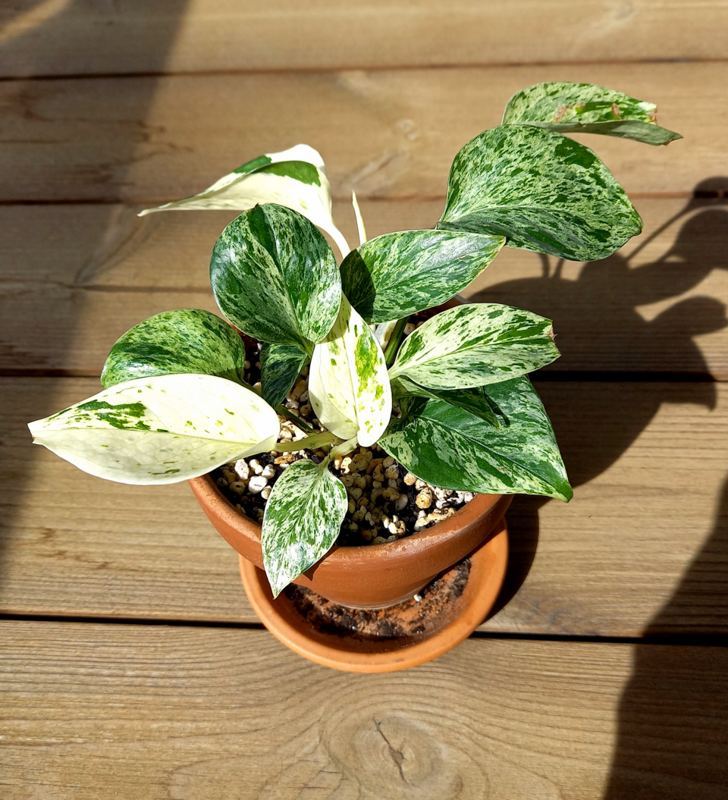 Pothos
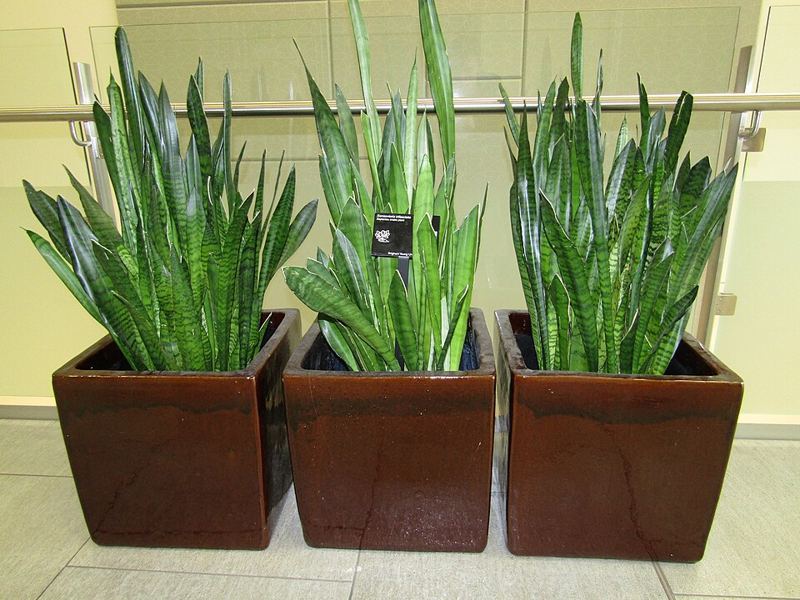 Snake Plant