

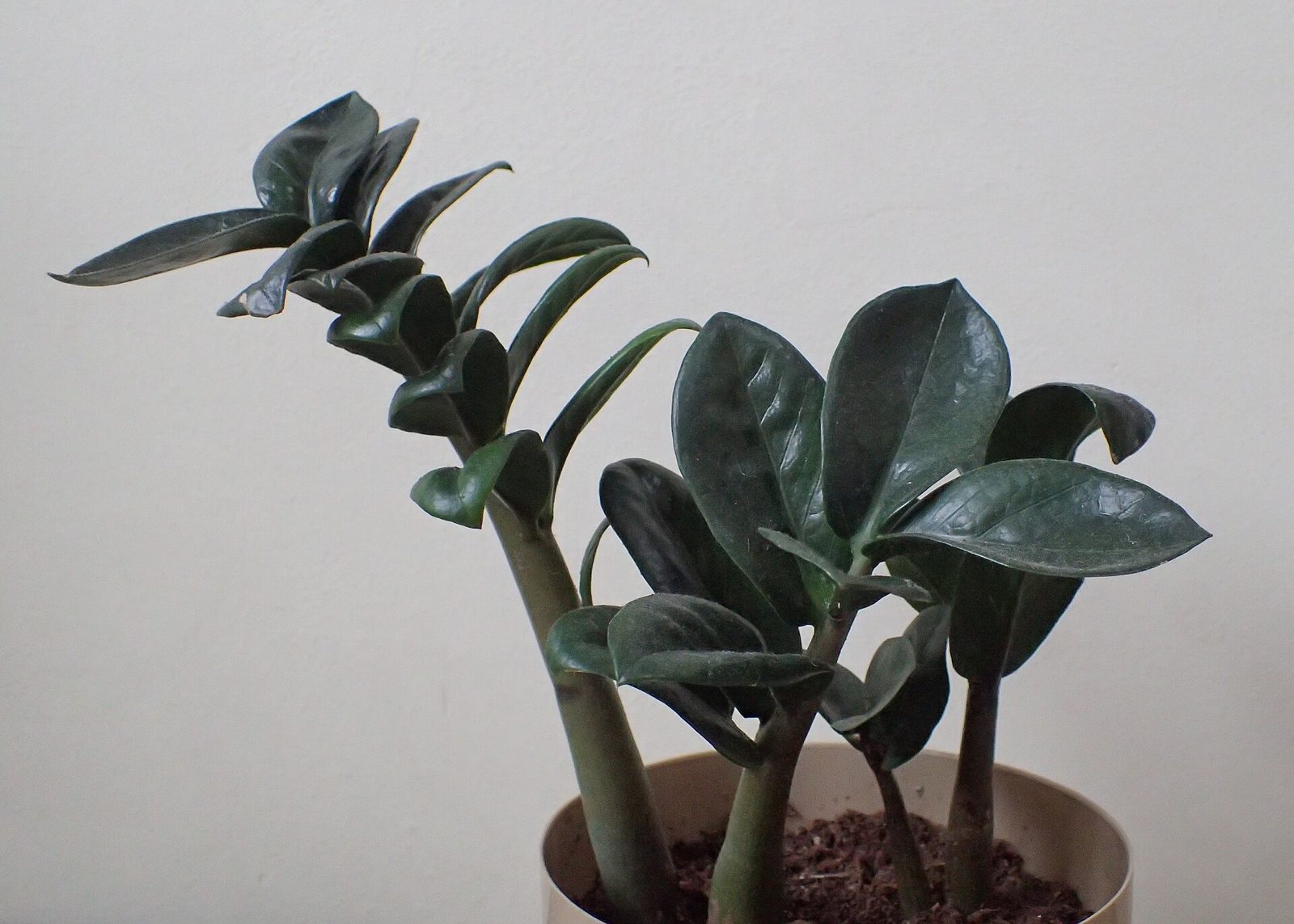
The ZZ plant (Zamioculcas zamiifolia) is a slow-growing houseplant that tolerates very low light, wants bright indirect light for its best growth, and rots if it is watered before the soil dries out (NC State, Clemson, UF/IFAS). It should stay above about 60°F and out of full sun. Sources disagree on how often to water and feed it, so we show each one. It has a medium pet-toxicity rating at NC State and “not pet safe” at Clemson, which is why this guide has a section on that near the end.
Indoors or outdoors?
Our sources treat the ZZ plant as a houseplant. UF/IFAS EDIS gives the temperature picture: warm, tropical conditions of 65°F to 90°F, “active growth will be reduced and injury may occur below 50°F,” and no freeze tolerance. Clemson says it is “sensitive to cold and should be kept above 60 °F.” We have no USDA zone in the fetched pages, so we do not give one. In practice this is an indoor plant everywhere in the US except a frost-free outdoor spot.
Size is modest. NC State says slow growth to 2 to 4 feet tall and wide, and UF/IFAS Gardening Solutions says it can reach three to four feet tall and three feet wide in time.
Light
The sources broadly agree, with a small difference in emphasis. NC State says it will grow “in very low levels of light, even in areas with only fluorescent light,” but does best with bright indirect sunlight. Clemson says to “locate ZZ plants anywhere except in full sunlight.” UF/IFAS EDIS says: “Strong, filtered light, but no direct sun.” NC State warns that “scalding and browning of leaves can occur if the plant is placed in direct sunlight.”
So the working range runs from very low light, which the plant tolerates, to bright filtered light, which it prefers. What every source rules out is direct sun. If your plant is in a dark corner it will probably survive, but the sources say it does best with bright indirect light.
Water
This is where the sources differ most. All of them say the soil should dry out, but they differ on how often.
NC State
Illinois Extension
UF/IFAS Gardening Solutions
UF/IFAS EDIS
The difference is partly seasonal. NC State and Illinois Extension talk about winter, and UF/IFAS Gardening Solutions gives a general interval that is shorter than NC State’s summer figure. A cautious reading is to let the soil dry completely first, as all sources require, and then water. Whether that takes one week or four depends on your pot, light and room, and no source resolves it. Clemson adds that overwatering can lead to root rot.
Humidity and temperature
Clemson says ZZ plants are “acclimated to arid conditions and will thrive with regular indoor humidity levels.” Illinois Extension says the plant “adapts to variable humidity levels.” Temperature advice is covered above: Clemson says above 60°F, UF/IFAS says 65°F to 90°F is the comfortable range and injury is possible below 50°F.
Soil and repotting
UF/IFAS EDIS says any well-drained peat- or bark-based potting soil can be used. Illinois Extension says to grow it in a medium that is well-drained and let it dry between waterings. NC State says to pot it in “well-drained potting soil” because wet feet are not tolerated. None of our sources gives a repotting interval or pot size, so we do not.
Feeding
Feeding advice varies by an order of magnitude.
- NC State: a balanced liquid houseplant fertilizer “once or twice a year.”
- UF/IFAS EDIS: a low-dose liquid fertilizer, following manufacturer instructions, twice per year.
- Clemson: once or twice during the growing season, with a balanced fertilizer, because ZZ plants are slow-growing.
- Illinois Extension: “a light supply of balanced fertilizer once or twice a month at the time of watering during the spring and summer months.”
Three of the four say a couple of times a year at most, and Illinois Extension is the outlier. For a slow grower, the lower-frequency advice is the most common in our sources. Follow the label on your product.
Propagation
Illinois Extension says “division is the most common and fastest way to create more ZZ plants.” NC State lists division or leaf cutting, and Illinois Extension also describes cutting each leaf from the stalk with the petiole intact. Our propagation guide covers both.
Pets
NC State says “this plant has a medium toxicity to cats and dogs,” with diarrhea and vomiting if leaves are consumed in quantity. Clemson says “NOT Pet Safe.” We did not find an ASPCA species rating page for the ZZ plant. An ASPCA article on trouble-causing houseplants lists it among insoluble calcium oxalate plants and says those plants are toxic, without a cat or dog split. See our ZZ plant pet-safety guide.
Where the sources agree and differ
| Topic | NC State | Clemson | Illinois Extension | UF/IFAS |
|---|---|---|---|---|
| Light | Very low tolerated, bright indirect best | Anywhere except full sun | Low tolerated, bright indirect thrives | Strong, filtered, no direct sun |
| Watering | Monthly in winter, up to twice monthly in summer | Overwatering leads to root rot | Monthly in fall and winter | Every week or two (Gardening Solutions) |
| Feeding | Once or twice a year | Once or twice in the growing season | Once or twice a month in spring and summer | Twice a year (EDIS) |
| Minimum temperature | Not covered | Above 60°F | Not covered | Injury possible below 50°F |
| Pets | Medium toxicity | Not pet safe | Not covered | Not covered |
Common ZZ plant problems
Drought has its own documented look. UF/IFAS EDIS says that in drought the leaflets and the upper part of the petiole fall off, “leaving the swollen petiole base to tide the plant over until the next irrigation.” That is leaf drop from dryness, so a ZZ plant that has lost leaflets is not always overwatered.
What our sources do not tell you
Our sources give no repotting schedule, no cause of yellow or brown leaf tips and no support advice. They also give no ASPCA rating and no common ZZ cultivar names. If a gap matters to you, ask your state extension office or a veterinarian for the pet question.
Grow these next
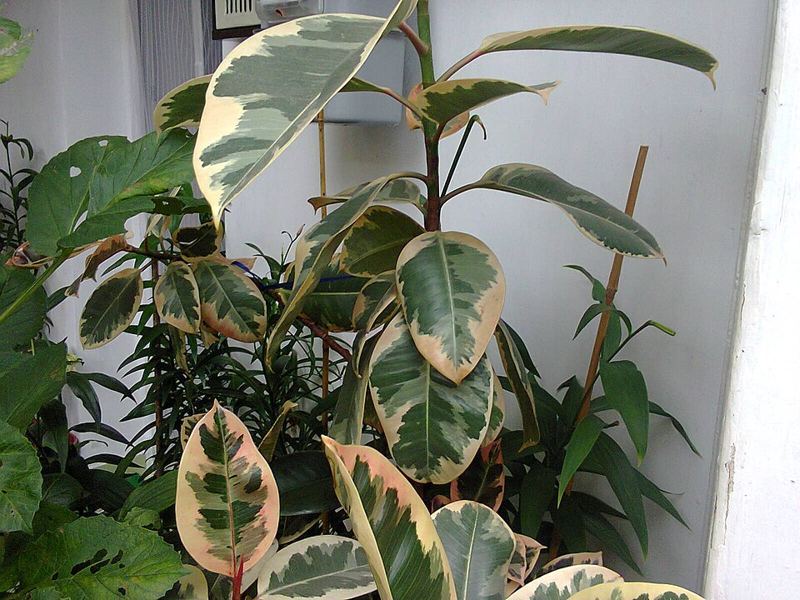
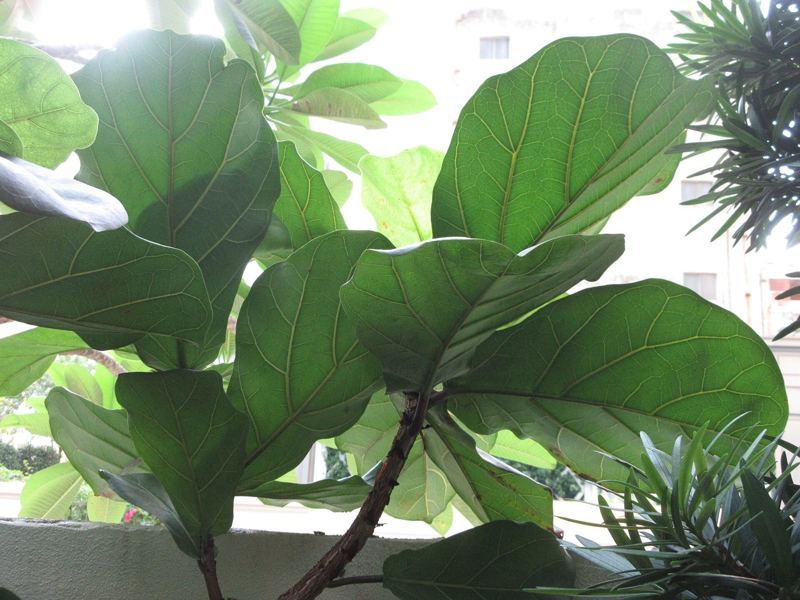
If you want a foliage plant with bigger leaves and more light, the rubber plant and the fiddle leaf fig are the next step up. If pets are the main concern, our calathea care guide cites an ASPCA rating of non-toxic to cats and dogs.
More houseplant care guides
For side-by-side comparisons across all our plants, see how often to water houseplants, repotting houseplants, low-light plants and which houseplants are safe for pets.
Frequently asked questions
How often should I water a ZZ plant?
Only when the soil has fully dried. NC State says about once a month in winter and up to twice a month in summer, and Illinois Extension says once a month in fall and winter. UF/IFAS Gardening Solutions says moderate watering every week or two will do better than drought.
Can a ZZ plant live in low light?
It tolerates very low light, even fluorescent light alone, but does best in bright indirect light (NC State). Clemson says to locate it anywhere except full sunlight. Direct sun can scald and brown the leaves.
Is a ZZ plant toxic to cats and dogs?
NC State says it has medium toxicity to cats and dogs, with diarrhea and vomiting if leaves are eaten in quantity. Clemson says not pet safe. We found no ASPCA species rating page for it.
How do I propagate a ZZ plant?
Division is the most common and fastest method, according to Illinois Extension. Leaf cuttings with the petiole intact also work, and NC State lists division or leaf cutting.
How much fertilizer does a ZZ plant need?
Sources differ. NC State and UF/IFAS EDIS say once or twice a year, Clemson says once or twice in the growing season, and Illinois Extension says a light supply once or twice a month in spring and summer.
Sources
- Zamioculcas zamiifolia (ZZ Plant), NC State Extension Plant Toolbox
- ZZ Plant (Zamioculcas zamiifolia): Indoor Care and Growing Tips, Clemson Cooperative Extension, Home and Garden Information Center
- Houseplant spotlight: the ZZ plant, University of Illinois Extension (Good Growing, January 9, 2026)
- ENH1219/EP480: Florida Foliage House Plant Care: ZZ Plant, University of Florida IFAS Extension (EDIS)
- ZZ Plant, UF/IFAS Gardening Solutions
 Rubber Plant
 Fiddle Leaf Fig