

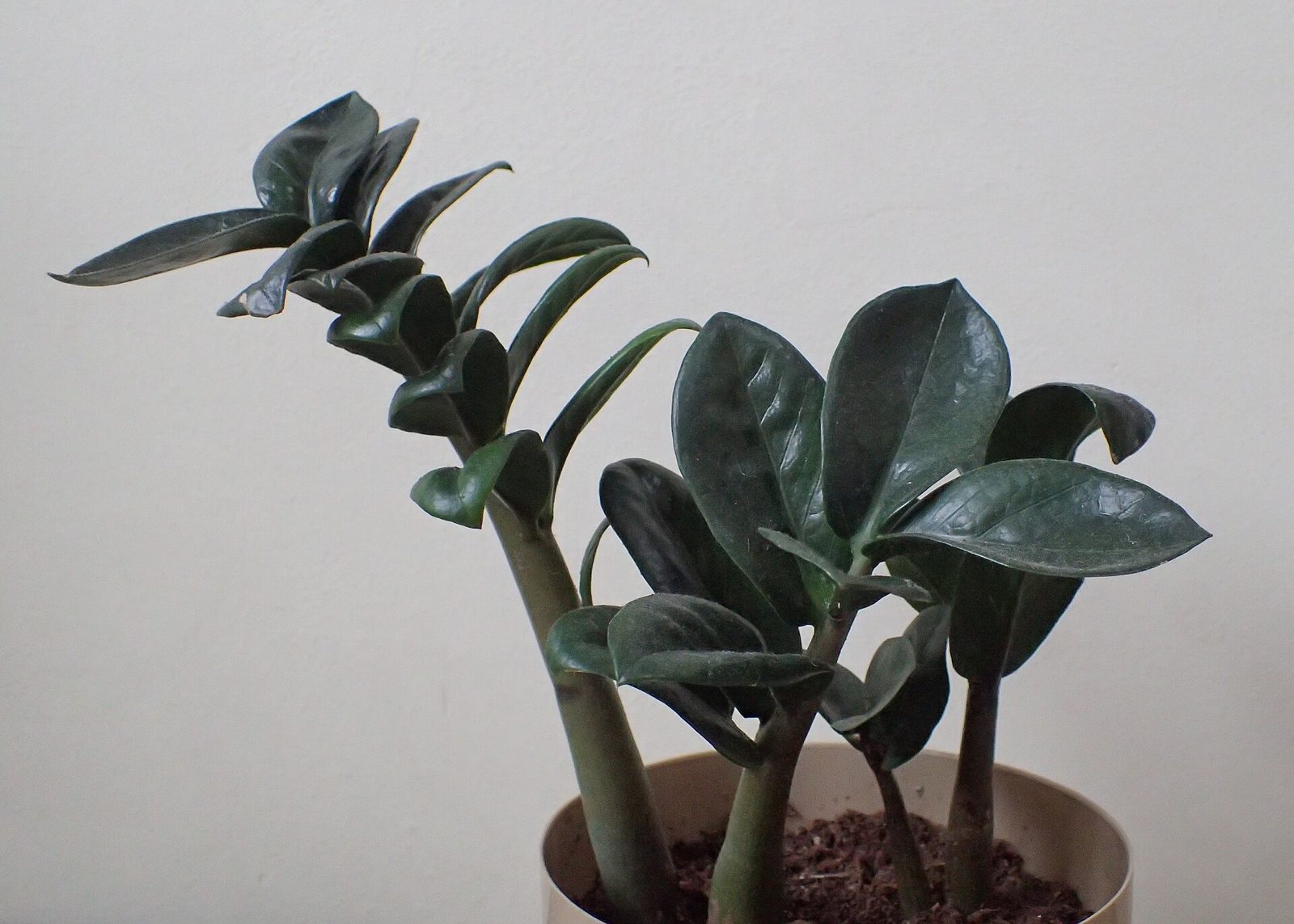
Our sources say the ZZ plant is toxic to cats and dogs: NC State Extension rates it “medium toxicity to cats and dogs,” and Clemson’s guide says “NOT Pet Safe.” NC State says diarrhea and vomiting can follow if the leaves are eaten in quantity. We did not find an ASPCA species rating for it. This page gives each source’s exact wording and the general safe steps that follow. It supports our ZZ plant care guide.
What each source says
NC State Extension
Clemson HGIC
ASPCA
The ASPCA gap
Many people check the ASPCA’s toxic and non-toxic plant database first. We looked for a ZZ plant entry there. The page we found returned only a list shell with no species rating, so we have no ASPCA cat or dog status to report. That is why the care card on our main guide cites NC State and Clemson, not ASPCA, as the species-level sources. The ASPCA article cited above is general: it groups the plant with others that contain insoluble calcium oxalates and says those plants are toxic.
If you need a definitive ASPCA rating, ask the ASPCA Animal Poison Control Center or your veterinarian. We will not infer one.
How the sources compare
| Source | Wording | Cats | Dogs |
|---|---|---|---|
| NC State Extension | Medium toxicity to cats and dogs | Medium toxicity | Medium toxicity |
| Clemson HGIC | Not pet safe | No split given | No split given |
| ASPCA article | Insoluble calcium oxalate plants are toxic | No split given | No split given |
| ASPCA species page | Not found | No rating | No rating |
Read together, the sources agree on the direction: this is not a plant to leave within reach of a cat or dog. They differ in precision. Only NC State grades the severity as “medium” and describes symptoms, and it limits those symptoms to leaves “consumed in quantity.” Clemson’s note is a flat caution without detail. We have no source that says how much is dangerous, how quickly signs appear or how long they last, so we do not.
What the sources say about symptoms
NC State lists two: diarrhea and vomiting, if leaves are consumed in quantity. That is the full list in our sources. The ASPCA article says only that these plants, when ingested by pets, “can cause a number of symptoms,” without naming them for the ZZ plant. We will not add signs from other sources or plants.
General safe steps
These steps follow from the sources’ warnings and from ordinary good practice. They are not treatment advice.
- Keep the plant out of reach. Put it somewhere a cat cannot jump to and a dog cannot reach.
- Clear trimmings. Fallen leaflets and cut stems are still plant material. Pick them up straight away, including the leaflets a ZZ plant drops in drought (see our yellow-leaves guide).
- Know who to call. If a pet chews or eats any part of the plant, contact your veterinarian or the ASPCA Animal Poison Control Center.
- Tell them what the plant is. Give the plant’s name, Zamioculcas zamiifolia, and how much you think was eaten.
What our sources do not tell you
We have no ASPCA species rating, no toxic principle named by NC State or Clemson for this plant, no dose information and no treatment advice. We do not say the ZZ plant is “safe” in any sense, and we do not say how toxic it is beyond NC State’s “medium.” For care, see the main ZZ plant guide. For a plant where ASPCA gives a clear non-toxic rating, see our calathea pet-safety guide.
Frequently asked questions
Is a ZZ plant toxic to cats?
NC State Extension says the ZZ plant has a medium toxicity to cats and dogs, with diarrhea and vomiting if leaves are consumed in quantity. Clemson says not pet safe.
Is a ZZ plant toxic to dogs?
The same sources apply: NC State says medium toxicity to cats and dogs, and Clemson says not pet safe. We found no separate source with a dog-only rating.
Does the ASPCA list the ZZ plant?
We found no ASPCA species rating page with a status for it. An ASPCA article lists ZZ plant among insoluble calcium oxalate plants and says those plants are toxic, without separating cats from dogs.
What should I do if my pet eats a ZZ plant?
Contact your veterinarian or the ASPCA Animal Poison Control Center. Our sources give no home treatment.
Sources
- Zamioculcas zamiifolia (ZZ Plant), NC State Extension Plant Toolbox
- ZZ Plant (Zamioculcas zamiifolia): Indoor Care and Growing Tips, Clemson Cooperative Extension, Home and Garden Information Center
- These Houseplants Can Cause Trouble for Your Pets, ASPCA