

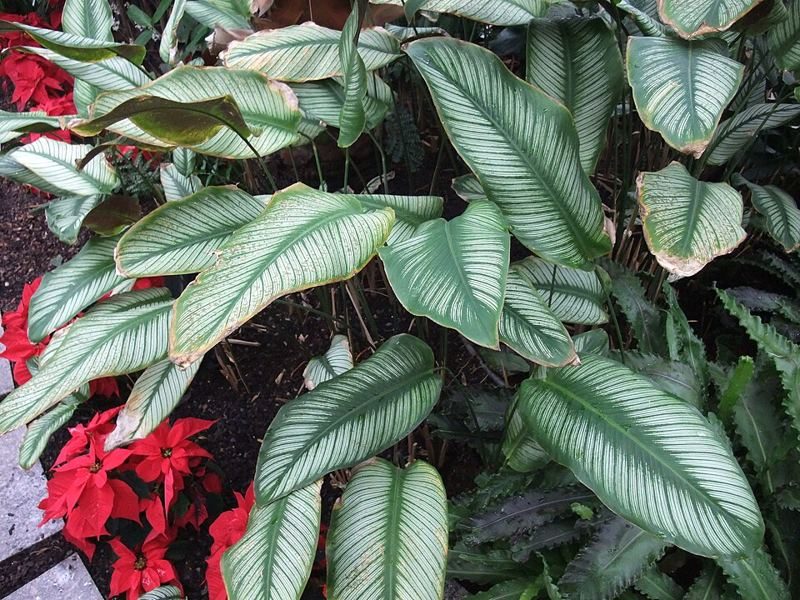
The ASPCA lists Calathea spp. as “Non-Toxic to Dogs, Non-Toxic to Cats, Non-Toxic to Horses.” NC State Extension agrees for the network prayer plant: “non-toxic to pets and humans; however, the sap can cause skin irritation.” Those are the two sources behind this page, and we state their wording exactly, with the limits of what they cover. It supports our main calathea care guide.
What each source says
ASPCA
NC State Extension
What the ASPCA rating covers
The ASPCA entry is for the genus Calathea, listed as Calathea spp. NC State files the plants it profiles under Goeppertia, the genus many calatheas now belong to. So the ASPCA rating is for Calathea as a group, and the NC State statement is about one species. They agree, but they are not the same kind of source: one is a poison-control database, the other a plant profile.
We also looked at the ASPCA page for a plant with “red-veined prayer” in its name. It returned no toxicity line when we fetched it, so we do not cite it. We rely only on the Calathea page.
Because the sources describe the group and one species, we do not claim a rating for every plant sold as a calathea. If your plant has a specific name on its label, you can look it up in the ASPCA database yourself. We have not checked every species.
What “non-toxic” does and does not mean here
“Non-toxic” in the ASPCA’s wording is a statement about toxicity. It is not a promise that eating a plant is harmless in every way, and our sources do not say anything about stomach upset, choking or other effects from a pet eating leaves. They are silent, so we say nothing. The only caveat in our sources is NC State’s note about the sap and skin irritation.
For the same reason we do not use the phrase “pet safe” as a blanket label. We say what the ASPCA says: non-toxic to dogs and cats.
The sap and skin
NC State says the network prayer plant’s sap “can cause skin irritation.” It does not say whether this affects pets or people, and it gives no advice on handling. For a pet, that means a plant that is listed as non-toxic can still be an irritant on contact, according to one species profile. Our sources do not confirm the same for other calatheas, but a careful owner would treat it as a reason to keep the plant tidy and to wash hands after handling it. That precaution is ordinary practice, not a source’s instruction.
General safe steps
These steps follow from the sources and from ordinary good practice. They are not treatment advice.
- Keep the plant out of reach anyway. A non-toxic rating is not an invitation to be eaten.
- Know which plant you have. The ASPCA entry covers Calathea. If your plant is something else sold as a prayer plant, check the name on the label before you rely on this rating.
- Watch your pet after any chewing. If your pet chews a leaf and seems unwell, or you are unsure what it ate, contact your veterinarian or the ASPCA Animal Poison Control Center.
- Do not guess at treatment. Our sources give none. Your vet or the ASPCA Animal Poison Control Center can advise.
What our sources do not tell you
We have no cat-only or dog-only study, no symptom list, no dose information and no treatment advice. We cannot say what happens if a pet eats a large amount of leaf, because our sources do not say. We also have not checked every Calathea or Goeppertia species individually. For care, see the calathea care guide, including the light guide.
Frequently asked questions
Is calathea toxic to cats?
The ASPCA's toxic and non-toxic plant list says Calathea spp. is non-toxic to cats. It also lists it as non-toxic to dogs and horses.
Is calathea toxic to dogs?
The ASPCA lists Calathea spp. as non-toxic to dogs. NC State says the network prayer plant is non-toxic to pets and humans.
Can the sap of a calathea irritate skin?
NC State says the network prayer plant is non-toxic to pets and humans but that the sap can cause skin irritation.
What should I do if my pet eats a calathea?
Our sources do not give a procedure. Contact your veterinarian or the ASPCA Animal Poison Control Center if your pet shows signs or you are unsure what was eaten.
Sources
- Toxic and Non-toxic Plants: Calathea, ASPCA
- Goeppertia kegeljanii (network prayer plant), NC State Extension Plant Toolbox