

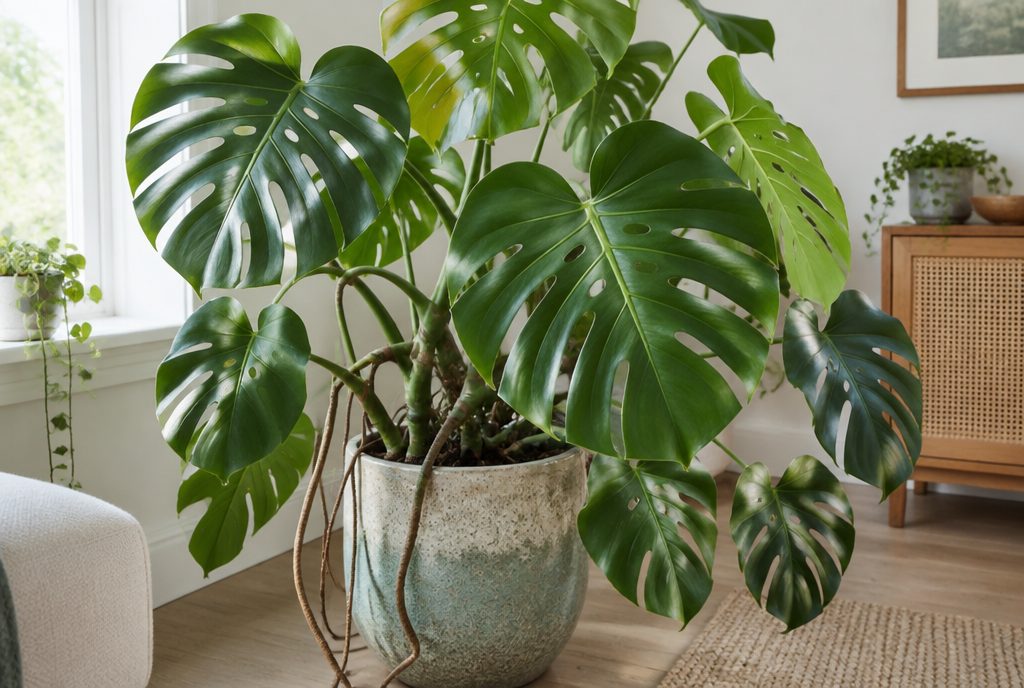
Yes. The ASPCA lists the Swiss cheese plant (Monstera deliciosa) as “Toxic to Dogs, Toxic to Cats,” and names insoluble calcium oxalates as the toxic principle. Penn State Extension says all parts of the plant are toxic to humans and pets if ingested, apart from the fully ripe fruit. The ASPCA entry lists oral irritation and drooling among the signs. This page gives each source’s wording and the general safe steps. It supports our monstera care guide.
What each source says
ASPCA
Penn State Extension
The two sources agree. The ASPCA entry is species-specific and gives separate lines for dogs and cats. Penn State is a houseplant care guide that makes a broader statement about people and pets.
What the sources say about the toxic principle
The ASPCA names the toxic principle as insoluble calcium oxalates. Our sources do not explain what that means for a pet beyond the signs the ASPCA entry lists, which are oral irritation and drooling. We do not add signs from other plants or from sources we have not checked. If you want to know how severe a reaction can be, ask your veterinarian or the ASPCA Animal Poison Control Center.
Which parts and which pets
- Leaves, stems and the rest of the plant: toxic if ingested (Penn State: “all parts”).
- Ripe fruit: the one exception Penn State makes, and it is “rarely seen in a houseplant.”
- Dogs and cats: both listed as toxic by the ASPCA.
- Other animals: our sources do not cover birds, rabbits or other pets, so we say nothing about them.
The ripe-fruit exception is Penn State’s statement, and it comes with the note that the fruit is rarely seen indoors. We would not treat it as a reason to offer any part of the plant to a pet.
General safe steps
These steps follow from the sources’ warnings and from ordinary good practice. They are not treatment advice.
- Keep the plant out of reach. A monstera grows 6 to 8 feet indoors (NC State, Penn State) and trails aerial roots, so check that no leaf or root is within a pet’s reach.
- Pick up fallen leaves and trimmings. Cut stems and leaves are still plant material. Our cuttings guide mentions keeping them away from pets.
- Know who to call. If a pet chews or eats any part, contact your veterinarian or the ASPCA Animal Poison Control Center.
- Give them the plant name. Tell them it is Monstera deliciosa, also called Swiss cheese plant, and how much you think was eaten.
How this compares with other plants
The ASPCA rates some foliage plants non-toxic: it lists Calathea spp. as non-toxic to dogs and cats, and our calathea pet-safety guide shows the wording. For the ZZ plant, NC State says medium toxicity and Clemson says not pet safe, and there is no ASPCA species page (see the ZZ plant pet-safety guide). The monstera is clear in the ASPCA database, which is why we show it as toxic on the care card.
What our sources do not tell you
We have no dose information, no treatment advice and no timeline for signs. We have no source for pets other than dogs and cats. We do not say how much leaf is dangerous because the sources do not. For care, see the monstera care guide.
Frequently asked questions
Is monstera toxic to cats?
Yes. The ASPCA lists the Swiss cheese plant (Monstera deliciosa) as toxic to dogs and toxic to cats. The toxic principle it names is insoluble calcium oxalates.
Is monstera toxic to dogs?
Yes. The same ASPCA entry says toxic to dogs. Penn State Extension says all parts of the monstera are toxic to humans and pets if ingested.
Is any part of a monstera safe?
Penn State says all parts are toxic to humans and pets if ingested, with the exception of the fully ripe fruit, which is rarely seen on a houseplant. We do not suggest feeding any part to a pet.
What should I do if my pet eats a monstera?
Contact your veterinarian or the ASPCA Animal Poison Control Center. Our sources give no home treatment.
Sources
- Toxic and Non-toxic Plants: Swiss Cheese Plant, ASPCA
- Monstera as a Houseplant, Penn State Extension