

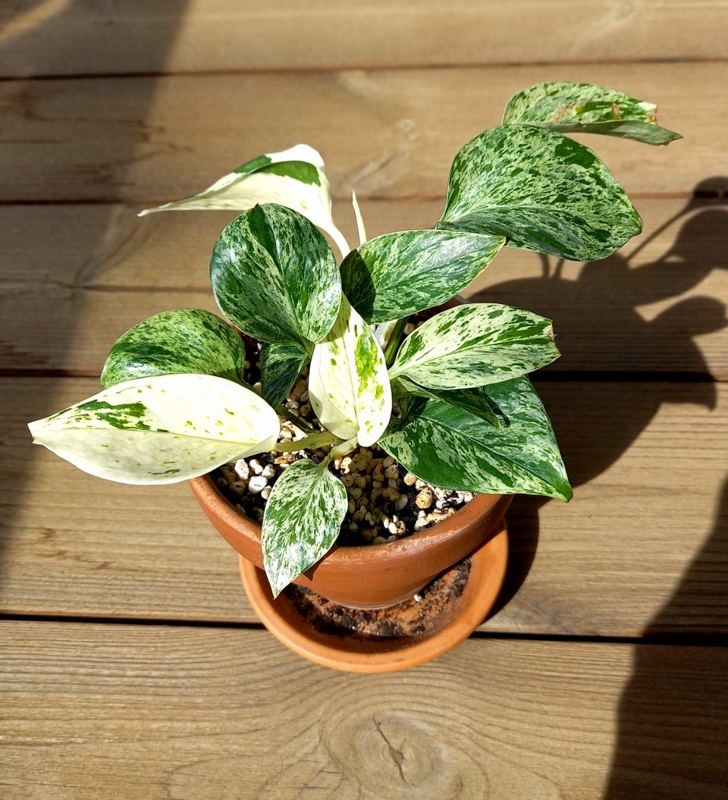
Pothos is a trailing vine that grows well indoors in bright, indirect light, tolerates lower light, and prefers soil that dries between waterings. Clemson says it is generally pest-free indoors, and Penn State says it is better kept too dry than too wet. Cuttings with at least one node root easily, so it is also one of the cheapest houseplants to multiply. The ASPCA lists it, under the name devil’s ivy, as toxic to dogs and cats.
Light
Clemson says pothos prefer bright, indirect light but will tolerate lower lighting conditions. Penn State is firmer about direct sun: it says direct sun will lead to the yellowing of leaves. Wisconsin says it does not tolerate much direct sunlight, and that plants need to be kept out of drafts.
Light also affects the leaves’ patterns. Clemson says lower light may cause variegated varieties to lose some of their coloring, and NC State says low light can cause loss of variegation. If you grow a marbled or cream-edged type and it is turning plain green, look for a brighter spot that is still out of direct sun.
Water
Clemson says soil should be allowed to dry between each watering, and to water thoroughly so that water reaches all the roots. Wisconsin says water only when the soil surface is dry. Penn State says pothos is better kept too dry than too wet. The three agree on the pattern: let it dry, then soak it, and do not keep it constantly wet.
Clemson says root rot is a common houseplant issue caused by overwatering or poorly draining soil, and NC State says root rot and blackening of the leaf margins can occur with overwatering.
Humidity and temperature
Humidity
Temperature
Drafts and vents
Soil and repotting
Clemson says pothos should be potted in an airy, well-draining soil mix. Penn State says to use a good-quality soilless potting mix that drains well. Wisconsin asks for a well-aerated growing medium.
Repotting frequency varies slightly. Clemson says most plants can be repotted once every year or two, depending on their growth rate. Penn State says pothos appreciates being potted up annually in the spring into a slightly larger container.
Feeding
The sources split. NC State and Wisconsin say to fertilize every other month, except when the plant is dormant in winter. Clemson says a houseplant fertilizer every other month during spring and summer. Penn State is more generous: it says to fertilize with a balanced houseplant food monthly through the winter and every two weeks throughout the rest of the year. The every-other-month schedule has the most support.
Propagation
Clemson says stem cuttings can be easily rooted in soil or water but should have at least one node to root properly. Wisconsin says the vines root in water or vermiculite within 3 to 4 weeks, and Penn State says propagation is more successful during the growing season from spring through summer. Penn State also says layering can be successful and that you can propagate through root division during the annual repotting. Our pothos propagation guide covers each.
Size and growth
As a houseplant, the leaves are typically a few inches long and stay whole (Clemson). Penn State says the stems can reach 8 to 10 feet or longer as a vine. NC State says trailing and climbing vines can grow as long as 40 feet in the wild, and Wisconsin says up to 65 feet long. Those larger figures are for mature vines, not what you will see on a shelf.
Wisconsin says pothos does not flower in cultivation, since only the juvenile phase is grown as a houseplant.
Choosing a spot
Pick the spot by light and air. Bright, indirect light suits pothos (Clemson), and Penn State and Wisconsin say to keep it out of direct sun. Clemson’s warning about air is easy to overlook: hot and cold air from vents can dry out the leaves and damage plant cells, so avoid placing the pot over a heating vent or beside a window that gets very cold in winter. Wisconsin adds that plants need to be kept out of drafts. Because pothos trails, a shelf, a high cabinet or a hanging pot gives the vines room, but our sources do not say how to train or support it.
Reading the leaves
Yellow leaves
Scorch and dry tips
Black margins
Fading variegation
The same symptom can have opposite causes, such as too much or too little water, so check the soil and the pot before changing anything.
Common pothos problems
Clemson says pothos are generally pest-free when kept indoors, but may be affected by common houseplant pests such as spider mites and mealybugs. Wisconsin says the most common insect pests infesting pothos in homes are mealybugs and scale, with spider mites occasionally. Clemson also lists leaf scorch and tip dieback, often caused by low humidity or intense light, and Wisconsin says blackening of the leaf margins or tips can be caused by overwatering, inadequate watering or excess fertilizer. Our sources give no treatments.
Pets
The ASPCA lists pothos, under the common name devil’s ivy, as toxic to dogs and toxic to cats. Clemson says all parts of a pothos are mildly toxic if ingested. Our pothos pet safety page gives the exact wording, the toxic principle and the clinical signs the ASPCA lists.
A simple routine
- Bright, indirect light. Out of direct sun, which yellows leaves (Penn State). Brighter light helps variegated types keep their color (Clemson).
- Water when the surface is dry. Then water thoroughly so the water reaches all the roots (Clemson, Wisconsin).
- Feed every other month in spring and summer. Clemson and NC State both give that schedule.
- Repot every year or two. Into a slightly larger pot (Clemson, Penn State).
- Take cuttings when it gets leggy. Stem cuttings with at least one node root in water or soil (Clemson).
What our sources do not tell you
Our sources give no USDA zone, no pot size rule beyond a slightly larger container, and no treatment for pests. They also do not say which cultivars are hardiest. If a detail matters, ask your state extension office.
Grow these next
If you like a trailing plant, the spider plant sends out plantlets on long stems and prefers a similar bright, indirect spot. For something that forgives longer gaps between waterings, try the snake plant.
More houseplant care guides
For side-by-side comparisons across all our plants, see how often to water houseplants, repotting houseplants, low-light plants and which houseplants are safe for pets.
Frequently asked questions
How often should I water a pothos?
Clemson says to let the soil dry between waterings and then water thoroughly. Wisconsin says to water only when the soil surface is dry, and Penn State says pothos is better kept too dry than too wet. None gives a fixed number of days.
How much light does a pothos need?
Clemson says bright, indirect light, though it tolerates lower light. Penn State says direct sun leads to yellow leaves, and Wisconsin says it does not tolerate much direct sun. Clemson and NC State say low light may cause variegated types to lose some of their coloring.
Is pothos toxic to cats and dogs?
The ASPCA lists pothos, under its common name devil's ivy, as toxic to dogs and toxic to cats. Clemson says all parts are mildly toxic if ingested. Our pet safety page has the exact wording.
How do I propagate pothos?
Clemson says stem cuttings root easily in soil or water but need at least one node. Penn State says it works best from spring through summer, and Wisconsin says rooted vines in water or vermiculite take 3 to 4 weeks.
Why are my pothos leaves yellow?
Clemson says yellow leaves are often caused by overwatering or low fertility, and Penn State says direct sun leads to yellowing of leaves. Our yellow leaves guide covers each.
Sources
- How to Grow Pothos Indoors: Epipremnum spp. Care, Cultivars and Common Problems, Clemson Cooperative Extension, Home and Garden Information Center
- Pothos (Epipremnum aureum), University of Wisconsin-Madison Division of Extension, Horticulture
- Pothos as a Houseplant, Penn State Extension
- Epipremnum aureum, NC State Extension Plant Toolbox
- Devil's Ivy, ASPCA Animal Poison Control
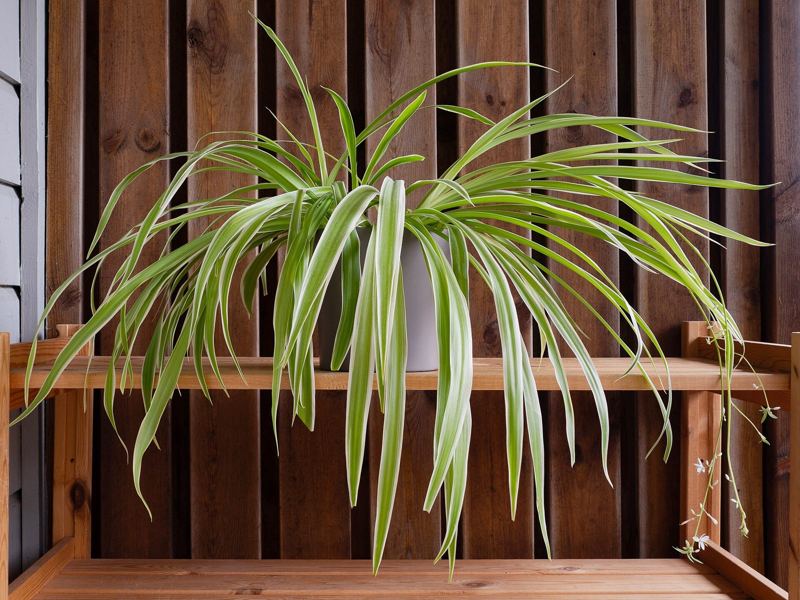 Spider Plant
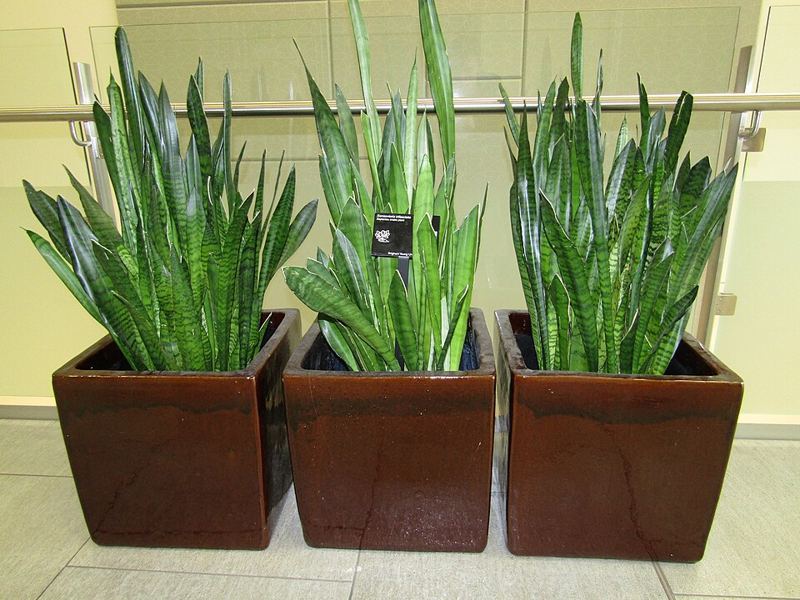 Snake Plant