

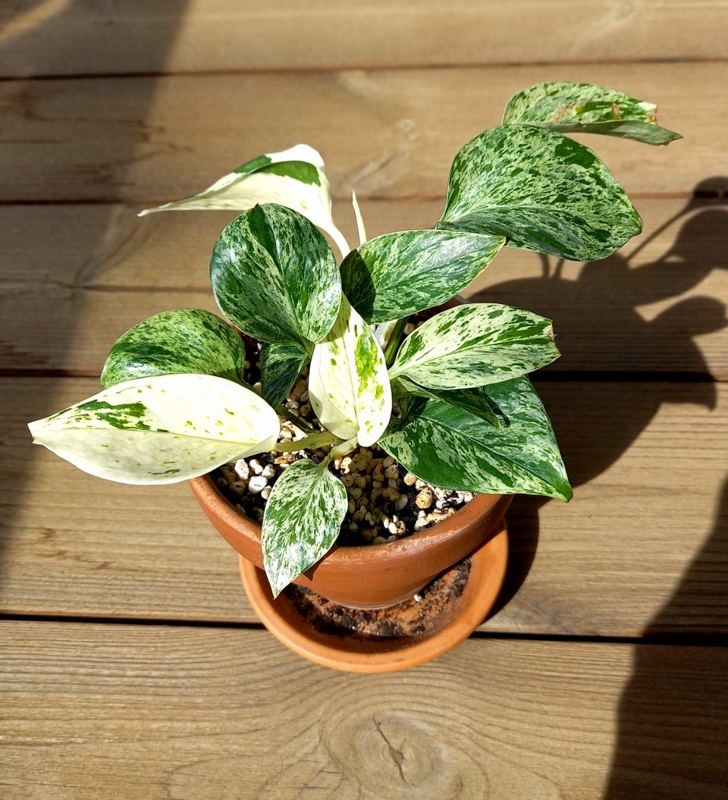
The ASPCA lists pothos as toxic to dogs and toxic to cats, and also toxic to horses. It files the plant under its common name, devil’s ivy. It names insoluble calcium oxalates as the toxic principle and lists oral irritation, drooling and vomiting among the clinical signs. Clemson and Wisconsin Extension both say the plant is toxic if eaten. This page sits under our pothos care guide and reports what these sources say.
What the ASPCA says
The ASPCA’s plant page, titled Devil’s Ivy, gives the status in one line:
Toxicity: Toxic to Dogs, Toxic to Cats, Toxic to Horses
Beyond the status, the page lists:
- Toxic principle: insoluble calcium oxalates.
- Clinical signs: Oral irritation, pain and swelling of mouth, tongue and lips, excessive drooling, vomiting (not horses), difficulty swallowing.
Pothos is widely sold under several names, and devil’s ivy is one of them. We only fetched the Devil’s Ivy page, so we have not cross-checked other ASPCA entries. You can read the entry on the ASPCA devil’s ivy page.
What the extension sources add
Two of the extension sources we use for pothos care mention toxicity. Clemson Extension says all parts of a pothos are mildly toxic if ingested. Wisconsin Extension says pothos is toxic if ingested in large quantities because it contains calcium oxalate. Both name the plant as toxic and Wisconsin names the same compound the ASPCA does.
The wording differs from the ASPCA. Clemson says “mildly toxic” and Wisconsin says “in large quantities,” while the ASPCA gives a status without a qualifier in the line we quote. We report each as written and do not try to rank them. Penn State and NC State did not discuss pet toxicity in the passages we recorded.
Dogs, cats and horses
The ASPCA status line covers dogs, cats and horses, and the clinical signs include the qualifier (not horses) after vomiting. So vomiting is listed for dogs and cats but not horses, while the mouth and throat signs have no such qualifier. For a household with cats and dogs, the ASPCA treats both the same, and so do we. The signs listed are all around the mouth and digestive tract, which is consistent with irritation from the calcium oxalate crystals, though we are reading that from the list and the ASPCA does not say so in the text we recorded.
What the sources do not say
None of the sources, in the passages we recorded, gives a dose, a time frame or a way to predict how a particular animal will react. They do not say how severe a reaction will be in a cat versus a dog. We will not fill that gap, and we are not vets.
We also do not call pothos “pet safe.” The ASPCA says it is toxic, and we only use that phrase when ASPCA or an extension source states it.
What to do in practice
- Keep it out of reach. Pothos trails, so a vine can hang within a pet’s reach. If your cat or dog chews houseplants, put it where the pet cannot get to it, or choose a different plant. This is common-sense advice rather than a claim from our sources.
- Know the plant's name. If a pet does eat some, tell the vet or poison line it was pothos, also called devil’s ivy, and what signs you have seen.
- Call for help rather than waiting. Contact your veterinarian or the ASPCA Animal Poison Control Center. They can advise on what to do for your particular animal.
Other plants we cover
Pet status differs from plant to plant, and we only report what the ASPCA or an extension source states. The ASPCA also lists the aloe vera and peace lily as toxic, and our snake plant page covers another. The spider plant page covers one where two ASPCA pages disagree. Back to the pothos care guide.
Frequently asked questions
Is pothos toxic to cats?
Yes, according to the ASPCA, which lists pothos under the name devil's ivy as toxic to cats. Its plant page reads: Toxicity: Toxic to Dogs, Toxic to Cats, Toxic to Horses.
Is pothos toxic to dogs?
Yes, according to the ASPCA, which lists it as toxic to dogs as well as cats and horses.
What makes pothos toxic?
The ASPCA names insoluble calcium oxalates. Wisconsin Extension says pothos is toxic if ingested in large quantities because it contains calcium oxalate.
What signs does the ASPCA list?
The ASPCA lists oral irritation, pain and swelling of the mouth, tongue and lips, excessive drooling, vomiting (not horses) and difficulty swallowing.
What should I do if my pet chews pothos?
Call your veterinarian or the ASPCA Animal Poison Control Center. This is general safe advice, and a professional can say what your pet needs.
Sources
- Devil's Ivy, ASPCA Animal Poison Control
- How to Grow Pothos Indoors: Epipremnum spp. Care, Cultivars and Common Problems, Clemson Cooperative Extension, Home and Garden Information Center
- Pothos (Epipremnum aureum), University of Wisconsin-Madison Division of Extension, Horticulture