

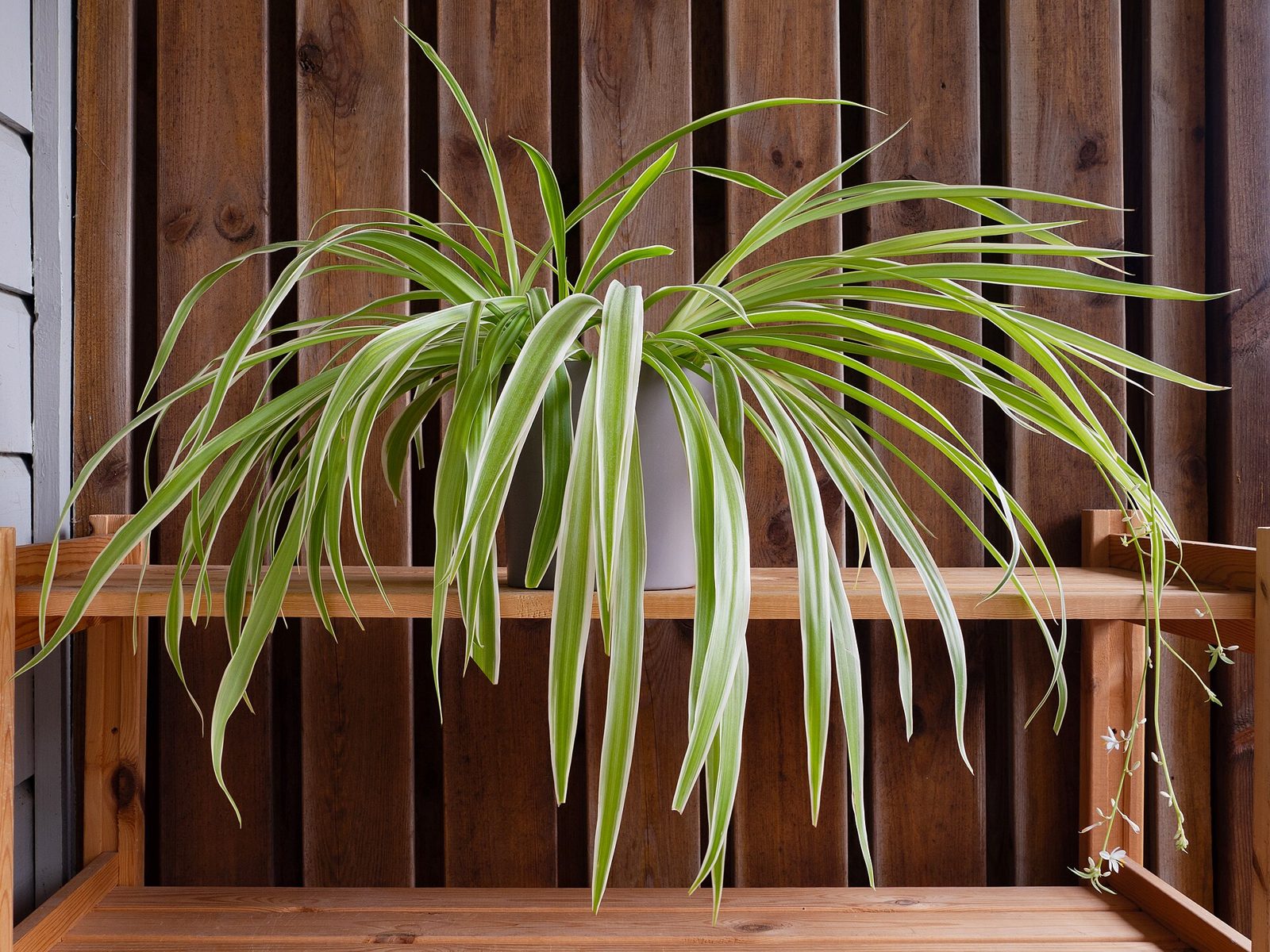
The ASPCA gives two different answers for the spider plant: its plant page says non-toxic to dogs and cats, and its 2019 houseplant article says mildly toxic to dogs and cats. We cannot reconcile the two, so we report both and do not call the spider plant “pet safe.” This page sits under our spider plant care guide.
What the ASPCA plant page says
On the spider plant page of its toxic and non-toxic plants database, the ASPCA states:
Non-Toxicity: Non-Toxic to Dogs, Non-Toxic to Cats
The page does not list a toxic principle. You can read it yourself on the ASPCA spider plant page.
What the ASPCA article says
The ASPCA Animal Poison Control Center also published an article, Is That Houseplant Safe for Your Pets?, which lists common houseplants that could be problematic. Under “Mildly Toxic Plants” it names the fiddle leaf fig and the spider plant (Chlorophytum comosum) and says:
Both the Fiddle Leaf Fig and Spider Plant are mildly toxic to dogs and cats. With small ingestions of the plant material, there is a risk for mild gastrointestinal irritation. The most common signs observed are vomiting and diarrhea.
Those are the article’s words as we read them. It is dated 2019 and does not say whether it replaces the plant page.
Why this matters
The same organization is telling you two things. The plant page is a database entry classing the plant as non-toxic. The article, from the Animal Poison Control Center, describes a mild risk of stomach upset if a pet eats some. We do not know which reflects the ASPCA’s current view, and we will not guess. The article’s description of the harm is mild and gastrointestinal.
For that reason, we do not say the spider plant is non-toxic, safe or pet safe. We say what each ASPCA page says and name it.
Our approach
We treat this as an open question rather than choosing a side. Both statements come from the ASPCA, so neither is a fringe view, and we cannot tell which is current. Until the ASPCA reconciles the two, the cautious reading is the second one, and the practical steps below follow it. This is our editorial judgment, not a claim from the ASPCA.
What the extension sources say
The extension sources we use for spider plant care are the University of Wisconsin, NC State, Clemson and UF/IFAS. None had a pet toxicity passage in what we recorded, so they cannot settle the question.
What the sources do not say
Neither ASPCA page, as we recorded them, gives a dose, a timeline or a way to predict how a particular animal will react. They also do not speak to fertilizer, pesticides or other products used on the plant. A spider plant you have treated with a product is a separate question for the product label and your vet.
What to do in practice
- Keep it out of reach. If your cat or dog chews houseplants, put the spider plant where the pet cannot get to it, or choose a different plant. This is common-sense advice rather than a claim from our sources, and it makes sense given the article’s mild-toxicity statement.
- Know the plant's name. If a pet does eat some, tell the vet or poison line it was a spider plant, Chlorophytum comosum.
- Call for help if your pet seems unwell. Contact your veterinarian or the ASPCA Animal Poison Control Center. They can advise on what to do for your particular animal.
Other plants we cover
Pet status differs from one houseplant to the next. The ASPCA lists the snake plant, peace lily and pothos as toxic to dogs and cats, and our pages report its exact wording for each. Back to the spider plant care guide for light, water and plantlets.
Frequently asked questions
Is a spider plant toxic to cats?
The ASPCA says two different things. Its plant page reads: Non-Toxicity: Non-Toxic to Dogs, Non-Toxic to Cats. Its 2019 article on houseplants says the spider plant is mildly toxic to dogs and cats. We report both and do not pick one.
Is a spider plant toxic to dogs?
Same answer as for cats: the ASPCA plant page lists it as non-toxic to dogs, while the ASPCA article Is That Houseplant Safe for Your Pets? says it is mildly toxic to dogs and cats.
What does the ASPCA say could happen if a pet eats it?
The 2019 ASPCA article says small ingestions carry a risk of mild gastrointestinal irritation, and that the most common signs observed are vomiting and diarrhea.
What should I do if my pet chews a spider plant?
Call your veterinarian or the ASPCA Animal Poison Control Center. This is general safe advice, and a professional can say what your pet needs.
Sources
- Spider Plant, ASPCA Animal Poison Control
- Is That Houseplant Safe for Your Pets?, ASPCA