

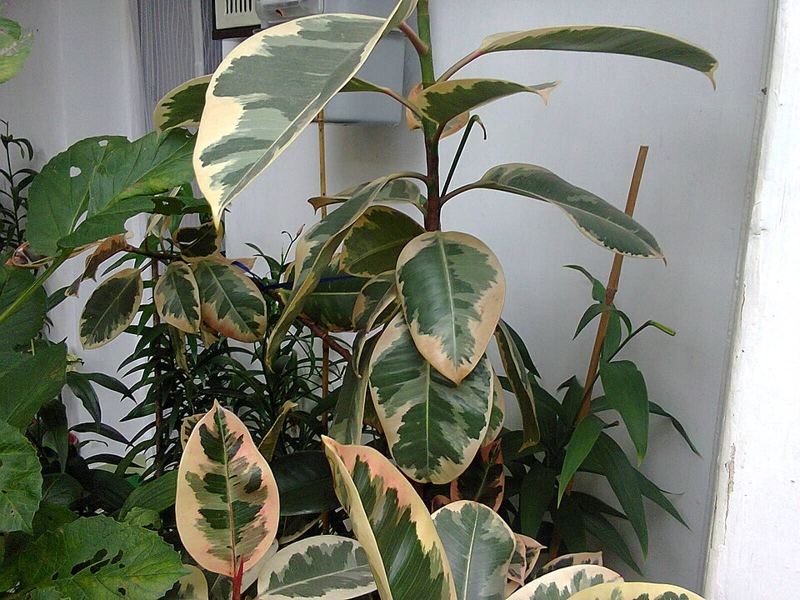
The rubber plant (Ficus elastica) is a large-leaved houseplant that wants bright indirect light, regular but not excessive watering, a soil-based potting mix and a spot above 55°F with no cold drafts (NC State). It is usually kept to 2 to 10 feet indoors and does best when left in one place. The sources we use disagree on exactly how bright its light should be, and they say little about feeding or repotting, so this guide marks every gap rather than filling it with guesses.
Indoors or outdoors?
Our sources treat the rubber plant as a houseplant, and NC State says “when grown indoors” it is usually kept to 2 to 10 feet with training or support as needed. In the wild it can reach 100 feet, which is why a young plant bought at 2 feet can outgrow a room. NC State also says it rarely flowers indoors. None of our sources gives a USDA zone, so we do not either. Penn State’s page on ficus diseases gives the one cold number for outdoor exposure: maintain temperatures above 40°F, and it describes cold injury as large brown blotches on mature leaves. NC State’s own figure for a happy plant is higher, above 55°F, so treat 40°F as a survival floor and 55°F as the comfort floor.
Light
This is where the sources split. NC State says to plant indoors “under bright indirect light or partial shade and protection from the afternoon sun.” Its humidity line adds that rubber plant “does best in partial shade or low light,” a looser phrase than its own indoor advice. Texas A&M says “Medium light or some daily sun.”
The two overlap on a window that is bright but not harsh. They part ways at the edges: NC State wants the afternoon sun kept off the leaves, while Texas A&M allows some daily sun. A sensible reading is to put the plant a few feet from an east or west window, or behind a sheer curtain in a south window, and to move it if the leaves look bleached or scorched. That placement is our reading of the two sources, not a rule either one states. Our rubber plant light guide lays the two side by side.
Water
NC State says to “water regularly, but avoid overwatering” and to “reduce watering altogether when the plant is dormant (from fall to late winter).” That is the whole sourced instruction. No source gives a number of days or a depth of dry soil, so check the pot rather than the calendar: if the mix is still wet, wait. Overwatering is the one error NC State names, and it says overwatering can cause loss of leaves.
Humidity and temperature
Humidity
Minimum temperature
Drafts
Moving it
Soil and repotting
NC State says to grow it indoors in a soil-based potting mix. It gives no pH, no mix recipe and no pot size. Our sources do not say when to repot or how large a pot to move up to, so we cannot give you a schedule. What they do tell us about size is useful for planning: a plant that can be trained to 10 feet will eventually need a heavy, stable container. Our containers and repotting guide covers what is and is not sourced. A related ficus, the fiddle-leaf fig, has repotting advice in the sources, and it is the closest sourced comparison.
Feeding
None of our rubber plant sources gives a fertilizer type, rate or schedule. NC State’s watering note about dormancy from fall to late winter implies slower growth then, but the page does not connect that to feeding, so we will not either. If you fertilize, follow the label on your product.
Pruning and training
NC State says to prune the main branches to encourage a bushier habit, or leave them unpruned to encourage “a tall, narrow, more tree-like form.” It also says the plant can be kept to 2 to 10 feet “with training or support as needed.” None of our sources describes how to make the cut, so check the plant for the growth habit you want before you prune.
Propagation
NC State lists layering, root cuttings and seed. Texas A&M lists air layering and cuttings. Neither gives steps, rooting medium, temperature or timing. Our propagation guide goes through what the sources do say and where the gaps are.
Pets
We did not find a pet-toxicity rating for Ficus elastica. NC State and Texas A&M give no pet information for it, and the ASPCA’s toxic-plant list has no entry for this species in the pages we checked. One ASPCA page is titled “Indian Rubber Plant,” but it describes Ficus benjamina, a different plant, so it does not tell you anything about this one. The care card above says “Not stated by our sources” for that reason. If a pet chews or eats the plant, contact your veterinarian or the ASPCA Animal Poison Control Center.
Common rubber plant problems
NC State’s problem list is short. Brown leaf edges, root rot and drooping have no entry in the pages we checked, so we do not diagnose them here.
Where the sources agree and differ
| Topic | NC State | Texas A&M | Penn State |
|---|---|---|---|
| Light | Bright indirect light or partial shade, no afternoon sun | Medium light or some daily sun | Not covered |
| Water | Regularly, avoid overwatering, less when dormant | Not covered | Not covered |
| Minimum temperature | Above 55°F | Not covered | Above 40°F |
| Propagation | Layering, root cutting, seed | Air layering and cuttings | Not covered |
| Pets | Not covered | Not covered | Not covered |
Read across the row for light and you can see why we describe the sources as “split.” Read down the pets row and you can see why the care card says “Not stated by our sources.”
What our sources do not tell you
Our three sources give no fertilizer rate, no repotting schedule, no cutting steps, no cause of brown leaf edges and no pet-toxicity rating. They also give no humidity percentage and no USDA zone. Missouri Botanical Garden’s plant page was not available to us. If any of these matters to your plant, check your state extension office or a veterinarian for the pet question.
Grow these next
The fiddle-leaf fig is another Ficus with large leaves, and our guide to its indoor light needs shows a similar disagreement among sources. For something that wants more support, try the monstera, which needs a sturdy pole to climb.
More houseplant care guides
For side-by-side comparisons across all our plants, see how often to water houseplants, repotting houseplants, low-light plants and which houseplants are safe for pets.
Frequently asked questions
How much light does a rubber plant need?
Our two main sources disagree. NC State says bright indirect light or partial shade with protection from afternoon sun. Texas A&M says medium light or some daily sun. Start with bright indirect light and keep it out of hot afternoon sun.
How often should I water a rubber plant?
No source gives a schedule. NC State says to water regularly but avoid overwatering, and to cut back watering when the plant is dormant, from fall to late winter. NC State also says overwatering can cause leaf loss.
Why is my rubber plant dropping leaves?
NC State says overwatering, temperature drops or cold drafts can cause loss of leaves. It also says it is normal for some bottom leaves to turn yellow and drop.
Is a rubber plant toxic to cats and dogs?
Our sources do not say. NC State and Texas A&M give no pet information for Ficus elastica, and we found no ASPCA entry for it. The ASPCA page titled Indian Rubber Plant is for Ficus benjamina, a different plant. Ask your vet or the ASPCA Animal Poison Control Center.
How big does a rubber plant get indoors?
NC State says it is usually kept to 2 to 10 feet with training or support as needed, and that it can reach 100 feet in the wild. Pruning the main branches makes it bushier; leaving them makes it tall and narrow.
Sources
- Ficus elastica (Rubber Plant), NC State Extension Plant Toolbox
- Rubber Plant: A Reference Guide to Plant Care, Handling and Merchandising, Texas A&M AgriLife Extension (Aggie Horticulture)
- Ficus Diseases, Penn State Extension
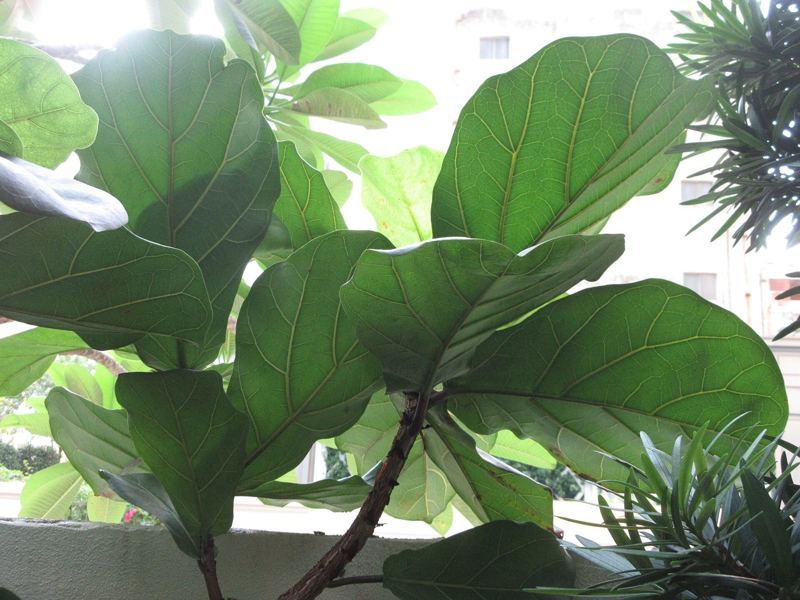 Fiddle Leaf Fig
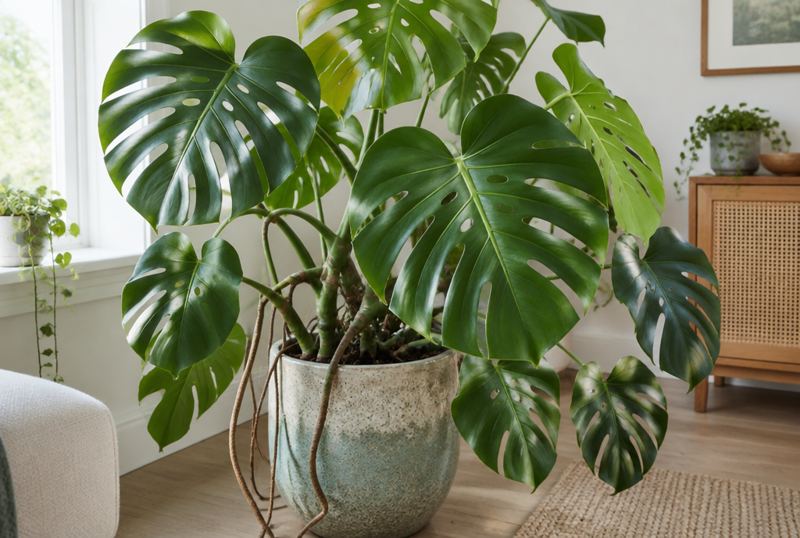 Monstera