

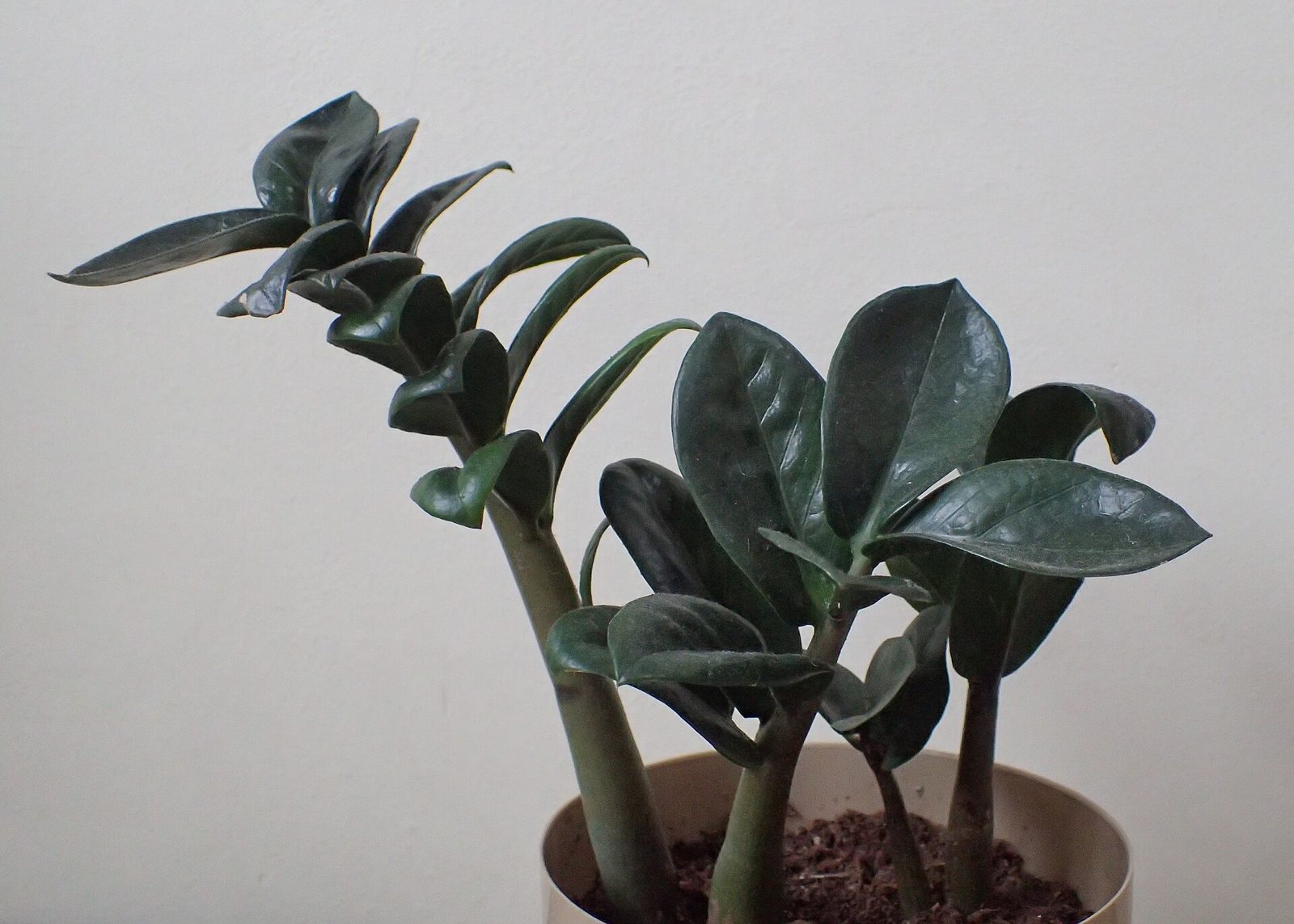
Repotting is plant-specific in our sources: some want a bigger pot every year or two, others do best slightly root-bound, and for three of our 10 plants the sources give no repotting guidance at all. Spider plant is the frequent one (yearly while young, per UF/IFAS), aloe every two years, snake plant fresh media about every 5 years, and peace lily and fiddle leaf fig tolerate being pot-bound. This guide gives each plant’s wording and mix, and flags where a source is one person’s routine rather than a research rate.
When to repot, by plant
| Plant | When | Source |
|---|---|---|
| Spider plant | Once a year while young, then every other year once mature (UF/IFAS); divide and repot before the roots crack the container (Clemson) | UF/IFAS, Clemson |
| Pothos | About once every year or two (Clemson); annually in spring into a slightly larger container (Penn State) | Clemson, Penn State |
| Aloe vera | Every two years into a slightly larger container (Penn State); as needed to refresh the media or give room to grow (UF/IFAS) | Penn State, UF/IFAS |
| Snake plant | Fresh potting media about every 5 years (Penn State); into a slightly larger pot every few years as the roots fill it (UGA) | Penn State, UGA |
| Peace lily | When roots grow through the drainage holes or circle the soil surface | Clemson |
| Monstera | Prune or re-pot if needed in spring (NC State); container plants need frequent repotting (Wisconsin) | NC State, Wisconsin |
| Fiddle leaf fig | Tolerates being potbound (Penn State columnist); cut circling roots before planting (UF/IFAS EDIS) | Penn State, UF/IFAS EDIS |
| ZZ plant | No repotting guidance in our sources | none |
| Calathea | No repotting guidance in our sources | none |
| Rubber plant | No repotting guidance in our sources | none |
Where the sources differ
Spider plant. UF/IFAS gives a schedule, once a year while young then every other year. Wisconsin says spider plants “need frequent repotting to do their best” because they grow quickly and their roots crowd easily, and Clemson says to repot before the roots expand enough to crack the container. The three agree that this plant outgrows its pot, and differ on how often.
Snake plant. Penn State’s “every 5 years or so” is about fresh media. UGA’s “every few years” is about moving to a larger pot, with the note that the roots “have been known to bust pots.” These may describe different jobs, and our sources do not say.
Monstera. NC State says repot if needed in spring. Wisconsin says container-grown plants need frequent repotting. Our sources do not define “frequent.”
Fiddle leaf fig. The Penn State source is a Master Gardener column, and our notes record that its repotting and fertilizer remarks are the columnist’s personal routine, not a research rate. The columnist says fiddle leaf figs “love to be potbound but, like all plants, drainage is extremely important.” UF/IFAS EDIS is the research-based note: cut roots circling the container before planting, since these can cause the tree to become unstable as it grows older.
Pot size
The sources are sparse on pot size, and the figures we have are:
- Peace lily: a container just one to two inches larger than the original pot (Clemson). Using too large a pot “may keep the potting mix too wet, leading to root rot.”
- Aloe vera: do not increase the new pot by more than two pot sizes, because too large a container can hold too much moisture that could lead to root rot (UF/IFAS).
- Pothos: a “slightly larger container” (Penn State).
- Snake plant: a “slightly larger pot” (UGA), and UGA says to choose a heavy-weight pot to prevent taller plants from toppling over.
The shared point is that a pot that is too big stays wet, which links back to watering. Our watering guide has the rules this affects. Our sources give no pot-size figure for spider plant, monstera, fiddle leaf fig, ZZ plant, calathea or rubber plant.
What to put in the pot
| Plant | Mix per sources | Source |
|---|---|---|
| Snake plant | Cactus potting mix or one with perlite; quick-draining, well-drained media | Penn State, UGA, NC State |
| Aloe vera | Coarse, well-draining cactus or succulent mix, or one part potting soil, one part sand, one part perlite or lava rock; pot with several drainage holes (clay is best, NC State) | Penn State, NC State |
| Peace lily | Almost any well-drained potting mix (Clemson); rich, organic peat or bark-based bagged potting soil (UF/IFAS EDIS) | Clemson, UF/IFAS EDIS |
| Spider plant | General-purpose potting soil, or a soilless medium | Clemson, Wisconsin |
| Pothos | An airy, well-draining soil mix (Clemson); a good quality soilless mix that drains well (Penn State) | Clemson, Penn State |
| Monstera | Well-draining soilless potting mix rich in organic matter, neutral pH 6.0 to 8.0 | Penn State |
| Calathea | Moist, well-drained potting mix with perlite or vermiculite added for drainage | NC State |
| ZZ plant | Any well-drained peat- or bark-based potting soil (UF/IFAS EDIS); well-drained medium (Illinois Extension) | UF/IFAS EDIS, Illinois |
| Rubber plant | Soil-based potting mix | NC State |
| Fiddle leaf fig | Moist, well-drained, loamy, acidic soil (NC State); well-drained, fast-draining potting soil (Penn State) | NC State, Penn State |
Aloe and snake plant lean to coarse, drying mixes, while peace lily, calathea and monstera lean to mixes that hold some moisture. That grouping is our reading of the table.
Putting it together
These steps are our summary of the sourced points, not a source’s procedure:
- Check why you are repotting. Roots through the drainage holes or circling the surface (peace lily, Clemson), crowded roots (spider plant, snake plant), or a cracked pot are the signs our sources name.
- Choose a pot only a little bigger. One to two inches for peace lily, up to two pot sizes for aloe at most, “slightly larger” for pothos and snake plant.
- Use the mix in the table. Drainage is the common thread, including holes in the pot (NC State for aloe, the Penn State columnist for fiddle leaf fig).
- Cut circling roots on a fiddle leaf fig before planting (UF/IFAS EDIS). Our sources give no root pruning step for other plants.
- Time it. Pothos is repotted in spring (Penn State), and NC State says to repot monstera in spring if needed. Our sources give no season for the others.
What we could not source
Repotting guidance for ZZ plant, calathea and rubber plant is missing from the pages we used, so we do not state a schedule. The same goes for how to loosen a root ball, what to do with roots, and when to water after repotting.
Related guides
Light and water decide how quickly a plant fills its pot. See low light plants and easy houseplants. For each plant’s ASPCA status, see pet safe houseplants.
Frequently asked questions
When should I repot a houseplant?
It depends on the plant. Clemson says repot a peace lily when roots grow through the drainage holes or circle the soil surface. UF/IFAS says spider plant yearly while young, then every other year. Penn State says refresh snake plant media about every 5 years and replant aloe every two years.
How big a pot should I move up to?
Clemson says a pot one to two inches larger for peace lily. UF/IFAS says for aloe not to increase the pot by more than two pot sizes. Both warn that a too-large pot holds too much moisture and can lead to root rot.
What potting mix do I use?
It varies by plant. Penn State suggests a cactus mix or one with perlite for snake plant, and a coarse, well-draining mix for aloe. For monstera it suggests a well-draining soilless mix rich in organic matter, and NC State suggests perlite or vermiculite for calathea.
Do all houseplants need repotting often?
No. Penn State's columnist says fiddle leaf figs love to be potbound, and Clemson says peace lilies like to be slightly pot-bound. Snake plant only needs fresh media about every 5 years per Penn State.
Sources
- Snake plant, a forgiving low-maintenance houseplant, Penn State Extension
- Snake plant, a striking and durable houseplant, University of Georgia Extension
- Peace lily, Clemson Home & Garden Information Center
- Spathiphyllum, EDIS, UF/IFAS EDIS
- Spider plant, Clemson Home & Garden Information Center
- Spider plant, houseplants, UF/IFAS Gardening Solutions
- Spider plant, Chlorophytum comosum, University of Wisconsin-Madison Extension
- Aloe, a hardy houseplant, Penn State Extension
- Aloe vera, Plant Toolbox, NC State Extension
- Aloe vera, UF/IFAS Gardening Solutions
- How to grow pothos indoors, Clemson Home & Garden Information Center
- Pothos as a houseplant, Penn State Extension
- Fiddle leaf fig (Ficus lyrata), Penn State Extension
- Ficus lyrata, fiddle leaf fig, UF/IFAS EDIS
- Monstera deliciosa (Swiss cheese plant), Plant Toolbox, NC State Extension
- Monstera deliciosa, University of Wisconsin-Madison Extension
- Monstera as a houseplant, Penn State Extension
- ZZ plant, EDIS, UF/IFAS EDIS
- ZZ plant, houseplant spotlight, University of Illinois Extension
- Goeppertia kegeljanii (network plant), Plant Toolbox, NC State Extension
- Ficus elastica (rubber plant), Plant Toolbox, NC State Extension