

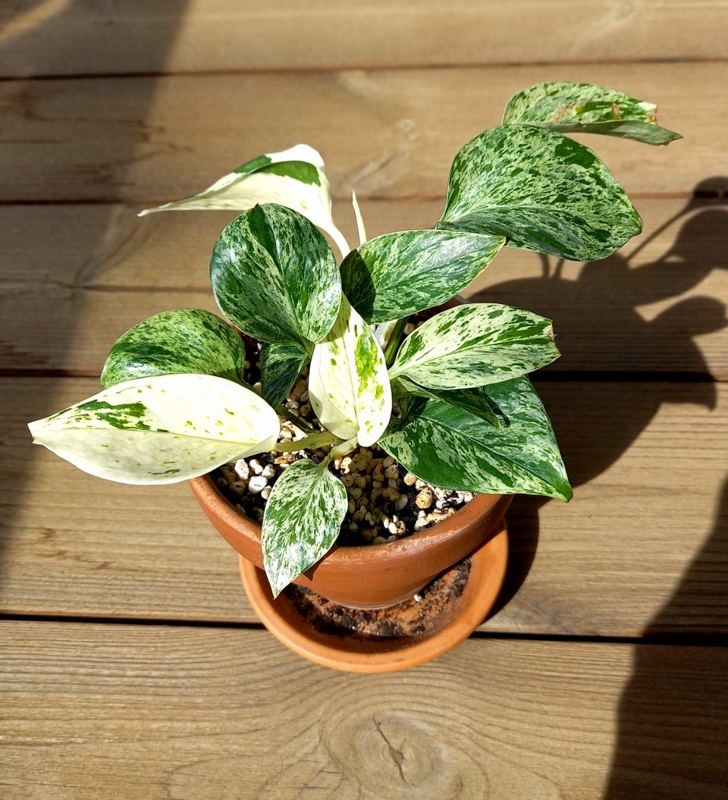
Our sources never rank houseplants by difficulty, so “easy” here is our reading: snake plant, ZZ plant, pothos, spider plant and aloe vera are the ones where the sources use the most forgiving words. They talk about drought tolerance, soil that should dry out between waterings, and tolerance of lower light. The fussier group is calathea, peace lily, fiddle leaf fig, monstera and rubber plant. This guide shows the wording behind each call, so you can disagree with us.
How we judged “easy”
We looked for three things in each plant’s sources:
- Does it tolerate neglected watering? Drought tolerance or a “let it dry” rule is a mark of an easy plant.
- Does it tolerate a poor spot? Wording about low light, deep shade, low humidity or cool temperatures counts. Our low light plants guide has the quotes.
- Does the source flag a specific fussy requirement? Tap-water sensitivity, high humidity, support or sensitivity to overwatering counts against a plant.
Any plant also carries the same universal risk. Overwatering shows up in our sources for almost every plant here, so “easy” always means “easy if you do not drown it.”
The forgiving group
| Plant | Wording that points to “easy” | Source |
|---|---|---|
| Snake plant | Penn State’s page is titled “a forgiving, low-maintenance houseplant”; tolerates low-light areas “very well”; tolerates low humidity and cool temperatures around 50 degrees | Penn State, NC State |
| ZZ plant | “It can survive periods of drought, but will perform better with moderate watering every week or two”; grows in very low light | UF/IFAS, NC State |
| Pothos | “Better kept too dry than too wet”; tolerates lower light | Penn State, Clemson |
| Spider plant | “Tolerant of drought and dry soil”; can tolerate deep shade | NC State |
| Aloe vera | “Extremely drought tolerant”; Penn State’s page is titled “a hardy houseplant”; “best to err on the side of underwatering” | Penn State |
Two cautions on this group:
- Aloe is easy on water, not on light. Penn State says full sun to bright indirect light, so a dim shelf is the wrong spot. See the light guide.
- Spider plant has its own quirks. Wisconsin and NC State link brown tips to low humidity, dry soil, or fluoride and chlorine in tap water. That is a cosmetic issue our sources do not call fatal.
The one rule that covers this group
Let the soil dry between waterings. That is the shared advice for snake plant, ZZ plant, pothos, aloe vera and, more briefly, spider plant. Our guide on how often to water houseplants gives each plant’s exact wording and shows where the sources disagree on timing. For example, ZZ plant watering ranges from about once a month in winter to every week or two, depending on the source.
The middle group: fine with a little attention
Rubber plant. NC State says water regularly but avoid overwatering, and reduce watering when dormant (fall to late winter). It recommends training or support as needed. Our sources give no pet status for Ficus elastica and no repotting guidance, so the profile is thin and we do not rank it harder or easier than the fussy group. That gap is a limit of our sources, not a verdict on the plant.
Monstera. Easy to keep alive, with strings attached. NC State’s Swiss cheese plant profile says it prefers moderate brightness and high humidity, and that sturdy support is needed to prevent stems breaking. Wisconsin says leaves “sweat” when the medium is too moist, which is its cue to cut back on water. Penn State says overwatering can cause root rot.
The fussier group
| Plant | What our sources flag | Source |
|---|---|---|
| Peace lily | Keep soil moist but not soggy, never leave it sitting in water; wilts, yellowing leaves and edges if the soil dries out excessively; brown edges from over-fertilizing or excessive drying | Clemson |
| Calathea | Keep moist but not wet or soggy; water with distilled or rain water because fluoride in tap water can cause brown edges; humidity around 60 percent for several species | NC State |
| Fiddle leaf fig | “Sensitive to overwatering,” needs protection from afternoon sun; leaf drop from too much or too little water | NC State |
Peace lily is the one that sits on the line. Its sources say it tolerates low light, which counts in its favor, but the watering window is narrower than for a succulent: wilting if the soil dries out too far, root and stem disease from overwatering (Clemson). Our calathea notes draw on NC State profiles of four Goeppertia species whose needs differ, so treat the humidity and temperature numbers as ranges, not one rule for every calathea.
Matching an easy plant to your situation
These pairings are our reading of the wording above, not a source ranking.
- Dim room. ZZ plant (“very low levels of light,” NC State), snake plant and pothos (“tolerate lower lighting conditions,” Clemson) have the strongest low light wording. See low light plants.
- You forget to water. ZZ plant, aloe vera and spider plant are the three our sources call drought tolerant or able to survive drought, and aloe is the one Penn State says to err on the side of underwatering.
- Bright window. Aloe vera, which Penn State places in full sun to bright indirect light, is the best fit on this list.
- Cool room. NC State says snake plant tolerates cool temperatures around 50 degrees, the only cool-temperature tolerance our sources give for the forgiving group.
What “easy” does not mean
- Not a guarantee for pets. The ASPCA lists snake plant, pothos, aloe vera, peace lily and monstera as toxic to cats and dogs. Calathea and spider plant are the two on our list with an ASPCA non-toxic plant page, and the spider plant has a conflicting ASPCA article. Our pet safe houseplants guide explains.
- Not maintenance free. Even the forgiving plants appear in our sources with root rot from overwatering, pests such as mealybugs and spider mites, or leaf damage from direct sun.
- Not indestructible. Penn State’s snake plant page calls the plant forgiving, and the same page and NC State list root rot from overwatering as the common problem.
Where our sources run out
We found no source that ranks plants by difficulty, so the groups above are ours. A few gaps also limit the picture. Rubber plant and fiddle leaf fig have no yellow-leaf or brown-edge guidance in our sources, and rubber plant, ZZ plant and calathea have no repotting guidance. If you want a first plant, start with the forgiving table, match the plant to the light you actually have (see medium light plants, bright indirect light plants and direct sun plants), and water by the soil, not the calendar. Feeding and humidity are covered in how to fertilize houseplants and humidity for houseplants.
Frequently asked questions
What is the easiest houseplant to keep alive?
Our sources do not rank plants, so this is our reading. Snake plant, ZZ plant, pothos and spider plant have the most forgiving wording in our sources, such as dry soil between waterings, drought tolerance and tolerance of lower light.
Which houseplants are hardest to look after?
Our reading is calathea, peace lily and fiddle leaf fig. Calathea needs soil kept moist but not soggy and, per NC State, distilled or rain water to avoid brown edges. Peace lily needs even moisture, and NC State says fiddle leaf fig is sensitive to overwatering.
Is overwatering the most common way to lose an easy plant?
Our sources name it often. Root rot from overwatering is listed for snake plant, aloe vera, pothos, ZZ plant, peace lily, calathea, monstera and fiddle leaf fig. For forgiving plants the usual advice is to let the soil dry between waterings.
Are easy houseplants safe for pets?
Not necessarily. The ASPCA lists snake plant, pothos, aloe vera, peace lily and monstera as toxic to cats and dogs. See our pet safe houseplants guide for the full table.
Sources
- Snake plant, a forgiving low-maintenance houseplant, Penn State Extension
- Exciting houseplant selections for beginners, Clemson Home & Garden Information Center
- Aloe, a hardy houseplant, Penn State Extension
- Aloe vera, Plant Toolbox, NC State Extension
- Zamioculcas zamiifolia (ZZ plant), Plant Toolbox, NC State Extension
- ZZ plant, houseplants, UF/IFAS Gardening Solutions
- Pothos as a houseplant, Penn State Extension
- How to grow pothos indoors, Clemson Home & Garden Information Center
- Spider plant, Chlorophytum comosum, University of Wisconsin-Madison Extension
- Spider plant, Clemson Home & Garden Information Center
- Chlorophytum comosum (spider plant), Plant Toolbox, NC State Extension
- Peace lily, Clemson Home & Garden Information Center
- Goeppertia kegeljanii (network plant), Plant Toolbox, NC State Extension
- Ficus lyrata (fiddle-leaf fig), Plant Toolbox, NC State Extension
- Ficus elastica (rubber plant), Plant Toolbox, NC State Extension
- Monstera deliciosa (Swiss cheese plant), Plant Toolbox, NC State Extension