

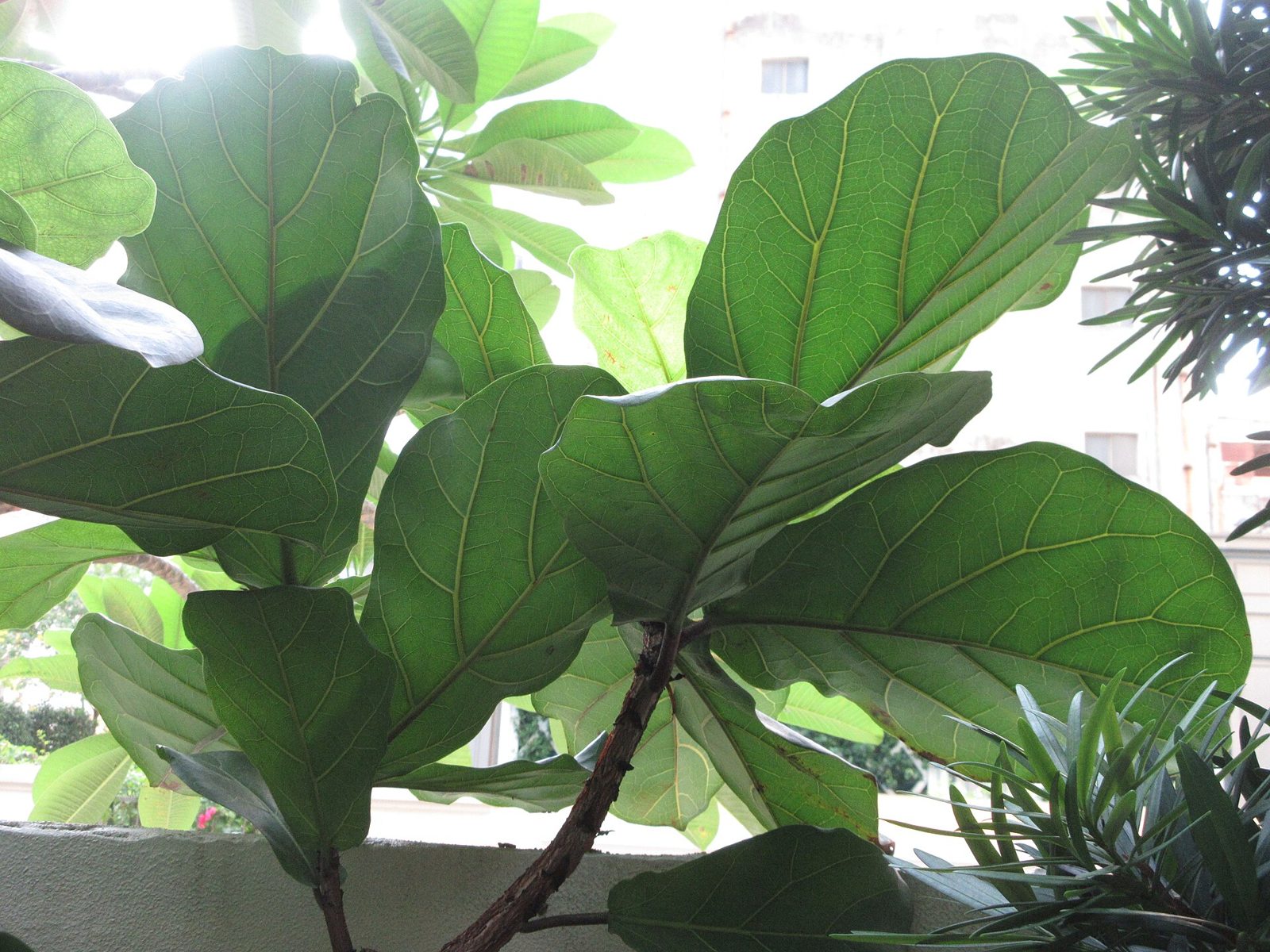
Bright indirect light is the most common answer in our sources: nine of the 10 houseplants we cover are described with “bright indirect” wording by at least one extension source. They are snake plant, peace lily, spider plant, pothos, rubber plant, fiddle leaf fig, ZZ plant, calathea and aloe vera, though aloe gets it only as the dimmer end of “full sun to bright indirect light.” Monstera is the exception, with “bright light but not direct sun.”
What bright indirect light means in a home
No source defines it with a number. The wording does carry two parts: bright, and without sun on the leaves. Clemson says peace lilies “should not be placed in direct sun as the heat will scorch the foliage,” and UF/IFAS says “Keep your peace lily in a well-lit area, but out of direct sunlight.”
Our reading, which no source states: this is a spot close to a bright window where the sun does not land on the leaves, such as beside a window that the sun does not reach, or a few feet from one that it does. For a dimmer spot, see low light plants, and for a gentler middle, see medium light plants.
Plants our sources place in bright indirect light
| Plant | What the source says | Source |
|---|---|---|
| Snake plant | “The ideal lighting for a snake plant is bright, indirect lighting” | Clemson |
| Peace lily | “Grow best in bright indirect light” (Clemson); “Bright, indirect light” (EDIS) | Clemson, UF/IFAS EDIS |
| Spider plant | “Spider plants grow best with bright indirect light” | Clemson |
| Pothos | “Prefer bright, indirect light but will tolerate lower lighting conditions” | Clemson |
| Rubber plant | “Bright indirect light or partial shade and protection from the afternoon sun” | NC State |
| Fiddle leaf fig | “Prefers bright indirect light or partial shade” | NC State |
| ZZ plant | “They do best with bright indirect sunlight”; “Strong, filtered light, but no direct sun” (EDIS) | NC State, UF/IFAS EDIS |
| Calathea | “The rose-painted Calathea prefers bright, indirect light” | NC State |
| Monstera | “Bright light but not direct sun” (Penn State); “moderate brightness but not direct sunlight” (NC State) | Penn State, NC State |
| Aloe vera | “Full sun to bright indirect light” | Penn State |
Calathea depends on the species. NC State’s rose-painted page says “bright, indirect light,” the network prayer plant page says “partial shade,” and the Alberta prayer plant page says direct sunlight will damage the leaves.
Where sources disagree
- Snake plant. Clemson says bright indirect is ideal, and Penn State says “Keep it out of the direct sun, as it can burn.” NC State says to place it “where it will receive direct sunlight only part of the day, 2 to 6 hours.” Bright indirect light is where all three overlap.
- Rubber plant and fiddle leaf fig. NC State says bright indirect or partial shade. Texas A&M says “Medium light or some daily sun,” and UF/IFAS EDIS says “full sun to partial shade” for fiddle leaf fig.
- Spider plant. NC State says it is “intolerant of direct sunlight.” Clemson says it can “tolerate some direct sunlight, but midday light may scorch leaves.”
- Monstera. NC State and Penn State say not direct sun. Wisconsin says it does best in “bright light in summer and direct sun in winter.”
- ZZ plant. NC State says it tolerates very low light and does best in bright indirect light. Clemson says “Locate ZZ plants anywhere except in full sunlight.”
What bright light does for the plant, as sourced
Sources name a few signs that a plant wants more light:
- Pothos: “Low light can cause loss of variegation” (NC State), and Clemson says lower light may cause variegated types to lose some coloring.
- Monstera: leaf perforations do not develop when light is inadequate (Wisconsin).
- Peace lily: Clemson says it flowers in low light, and also that flowering is lacking in insufficient light.
Signs of too much sun are named too: scalding and browning on ZZ plant (NC State), yellowing on pothos (Penn State), and “leaf burn” on calathea (NC State).
Moving a plant brighter
UF/IFAS says to make the move gradual for aloe vera, because “the plant can sunburn when moved from low to bright light too quickly.” Wisconsin says the same of monstera moved outside for summer, which must be “acclimated to higher light levels gradually or the leaves will suffer sunburn.” Our reading is that any plant coming from a dim room to a bright window deserves the same care, since the sources do not say.
How often to water changes with light, and our how often to water houseplants guide covers the rule for each plant. Easy houseplants sorts the same ten by how forgiving they are.
Short version
Bright indirect light is the safe middle for most of our ten plants, and the overlap point for snake plant and spider plant where sources disagree about direct sun. Aloe vera wants more, with full sun to bright indirect light, and monstera sits close with bright light but not direct sun.
Frequently asked questions
What is bright indirect light?
Our sources do not give a number. The wording means bright but without sun on the leaves: Clemson says peace lilies "should not be placed in direct sun as the heat will scorch the foliage," and UF/IFAS says "in a well-lit area, but out of direct sunlight." Our reading is a spot close to a bright window, out of the sun's beam.
Which houseplants like bright indirect light?
Snake plant, peace lily, spider plant and pothos (Clemson), rubber plant, fiddle leaf fig, ZZ plant and calathea (NC State) all use the phrase. Aloe vera gets it as the dimmer end of full sun to bright indirect light (Penn State). Monstera is described as bright light but not direct sun.
Can bright indirect plants take some direct sun?
Sources disagree. NC State allows snake plant 2 to 6 hours of direct sun, and Clemson says spider plant can tolerate some, but Penn State says to keep snake plant out of direct sun and NC State says spider plant is intolerant of it.
Is bright indirect light the same as low light?
No. Sources say snake plant, ZZ plant, pothos and peace lily tolerate low light but do best, or grow best, in bright indirect light. See our low light plants guide for the plants and wording.
Sources
- Dracaena trifasciata (Mother-in-law's tongue), Plant Toolbox, NC State Extension
- Snake plant, a forgiving low-maintenance houseplant, Penn State Extension
- Exciting houseplant selections for beginners, Clemson Home & Garden Information Center
- Peace lily, Clemson Home & Garden Information Center
- Spathiphyllum, EDIS, UF/IFAS EDIS
- Peace lily, houseplants, UF/IFAS Gardening Solutions
- Spider plant, Clemson Home & Garden Information Center
- Chlorophytum comosum (spider plant), Plant Toolbox, NC State Extension
- How to grow pothos indoors, Clemson Home & Garden Information Center
- Pothos as a houseplant, Penn State Extension
- Epipremnum aureum (pothos), Plant Toolbox, NC State Extension
- Ficus elastica (rubber plant), Plant Toolbox, NC State Extension
- Ficus lyrata (fiddle-leaf fig), Plant Toolbox, NC State Extension
- Zamioculcas zamiifolia (ZZ plant), Plant Toolbox, NC State Extension
- ZZ plant, indoor care and growing tips, Clemson Home & Garden Information Center
- ZZ plant, EDIS, UF/IFAS EDIS
- Goeppertia kegeljanii (network plant), Plant Toolbox, NC State Extension
- Goeppertia roseopicta (rose-painted calathea), Plant Toolbox, NC State Extension
- Goeppertia albertii (Alberta prayer plant), Plant Toolbox, NC State Extension
- Monstera as a houseplant, Penn State Extension
- Monstera deliciosa (Swiss cheese plant), Plant Toolbox, NC State Extension
- Monstera deliciosa, University of Wisconsin-Madison Extension
- Aloe, a hardy houseplant, Penn State Extension
- Aloe vera, UF/IFAS Gardening Solutions