

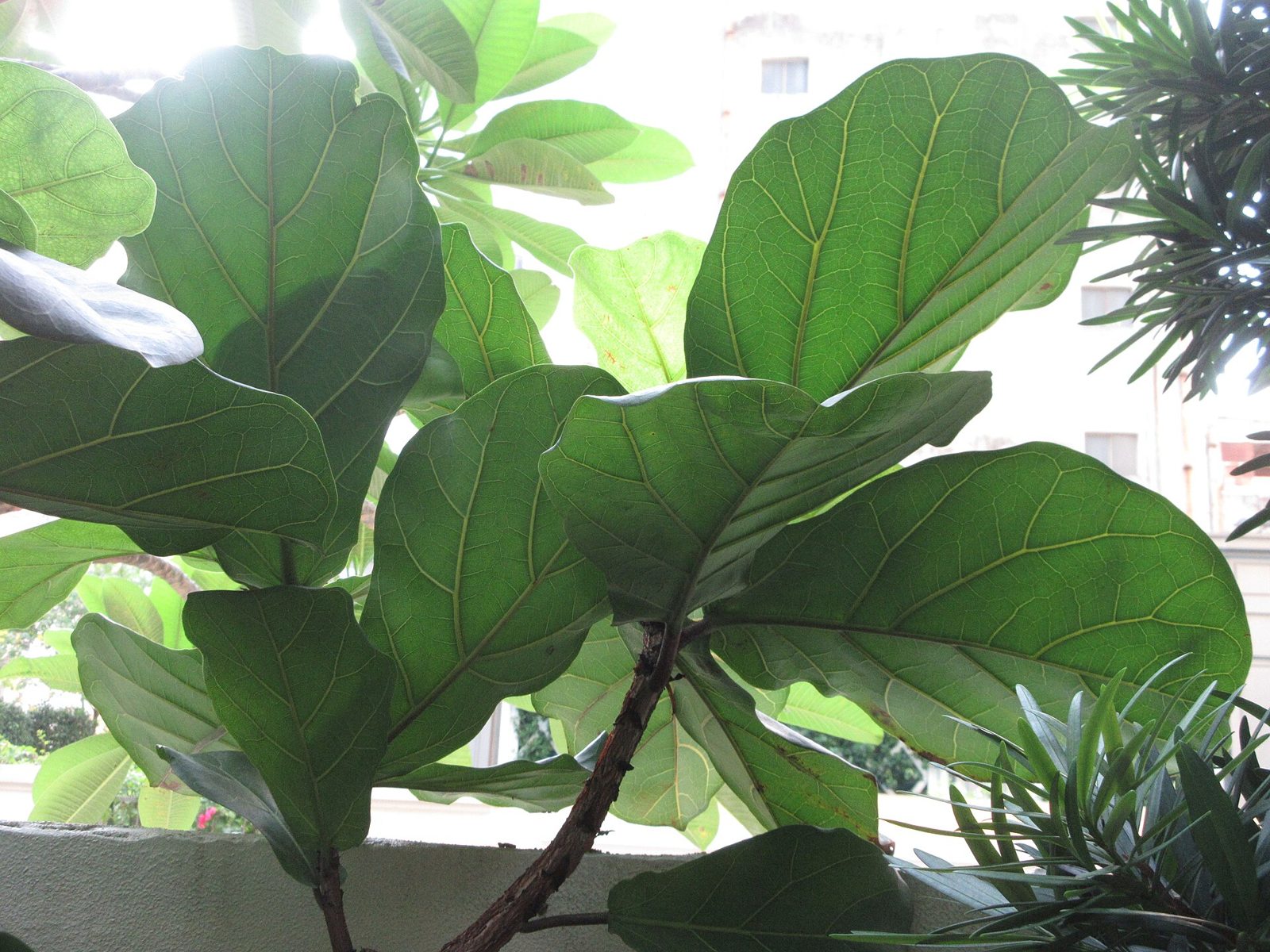
The fiddle leaf fig (Ficus lyrata) wants bright indirect light, regular watering in well-drained soil and a spot above 55°F, and it is sensitive to overwatering (NC State, UF/IFAS). Indoors it grows 2 to 10 feet tall with leaves up to 18 inches long. Our sources disagree on how much sun it can take, and they disagree on pet toxicity wording, so we show each source by name below. They also have no sourced answer for yellow or brown leaves, which we say plainly in the problems section.
Indoors or outdoors?
Our sources describe the fiddle leaf fig as a houseplant: NC State says “as a houseplant, it will grow 2 to 10 feet tall.” UF/IFAS describes it as growing “moderately fast in full sun or partial shade on any well-drained soil,” which reads as advice for growing it in the ground. We do not have a USDA zone in the fetched pages, so we do not give one. If you live where winters drop below the 55°F that NC State recommends as a minimum, the plant belongs indoors.
Light
Three sources, three answers:
- NC State: “prefers bright indirect light or partial shade,” and needs “protection from the afternoon sun.” It adds that “leaf scorch can occur if the plant is receiving too much direct sunlight.”
- UF/IFAS EDIS: “Light requirement: full sun to partial shade.”
- Texas A&M: “Light: Medium light or some daily sun.”
The overlap is partial shade. NC State and UF/IFAS both name it, and Texas A&M’s “medium light” is close. The disagreement is about direct sun, where UF/IFAS is the most generous and NC State the most cautious. The UF/IFAS page does not say whether “full sun” applies to a potted plant indoors, so think twice before putting one in an unfiltered south window. Our indoor light guide compares the three in detail.
Water
UF/IFAS says the plant “should receive regular watering” in well-drained soil. NC State says it is “sensitive to overwatering.” Those two sit together: water regularly, but not so often that the mix stays soggy. NC State adds that “leaf drop may occur from too much or too little water,” which means both extremes are documented. No source gives a number of days or a soil depth, so check the pot before you water.
The watering signs that our sources do document are few. Leaf drop is the one NC State names for both too much and too little water, which makes it a poor clue on its own. Penn State’s columnist lists brown spots as a possible sign of root rot, while NC State ties brown spots to fluctuating room temperature. If you see both leaf drop and spots, check the roots and the vents before you change the watering.
Humidity and temperature
NC State says it performs best in “medium relative humidity with a temperature greater than 55 degrees F.” It gives no percentage. It also says brown spots may occur if room temperature fluctuates from heating or cooling vents, so keep the plant away from vents. The other sources give no temperature figure.
Soil and repotting
NC State says it prefers “moist, well-drained, loamy, acidic soils.” A Penn State master gardener columnist uses “a very good quality potting soil” and says the plant loves to be potbound, adding that “drainage is extremely important.” UF/IFAS says to cut roots that circle the container before planting, because they can make the tree unstable as it ages. The Penn State advice is one gardener’s habit, not research, and the page says so. Our repotting guide goes through all three.
Feeding
No research source in our set gives a fertilizer rate. The Penn State columnist describes a personal routine: a liquid fertilizer with a 3-1-2 N-P-K ratio, one tablespoon in a gallon of water at watering. The column calls it “perfect for FLF’s.” Treat it as one person’s regimen, not a recommendation, and follow the label on your product.
Propagation
UF/IFAS says “propagation is by layering and cuttings.” Texas A&M says air layering and cuttings. Neither gives steps. Our propagation guide covers what is and is not sourced.
Size and growth
NC State says the fiddle-leaf fig grows 2 to 10 feet tall as a houseplant and has “large, broad, lyre-shaped, green leaves that can measure up to 18 inches long.” UF/IFAS says it grows moderately fast. None of our sources says how fast that is in a pot, or whether the plant needs a stake. That matters for placement, because a plant with 18-inch leaves needs room to turn and a heavy pot to stay upright.
Where the sources agree and differ
| Topic | NC State | UF/IFAS | Texas A&M | Penn State columnist |
|---|---|---|---|---|
| Light | Bright indirect or partial shade | Full sun to partial shade | Medium light or some daily sun | Not covered |
| Water | Sensitive to overwatering | Regular watering | Not covered | Not covered |
| Soil | Moist, well-drained, loamy, acidic | Any well-drained soil | Not covered | Good-quality, fast-draining potting soil |
| Repotting | Not covered | Cut circling roots | Not covered | Likes to be potbound |
| Propagation | Not covered | Layering and cuttings | Air layering and cuttings | Not covered |
Pets
The sources use different wording, and we show both.
- ASPCA: an article on houseplants (February 27, 2019) says the fiddle-leaf fig and spider plant “are mildly toxic to dogs and cats.” It spells the plant “Ficus lyrate.”
- NC State Extension: “This plant is toxic to humans, cats, and dogs if ingested.” NC State also says the sap is a skin irritant.
“Mildly toxic” and “toxic” are not the same wording, and neither source gives a symptom list for this plant. Keep it out of reach of pets. If a pet chews or eats a leaf, contact your veterinarian or the ASPCA Animal Poison Control Center. We have not found a species page for Ficus lyrata on ASPCA’s toxic-plant list in our research, so we are citing the article only.
Common fiddle leaf fig problems
On the pest side, NC State says to monitor for scale, aphids, mealybugs, thrips and spider mites. UF/IFAS is more relaxed: no pests or diseases are of major concern, though scales occasionally are a problem. We have no sourced treatments.
What our sources do not tell you
Our sources give no yellow-leaf diagnosis, no cause of brown edges, no support advice and no research-based fertilizer rate. They do not say how often to repot, what steps a cutting needs or how long it takes. They also do not give an ASPCA species page for the pet question, only an article. If one of these gaps matters to you, ask your state extension office.
Grow these next
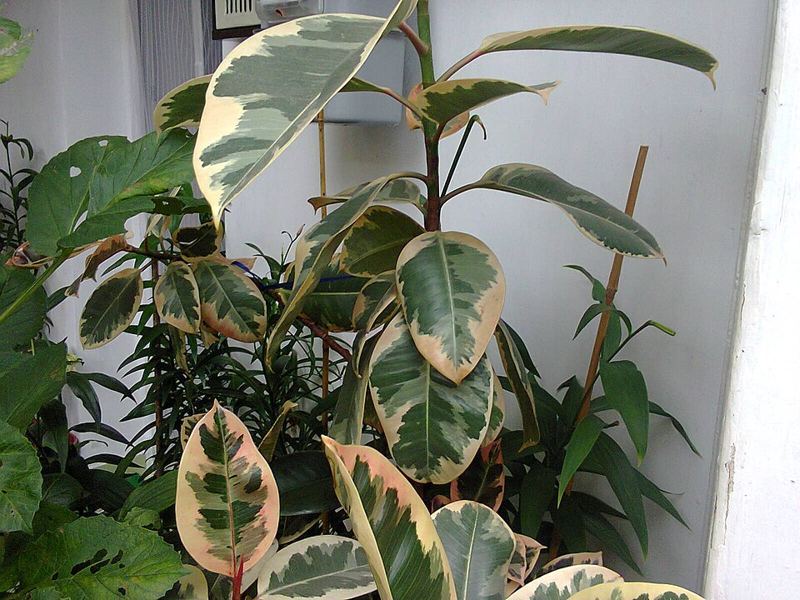
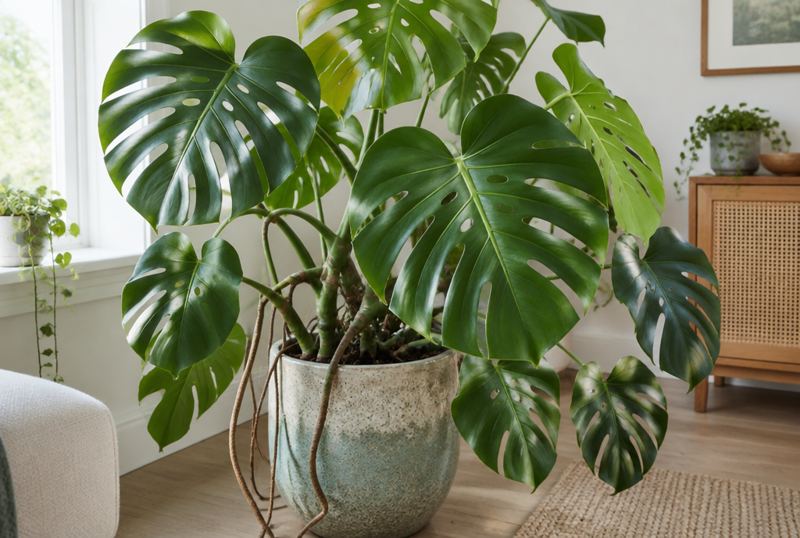
The rubber plant is a close relative and our sources disagree on its light needs in much the same way. The monstera is another large-leaved plant that needs a sturdy support as it grows.
More houseplant care guides
For side-by-side comparisons across all our plants, see how often to water houseplants, repotting houseplants, low-light plants and which houseplants are safe for pets.
Frequently asked questions
How much light does a fiddle leaf fig need?
Bright indirect light or partial shade, with protection from the afternoon sun, says NC State. UF/IFAS says full sun to partial shade and Texas A&M says medium light or some daily sun. NC State adds that too much direct sun can scorch the leaves.
How often should I water a fiddle leaf fig?
No source gives a schedule. UF/IFAS says it should receive regular watering in well-drained soil, and NC State says it is sensitive to overwatering. NC State also says leaf drop may occur from too much or too little water.
Is a fiddle leaf fig toxic to cats and dogs?
An ASPCA article says the fiddle-leaf fig is mildly toxic to dogs and cats. NC State says the plant is toxic to humans, cats and dogs if ingested. Keep it out of reach and contact your vet or the ASPCA Animal Poison Control Center if a pet eats it.
Does a fiddle leaf fig like to be root-bound?
A Penn State master gardener columnist says fiddle leaf figs love to be potbound, as long as drainage is good. UF/IFAS says to cut roots circling the container before planting. The Penn State piece is one grower's routine, not research.
How tall does a fiddle leaf fig grow indoors?
NC State says 2 to 10 feet as a houseplant, with leaves up to 18 inches long.
Sources
- Ficus lyrata (Fiddle-leaf Fig), NC State Extension Plant Toolbox
- ENH413/ST254: Ficus lyrata: Fiddleleaf Fig, University of Florida IFAS Extension (EDIS)
- Fiddle-leaf Fig: A Reference Guide to Plant Care, Handling and Merchandising, Texas A&M AgriLife Extension (Aggie Horticulture)
- Fiddle Leaf Fig (Ficus lyrata), Penn State Extension, Master Gardeners of Adams County (a columnist's own routine)
- Is That Houseplant Safe for Your Pets?, ASPCA (article dated February 27, 2019)
 Rubber Plant
 Monstera