

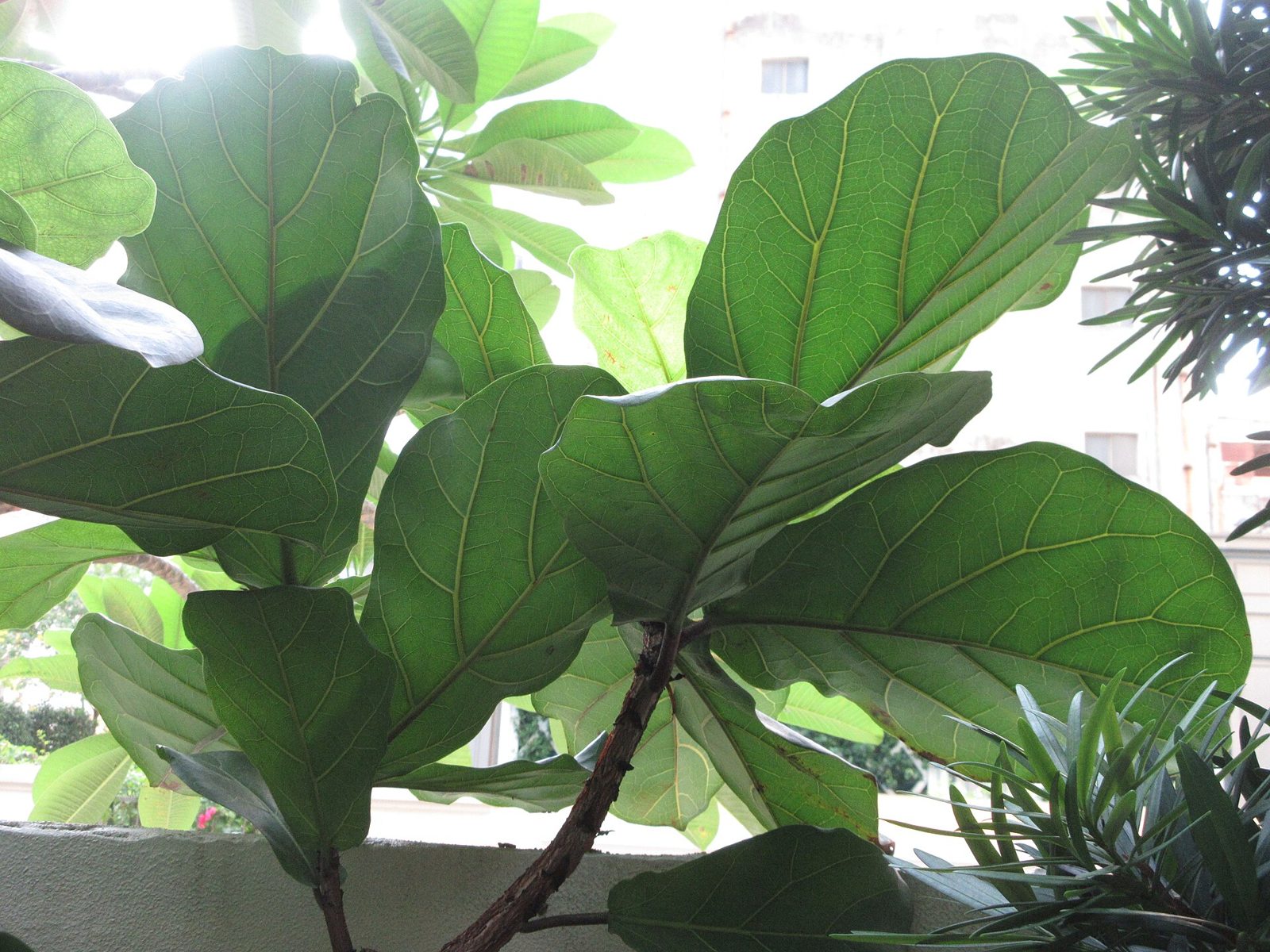
For a fiddle leaf fig in a pot, the sourced advice is short: use well-drained soil, make sure the pot drains, and cut any roots that circle the container before planting. NC State names moist, well-drained, loamy, acidic soil, UF/IFAS says to cut circling roots, and a Penn State master gardener columnist says the plant loves to be potbound. No source gives a repotting interval or pot size. This guide supports our main fiddle leaf fig care guide.
One caution up front. The Penn State page is a columnist’s own routine, and the page does not present it as research. We label it each time it appears.
Soil
Three descriptions, none of them a recipe:
- NC State: “moist, well-drained, loamy, acidic soils.”
- UF/IFAS: it “will grow moderately fast in full sun or partial shade on any well-drained soil.”
- Penn State columnist: a “very good quality potting soil” that is fast-draining.
The overlap is well-drained. NC State alone says acidic and loamy, and it is the only one of the three to pair “moist” with “well-drained,” which fits the plant’s sensitivity to overwatering. Our sources give no pH number, no perlite or bark ratio and no brand. If you want a mix, look for one sold as well-draining and check that water runs through the pot freely after you water.
Pots and drainage
The Penn State column says: “Fiddle Leaf Figs love to be potbound but, like all plants, drainage is extremely important.” That is the strongest statement on drainage in our set, and it is paired with NC State’s warning that the plant is “sensitive to overwatering.” The same Penn State page lists brown spots as a possible sign of root rot, alongside aphids, spider mites, scale and mealybugs.
Our sources give no pot size, no material (plastic, clay, glazed) and no advice on saucers or cache pots. We therefore can only say what follows from the drainage point: choose a container with a drainage hole and do not leave the roots standing in water. That is our reading, not a quotation.
Repotting and root-bound plants
Two statements bear on repotting, and they pull slightly in different directions.
Potbound is fine, says one columnist. The Penn State column says the plant loves to be potbound. It does not say how long a plant can stay in the same pot or what a root-bound plant looks like.
Circling roots should be cut, says UF/IFAS. The EDIS page says: “Be sure to cut roots circling the container before planting since these can cause the tree to become unstable as it grows older.” The advice is about planting. EDIS is a landscape publication, so it may be written for planting a nursery container in the ground, and it does not say it applies to repotting a houseplant. We cannot tell from the page.
Putting the two together: a fiddle leaf fig tolerates a snug pot in the columnist’s experience, and UF/IFAS warns that circling roots can destabilize a tree over time. Those are compatible. Neither gives a schedule.
Size and stability
NC State says the plant grows 2 to 10 feet tall indoors, with leaves up to 18 inches long. UF/IFAS’s concern about instability comes from the same fact: a tall plant on a root ball that has circled the pot is easier to tip. Our sources give no staking advice. A heavier pot is a reasonable response to a tall plant, but that is our inference.
Feeding at repotting time
Our sources give no fertilizer rate from a research publication. The Penn State columnist waters with a 3-1-2 N-P-K liquid fertilizer at one tablespoon per gallon, and says so as a personal routine. Nothing in the sources says to fertilize at repotting or to wait. Follow your product’s label.
A short checklist
- Check the drainage. The Penn State columnist says drainage is extremely important. NC State says the plant is sensitive to overwatering.
- Look at the roots. UF/IFAS says to cut roots that circle the container before planting.
- Choose a well-drained mix. NC State, UF/IFAS and the Penn State columnist all use some form of that phrase.
- Do not hurry to upsize. The Penn State columnist says the plant loves to be potbound. That is one grower’s experience, so use it only as a reason not to panic about a snug pot.
What our sources do not tell you
We have no sourced pot size, no repotting interval, no season, no soil recipe and no root-pruning method for houseplants. For a comparison with a plant where the sources give more repotting detail, see the monstera containers guide. For light and temperature, see our indoor light guide, and for new plants from this one, the propagation guide.
Frequently asked questions
What soil is best for a fiddle leaf fig?
NC State says moist, well-drained, loamy, acidic soil. UF/IFAS says any well-drained soil. A Penn State columnist uses a very good quality, fast-draining potting soil.
Does a fiddle leaf fig like to be root-bound?
A Penn State master gardener columnist says fiddle leaf figs love to be potbound but drainage is extremely important. That is one grower's routine, not research. UF/IFAS advises cutting roots circling the container.
How often should I repot a fiddle leaf fig?
Our sources do not give an interval. The Penn State columnist says the plant tolerates being potbound, and UF/IFAS says to cut circling roots before planting.
Why does drainage matter for a fiddle leaf fig?
NC State says the plant is sensitive to overwatering. Penn State's columnist says drainage is extremely important and lists brown spots as a sign of root rot.
Sources
- Ficus lyrata (Fiddle-leaf Fig), NC State Extension Plant Toolbox
- ENH413/ST254: Ficus lyrata: Fiddleleaf Fig, University of Florida IFAS Extension (EDIS)
- Fiddle Leaf Fig (Ficus lyrata), Penn State Extension, Master Gardeners of Adams County (a columnist's own routine)