

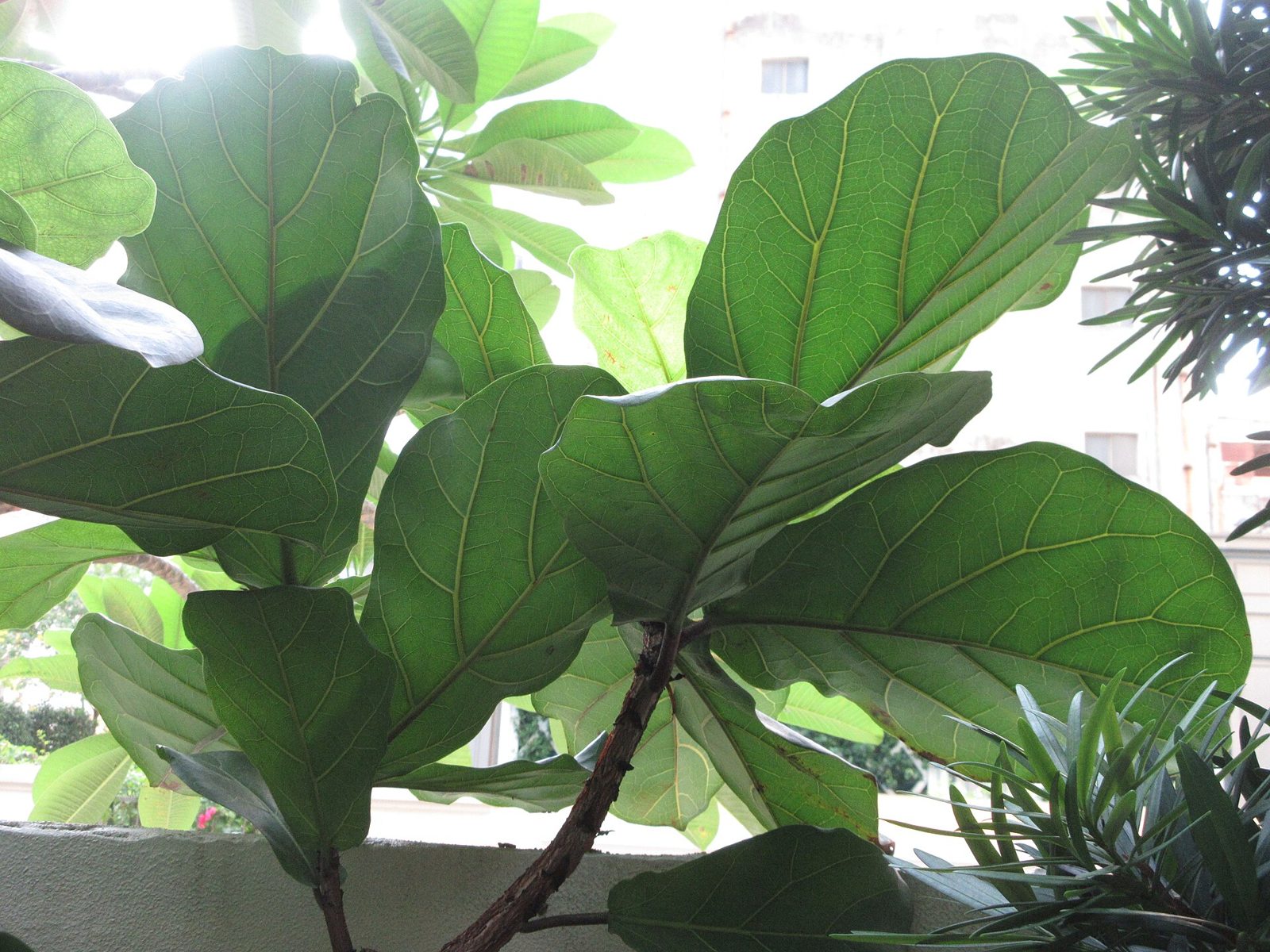
The fiddle leaf fig can be propagated by cuttings and by layering: UF/IFAS says “propagation is by layering and cuttings,” and Texas A&M lists air layering and cuttings. Neither source gives steps, a cutting length, a rooting medium or a timeline. This page sets out the two statements, what the sources say about the plant’s sap and care, and where you need to look elsewhere. It supports our main fiddle leaf fig care guide.
What the sources say
The wording is brief:
- UF/IFAS EDIS: “Propagation is by layering and cuttings.”
- Texas A&M AgriLife: “Methods of propagation: Air layering and cuttings.”
The two agree that cuttings work, and that layering is an alternative. Texas A&M is the one that specifies air layering, which is a method of rooting a stem while it is still on the parent. Neither source defines the term, and our research did not turn up a description of the technique on a fiddle leaf fig page, so we do not describe it.
What is missing
You will want these details, and none of our sources has them:
- where on the plant to cut, and how long the cutting should be
- whether the cutting should have leaves, nodes or a heel
- rooting hormone, water rooting or potting mix
- the temperature and humidity that help
- how long rooting takes
If a source elsewhere gives these, it is not one of the extension pages we checked. We would rather say so than offer steps from a blog.
The sap
NC State says the sap of the fiddle leaf fig is a skin irritant. Taking a cutting means cutting a stem, so expect sap. Our sources give no advice on how to handle it. The ordinary precautions are keeping it off skin and keeping cut material away from pets and children. That last point matters because NC State says the plant is toxic to humans, cats and dogs if ingested, and an ASPCA article describes it as mildly toxic to dogs and cats. The care guide quotes both. Trimmings left on a counter or floor can be reached by a pet.
Why you might propagate
The plant grows 2 to 10 feet tall as a houseplant, according to NC State, with leaves up to 18 inches long. If the plant has outgrown its space, propagation is one way to start again from a smaller piece. Our sources do not link pruning to propagation or say which stem makes the best cutting. A cutting is also a way to keep a plant that is struggling, but the sources do not describe that either.
Care for the new plant
Once you have a rooted cutting or layer, the sourced care for the adult plant is the best guide we have:
- Light: NC State says bright indirect light or partial shade with protection from afternoon sun. UF/IFAS and Texas A&M allow more. See our indoor light guide.
- Water: regular watering in well-drained soil (UF/IFAS), and be careful of overwatering (NC State).
- Temperature: greater than 55°F, away from vents (NC State).
- Soil: moist, well-drained and loamy (NC State). Our containers guide covers pots and drainage.
None of these is sourced for a cutting specifically. A young plant may have different needs, and the sources are silent.
How this compares with other plants
The rubber plant, another Ficus, is in the same position: NC State lists layering, root cuttings and seed, Texas A&M lists air layering and cuttings, and neither gives steps. See the rubber plant propagation guide. For a plant where sources do give steps, our ZZ plant propagation guide and monstera cuttings guide show what that detail looks like. Those methods are for those plants, and we do not suggest copying them to a ficus.
What our sources do not tell you
We have no sourced step-by-step method for the fiddle leaf fig. We have no timing, no medium, no hormone advice and no description of air layering. Back to the fiddle leaf fig care guide for light, water, soil and the pet-toxicity wording.
Frequently asked questions
Can you propagate a fiddle leaf fig from a cutting?
Yes. UF/IFAS says propagation is by layering and cuttings, and Texas A&M says air layering and cuttings. Neither gives steps.
Can a fiddle leaf fig grow from a single leaf?
Our sources do not say. They name cuttings and layering only, with no detail on what part of the plant to use.
How long do fiddle leaf fig cuttings take to root?
Our sources give no timeline, temperature or rooting medium.
Is the sap a problem when taking cuttings?
NC State says the plant's sap is a skin irritant. It gives no handling advice, so keep it off your skin and away from pets and children.
Sources
- ENH413/ST254: Ficus lyrata: Fiddleleaf Fig, University of Florida IFAS Extension (EDIS)
- Fiddle-leaf Fig: A Reference Guide to Plant Care, Handling and Merchandising, Texas A&M AgriLife Extension (Aggie Horticulture)
- Ficus lyrata (Fiddle-leaf Fig), NC State Extension Plant Toolbox