

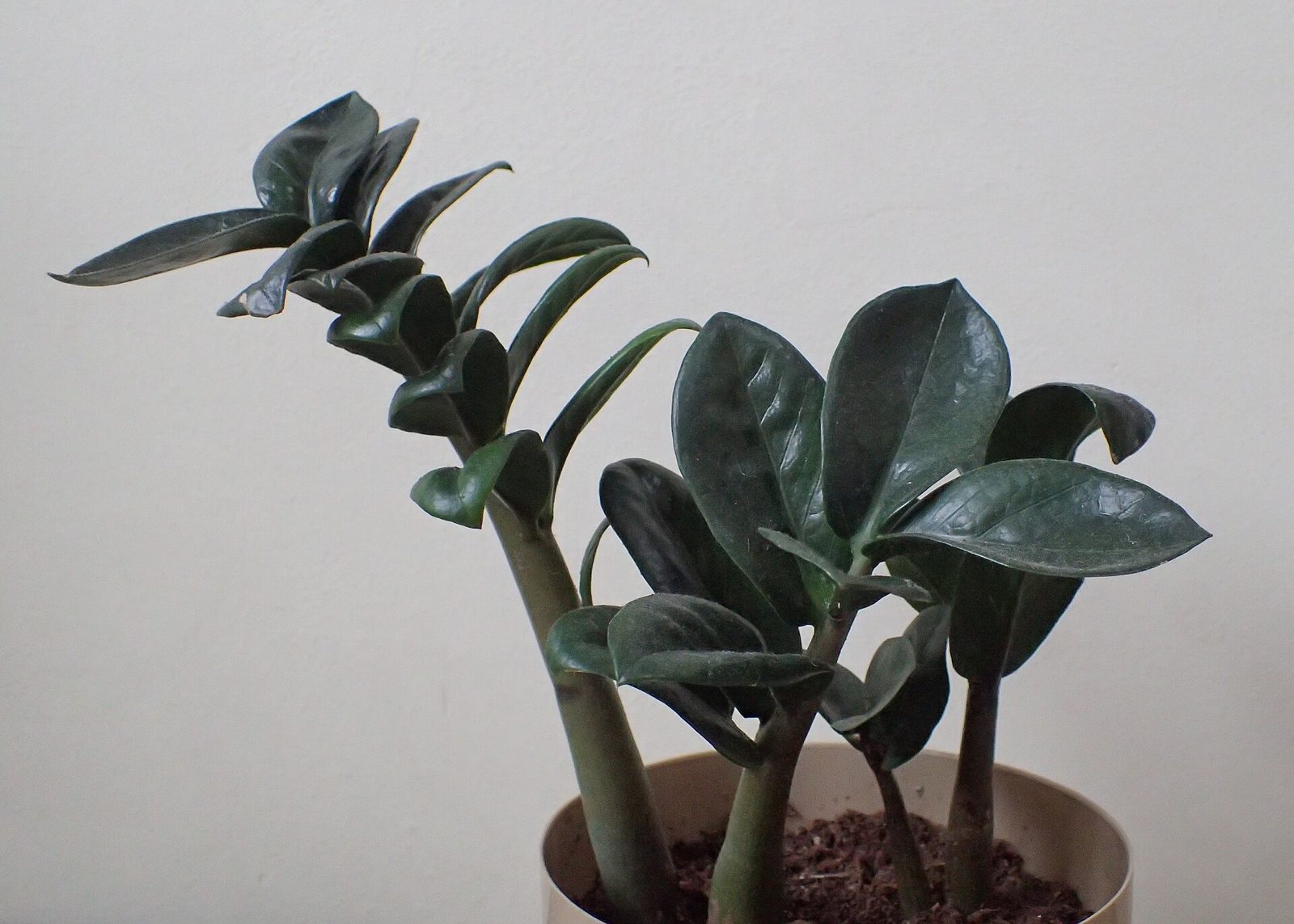
The fastest way to propagate a ZZ plant is division, and leaf cuttings with the petiole intact also work, according to the University of Illinois Extension. NC State lists the same two methods: “propagate by division or leaf cutting.” Illinois Extension adds that cuttings do best near 80°F with relatively high humidity. This page covers what each source says, what it leaves out and how to care for the new plants. It supports our main ZZ plant care guide.
Division
Illinois Extension says: “Division is the most common and fastest way to create more ZZ plants.” NC State agrees that division is one of two methods. Our sources do not give the steps, such as when to divide, how to separate the plant or what size each piece should be. They also do not say how large a plant must be before it can be divided.
Because UF/IFAS says the ZZ is a slow grower that can reach three to four feet tall and three feet wide in time, it may take years before a plant is big enough to divide. That is our reasoning from the growth rate, not a statement in the sources.
Leaf cuttings
Illinois Extension is the only source in our set with any detail for leaf cuttings. It says: “Cut each leaf from the stalk, keeping the petiole intact.” The petiole is the leaf stalk, the part that joins the leaf to the main stem. It also says “cuttings will do best when air temperatures are kept near 80 degrees F and relatively high humidity.”
That is the full sourced method. We have no rooting medium, no instruction on whether to use water or soil, no hormone advice and no timeline. NC State lists leaf cutting as a method but gives no more.
Division or cuttings?
The sources favor division as the quicker, more common route, and Illinois Extension says so directly. Leaf cuttings are the choice when you want more plants than a division can give, or when your plant is too small to split. The sources do not make that comparison, so that is our summary of the trade-off, not a quotation.
| Division | Leaf cutting | |
|---|---|---|
| Named by | Illinois Extension, NC State | Illinois Extension, NC State |
| Sourced detail | “Most common and fastest” | Keep the petiole intact; about 80°F and high humidity |
| Timeline | Not given | Not given |
| Medium | Not given | Not given |
Caring for the new plants
Once the pieces are potted, the care for an adult plant is the best guide we have.
- Light: very low light is tolerated, bright indirect light is best, and no direct sun (NC State, UF/IFAS EDIS). Scalding and browning can occur in direct sunlight.
- Water: let the soil dry out between waterings. Root rot may occur in poorly drained soil with excessive water for an extended time (UF/IFAS EDIS).
- Soil: any well-drained peat- or bark-based potting soil (UF/IFAS EDIS).
- Temperature: keep above 60°F (Clemson).
Illinois Extension’s 80°F figure applies to cuttings, and it is higher than the room temperature Clemson recommends for adult plants. Our sources do not explain the difference.
Our yellow-leaves guide lists what the sources document about leaf and root damage, which is worth reading if a new piece looks poorly.
A note on sap and pets
NC State says the ZZ plant has a medium toxicity to cats and dogs, and Clemson says “NOT Pet Safe.” Cut leaves and stalks are still plant material, so keep trimmings and cuttings away from pets while you work. Our ZZ plant pet-safety guide gives each source’s wording.
Compared with other plants
For an easy comparison, our monstera cuttings guide has sourced instructions for stem cuttings and air layering, and our fiddle leaf fig propagation guide shows a case where the sources name methods without steps. The ZZ plant sits in between: two methods and a few sourced details.
What our sources do not tell you
We have no sourced rooting medium, hormone advice, cutting length, timeline or division technique. We also do not know how many stalks a divided piece needs. Back to the ZZ plant care guide for light, water and feeding.
Frequently asked questions
What is the fastest way to propagate a ZZ plant?
Division. Illinois Extension says division is the most common and fastest way to create more ZZ plants.
Can you grow a ZZ plant from a single leaf?
Yes. Illinois Extension says to cut each leaf from the stalk, keeping the petiole intact. NC State lists division or leaf cutting as the propagation methods.
What temperature do ZZ cuttings need?
Illinois Extension says cuttings do best when air temperatures are kept near 80°F with relatively high humidity.
How long do ZZ plant cuttings take to root?
Our sources give no timeline.
Sources
- Houseplant spotlight: the ZZ plant, University of Illinois Extension (Good Growing, January 9, 2026)
- Zamioculcas zamiifolia (ZZ Plant), NC State Extension Plant Toolbox
- ZZ Plant, UF/IFAS Gardening Solutions