

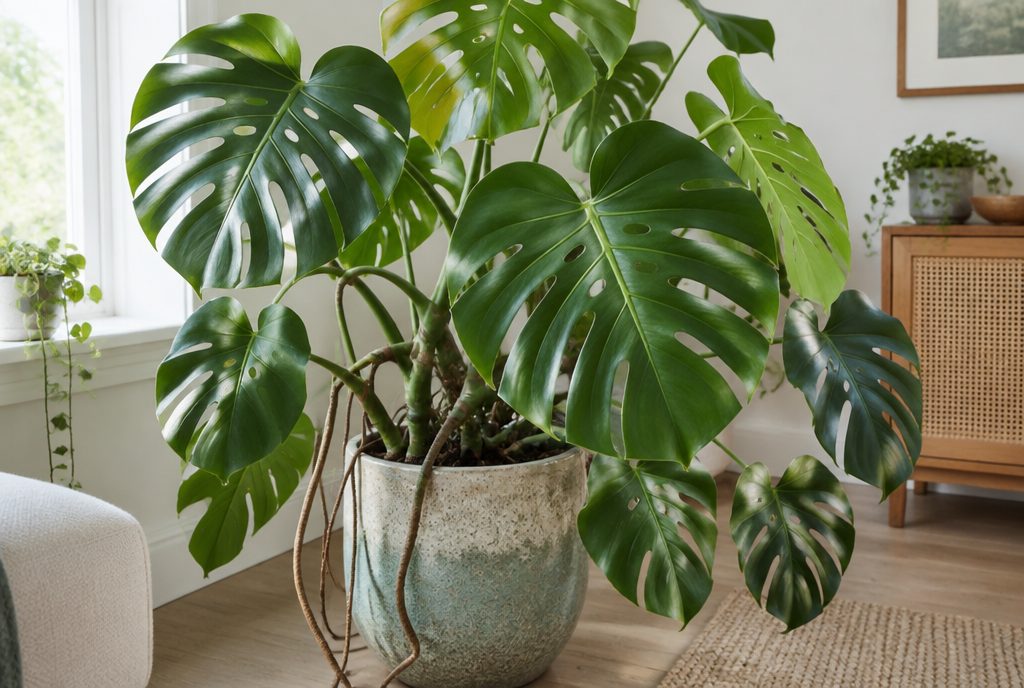
Monstera deliciosa is a climbing houseplant that wants bright light without hot direct sun, water when the top inch or two of soil is dry, humidity above 50% and a sturdy support to climb (Penn State, NC State, Wisconsin). It is toxic to dogs and cats according to the ASPCA. Our three extension sources agree on most of this, and where they differ on light and watering we show each one by name. Indoors it reaches 6 to 8 feet, so plan for a pole as well as a pot.
Indoors or outdoors?
NC State says the plant is “native from Mexico to Panama and can grow to 70 feet tall, though it stays between 6 to 8 feet in most home environments.” Penn State says indoors it “will still reach a hefty 6 to 8 feet tall.” Our sources treat it as a houseplant and give no USDA zone. Wisconsin Extension says plants do not grow below 50°F and that frost kills them, so it lives indoors for most of the US. Wisconsin adds that it can be moved outside for the summer, but needs to be acclimated to higher light gradually or the leaves will suffer sunburn.
Light
The sources disagree about direct sun.
- Penn State: “Select a site near a sunny window where it can receive bright light but not direct sun.”
- NC State: “moderate brightness but not direct sunlight.” It adds that variegated types need more light.
- Wisconsin Extension: recommends direct sun in winter and bright light in summer. It also says a monstera can be grown under fluorescent light but “will not develop the leaf perforations when light is inadequate.”
The two with “no direct sun” are the more common advice, and Wisconsin’s is the outlier. The point Wisconsin makes that matters most is the leaves: the split and holes that make a monstera look like a monstera appear only in adequate light. If your new leaves are solid and unsplit, light is the first thing to look at.
Water
Two figures, one idea. NC State says to “water this plant thoroughly, then allow the top quarter to one-third part to dry between watering.” Penn State says “water thoroughly and let the top 1 to 2 inches of the soil dry out between watering.” Wisconsin says to allow the growing medium to dry slightly between waterings and to water the moss-covered support as well, “so the aerial roots can obtain water and nutrients.”
The two figures describe the same idea: water thoroughly, then wait for the upper soil to dry. Penn State warns that overwatering can result in root rot. Wisconsin says leaves “sweat” when the medium is too moist, and that if this happens you should reduce watering to prevent root rot.
Humidity and temperature
Humidity
Temperature
Raising humidity
Moving it outside
Soil and repotting
Penn State says to use “a well-draining soilless potting mix that is rich with organic matter” with a neutral pH of 6.0 to 8.0. Wisconsin says a fertile soilless mix “with ample root room to promote larger leaf growth.” NC State says to prune or repot if needed in the spring, and Wisconsin says container-grown plants need frequent repotting. Our containers guide covers repotting and support together.
Support
The monstera climbs. Wisconsin says to provide “a tree bark or strong, moss-covered support sunk into the pot for the aerial roots to attach to.” Penn State says moss sticks, trellises, bamboo stakes and boards covered with sphagnum moss all work, and NC State says sturdy support is needed to prevent the stems from breaking.
Feeding
Penn State gives a schedule: fertilize every two weeks through the growing season and monthly through the winter, with a balanced houseplant fertilizer. Wisconsin says only to fertilize regularly from spring until fall. The two overlap in the growing season and differ in winter: Penn State continues monthly through the winter, while Wisconsin names only spring until fall.
Propagation
Wisconsin says to propagate from stem cuttings from mature plants, or by air layering or simple layering, at any time of the year, and to cut the tip of the stem just below an aerial root and pot the cutting. Penn State says air layering or stem cuttings are the easiest. Our propagation guide has the details.
Size and growth
NC State and Penn State both put the indoor size at 6 to 8 feet, and Penn State adds that the plant needs “something sturdy to climb.” Wisconsin says ample root room promotes larger leaf growth, which links pot size to leaf size. None of our sources gives a growth rate or says how many years it takes to reach 6 feet, so we do not.
Where the sources agree and differ
| Topic | NC State | Penn State | Wisconsin |
|---|---|---|---|
| Light | Moderate brightness, no direct sun | Bright light, no direct sun | Direct sun in winter, bright light in summer |
| Water | Top quarter to one-third dry | Top 1 to 2 inches dry | Dry slightly; water the moss support |
| Humidity | High | Preferably above 50% | Brown edges if too low |
| Feeding | Not covered | Every two weeks, monthly in winter | Regularly, spring until fall |
| Repotting | If needed, in spring | Use soilless mix when repotting | Frequent for container plants |
| Pets | Not covered | All parts toxic if ingested | Not covered |
Pets
The ASPCA says: “Toxicity: Toxic to Dogs, Toxic to Cats.” The toxic principle is insoluble calcium oxalates. Penn State says all parts of the monstera are toxic to humans and pets if ingested, with the exception of the fully ripe fruit, which is rarely seen on a houseplant. Our monstera pet-safety guide gives the wording and safe steps.
Common monstera problems
For the fungus gnats Penn State lists, see our fungus gnats guide.
What our sources do not tell you
Our sources give no cause of yellow leaves or leaf drop, no method for raising humidity, no guidance on how tall to extend a moss pole and no repotting interval. They disagree on winter sun and on winter feeding. For yellow leaves, ask your state extension office, and for pets, your veterinarian.
Grow these next
The fiddle leaf fig and rubber plant are large-leaved foliage plants that also benefit from bright light. For a plant that tolerates much less light, the ZZ plant is the usual comparison.
More houseplant care guides
For side-by-side comparisons across all our plants, see how often to water houseplants, repotting houseplants, low-light plants and which houseplants are safe for pets.
Frequently asked questions
How much light does a monstera need?
Penn State says bright light but not direct sun, and NC State says moderate brightness but not direct sunlight. Wisconsin Extension recommends direct sun in winter and bright light in summer, and says leaves will not develop their perforations when light is inadequate.
How often should I water a monstera?
Water thoroughly, then let the top quarter to one-third of the soil dry (NC State) or the top 1 to 2 inches (Penn State). Wisconsin Extension adds that the moss-covered support should be watered too.
Is monstera toxic to cats and dogs?
Yes. The ASPCA lists Monstera deliciosa as toxic to dogs and toxic to cats, with insoluble calcium oxalates as the toxic principle. Penn State says all parts are toxic to humans and pets if ingested, except the fully ripe fruit.
How big does a monstera get indoors?
NC State says it can reach 70 feet in the wild but stays between 6 and 8 feet in most homes. Penn State says it will need something sturdy to climb.
Why are my monstera leaf edges turning brown?
Wisconsin Extension says the leaf edges will turn brown if humidity is too low. Penn State says to keep humidity preferably above 50%.
Sources
- Swiss Cheese Plant (Monstera deliciosa), NC State Extension Plant Toolbox
- Swiss-Cheese Plant, Monstera deliciosa, University of Wisconsin Horticulture Extension
- Monstera as a Houseplant, Penn State Extension
- Toxic and Non-toxic Plants: Swiss Cheese Plant, ASPCA
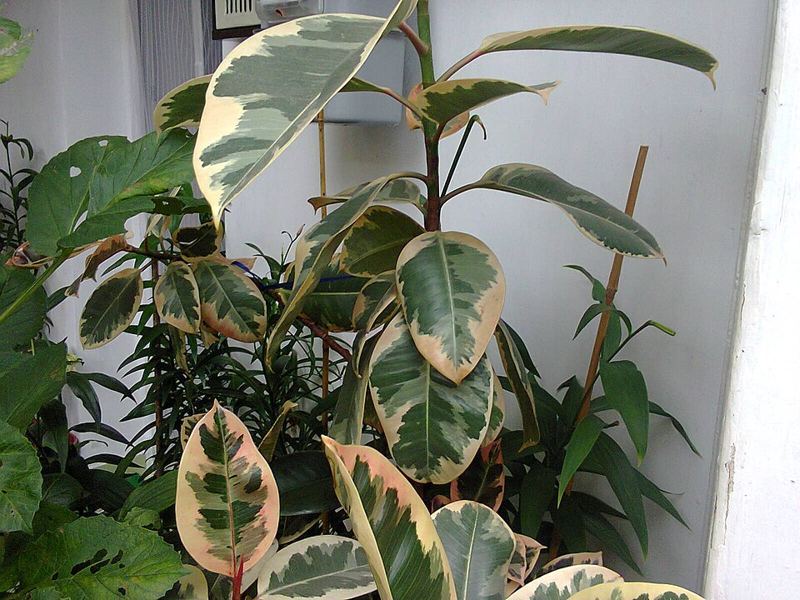 Rubber Plant
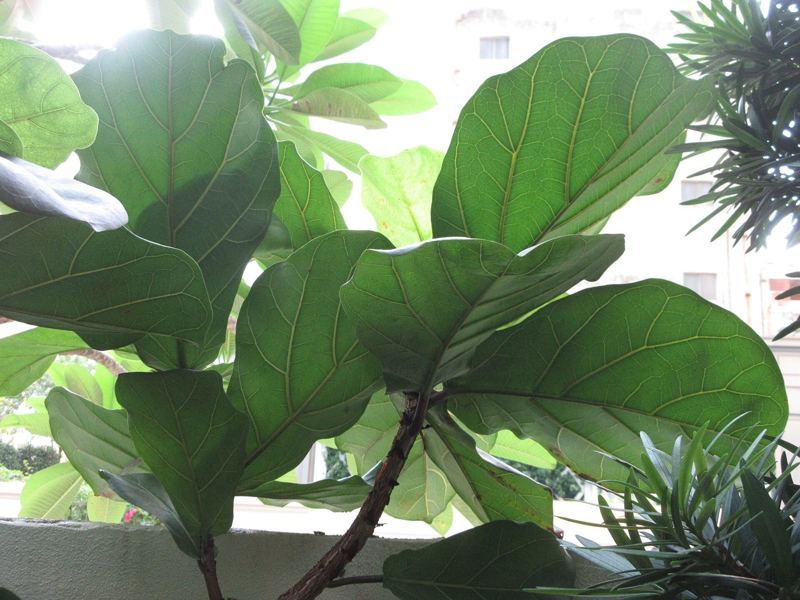 Fiddle Leaf Fig