

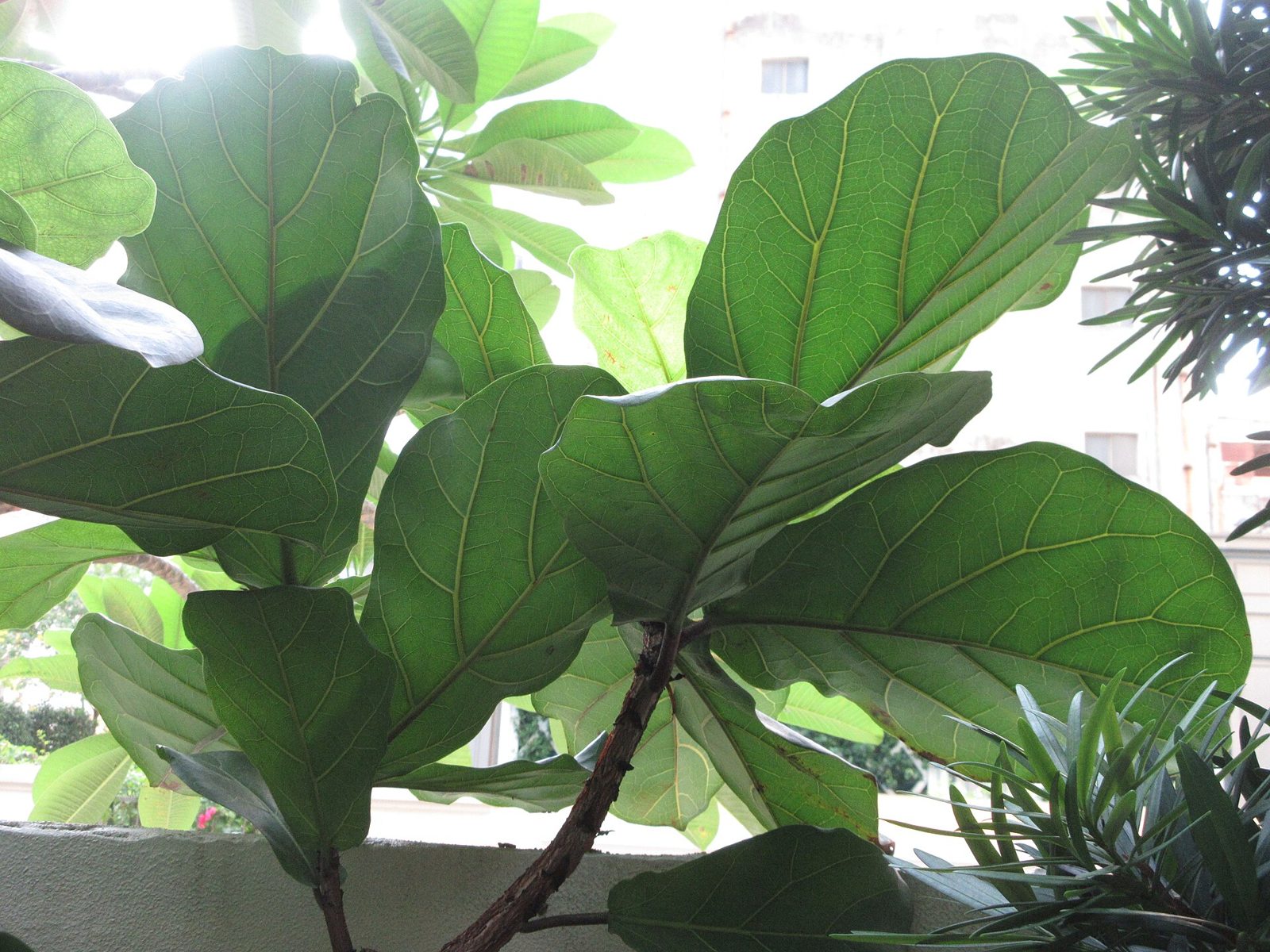
Three extension sources give three different light ranges for the fiddle leaf fig: bright indirect light or partial shade (NC State), full sun to partial shade (UF/IFAS) and medium light or some daily sun (Texas A&M). The safest overlap is a bright spot with partial shade and no hot afternoon sun. This guide shows each source’s wording so you can judge for yourself, and it supports our main fiddle leaf fig care guide.
What each source says
NC State Extension
UF/IFAS EDIS
Texas A&M AgriLife
Reading the three together
The common ground is partial shade. NC State and UF/IFAS both include it, and Texas A&M’s “medium light” sits in the same territory. If you want a position all three can live with, it is a bright room where the plant is not baked by afternoon sun. That is our synthesis; none of the sources states it in those words.
The disagreement is the upper limit. UF/IFAS opens the range to full sun. Texas A&M allows some daily sun. NC State recommends shielding the plant from the afternoon sun and says too much direct sun can scorch the leaves. One reading is that the UF/IFAS page describes the plant’s tolerance in the ground, and the NC State page describes what a pot on a living-room floor will cope with. The sources do not say that, so treat it as a guess.
Because scorch is the one light-related symptom a source documents, it is the sensible reason to lean cautious. Moving a plant from a dim shop or room straight into strong sun is the situation NC State’s warning fits best. The sources do not describe acclimating a plant, though, so that part is our reasoning.
What the sources do not say about light
- No window direction. East, west and south are not mentioned for this plant.
- No foot-candle or hours-of-sun figure.
- No description of too-little-light symptoms such as stretching or small new leaves.
- No guidance on grow lights.
- No advice on rotating the plant.
If you have read elsewhere that fiddle leaf figs hate being moved or need to be turned for even growth, those are not claims our sources make.
Temperature, humidity and vents
Light is only part of the spot. NC State says the plant “performs best in medium relative humidity with a temperature greater than 55 degrees F.” It adds that “brown spots may occur if there is a fluctuation in room temperatures for heating or cooling vents.” A bright window near a heating vent or a cold-air return is therefore a mixed choice. Penn State’s columnist lists brown spots as a possible sign of root rot, so brown spots have at least two documented causes in our sources, and neither source supports a quick diagnosis.
How to choose a spot
- Start with bright indirect light. That is NC State’s primary advice and sits inside the other two sources’ ranges.
- Block hot afternoon sun. NC State says to protect the plant from it, and warns of leaf scorch.
- Keep it above 55°F and away from vents. Temperature swings are tied to brown spots by NC State.
- Water to match the light. Our sources do not link light to watering, but they do say the plant is sensitive to overwatering. Brighter spots dry the mix faster, so check before you water.
What our sources do not tell you
We cannot give a number of hours of light, a window direction or an acclimation method. For the pet question, which people often check before choosing a spot at floor level, see the pets section of the main guide. For repotting, drainage and soil, see our containers guide. For another ficus where the sources split, see the rubber plant light guide.
Frequently asked questions
Can a fiddle leaf fig take direct sun?
UF/IFAS says full sun to partial shade and Texas A&M says some daily sun. NC State says to protect it from the afternoon sun and warns that leaf scorch can occur with too much direct sunlight.
What window is best for a fiddle leaf fig?
Our sources do not name a window direction. NC State's bright indirect light with afternoon-sun protection is the most specific advice.
Can a fiddle leaf fig grow in low light?
None of our sources recommends low light. The lowest level any of them names is partial shade (NC State, UF/IFAS) or medium light (Texas A&M).
What temperature does a fiddle leaf fig need indoors?
NC State says greater than 55°F with medium relative humidity. It also says brown spots may occur if room temperature fluctuates because of heating or cooling vents.
Sources
- Ficus lyrata (Fiddle-leaf Fig), NC State Extension Plant Toolbox
- ENH413/ST254: Ficus lyrata: Fiddleleaf Fig, University of Florida IFAS Extension (EDIS)
- Fiddle-leaf Fig: A Reference Guide to Plant Care, Handling and Merchandising, Texas A&M AgriLife Extension (Aggie Horticulture)