

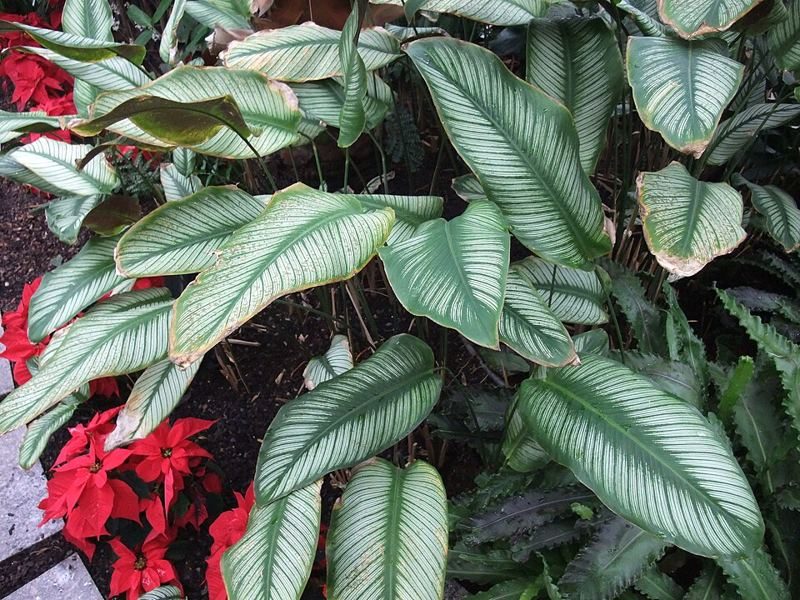
The sourced way to propagate a calathea is division, not cuttings: NC State says “the best method of propagation is division of its rhizomatous roots” for the rose-painted calathea. It recommends division for the network prayer plant and says the Alberta prayer plant may be propagated by division. We found no stem or leaf cutting method in any of our sources, so we do not describe one. This guide covers what is sourced and how to care for the divisions. It supports our main calathea care guide.
What the sources say
Three NC State profiles mention propagation, each in a single sentence:
- Rose-painted calathea: “The best method of propagation is division of its rhizomatous roots.”
- Network prayer plant: “Division is recommended for propagation.”
- Alberta prayer plant: “It may be propagated by division.”
The majestic prayer plant page did not give propagation advice in our research. All three statements say the same thing, and none gives steps. That is why this page is titled about dividing rather than cuttings. Our target keyword, “how to propagate calathea,” is mostly searched by people looking for a cutting method, and our honest answer is that the sources point to division.
What “rhizomatous” means for you
NC State describes the roots as rhizomatous. A rhizome is an underground stem that grows sideways and sends up shoots, and a clump-forming plant spreads this way. NC State describes the rose-painted calathea as having a “clump-forming, compact, bushy habit,” 1 to 2 feet tall and wide. That tells you why division is the method: the plant already grows as a clump, so a clump can be separated into pieces. The sources do not describe how to separate it, and we will not make up steps.
What the sources do not say
You will want these details, and none of our sources gives them:
- when to divide, in season or in pot size
- how large each division should be
- whether to cut or to pull the clump apart
- what to do about damaged roots
- how long a division takes to settle
- whether a division should be watered, fed or kept humid differently from an adult plant
If another source gives these, it is not one of the NC State pages we read. We do not give a method from a blog or video.
No cuttings in our sources
NC State’s propagation lines do not include stem cuttings or leaf cuttings. Our research file for this plant says plainly: no stem or leaf cutting detail in the fetched sources. A calathea grows leaves on stalks that rise from the rhizome, so there is no obvious stem to cut, but that is our observation, not a source’s. If you read online that a calathea can be grown from a leaf cutting, our sources neither confirm nor deny it.
Caring for the divisions
Once you have a new plant, the sourced care for an adult calathea is the best guide we have. It is a general guide, not one NC State gives for divisions.
- Light: bright, indirect light or partial shade, and no direct sun (NC State). See our light guide.
- Water: keep the soil moist but not wet or soggy (NC State). Overwatering can cause root rot.
- Soil: a moist, well-drained potting mix, with perlite or vermiculite added for drainage (NC State).
- Humidity: at least 60% for the network and majestic prayer plants.
- Temperature: 60 to 80°F for the network prayer plant, with no drafts or sudden changes.
- Water quality: distilled or rain water is NC State’s suggestion for the network prayer plant, because the fluoride in tap water can brown the leaf edges.
Sap and pets
NC State says the network prayer plant’s sap can cause skin irritation, and it also calls the plant non-toxic to pets and humans. The ASPCA lists Calathea spp. as non-toxic to dogs and cats. Dividing a plant exposes roots and stems, so you may be handling sap. Our sources give no handling advice. Washing your hands afterward is an ordinary precaution, not a sourced one. See our calathea pet-safety guide for the exact wording.
How other plants compare
If a plant with propagation steps would help, our ZZ plant propagation guide has division and leaf-cutting detail from Illinois Extension, and the monstera cuttings guide shows stem cuttings and air layering. Those methods are for those plants, and we do not suggest applying them to a calathea.
What our sources do not tell you
We have no sourced division steps, no season, no timeline and no cutting method for calathea. We read four species, and the propagation lines come from three of them. Back to the calathea care guide.
Frequently asked questions
Can you propagate calathea from cuttings?
Our sources name division only. NC State says the best method for the rose-painted calathea is division of its rhizomatous roots, and it gives no stem or leaf cutting method for any of the four species we read.
What is the best way to propagate calathea?
Division. NC State says it is the best method for the rose-painted calathea and recommends it for the network prayer plant. It says the Alberta prayer plant may be propagated by division.
When should I divide a calathea?
Our sources do not say. They give no season, size or signs that a plant is ready to divide.
Is calathea sap irritating?
NC State says the network prayer plant is non-toxic to pets and humans, but that its sap can cause skin irritation.
Sources
- Goeppertia roseopicta (rose-painted calathea), NC State Extension Plant Toolbox
- Goeppertia kegeljanii (network prayer plant), NC State Extension Plant Toolbox
- Goeppertia albertii (Alberta prayer plant), NC State Extension Plant Toolbox