

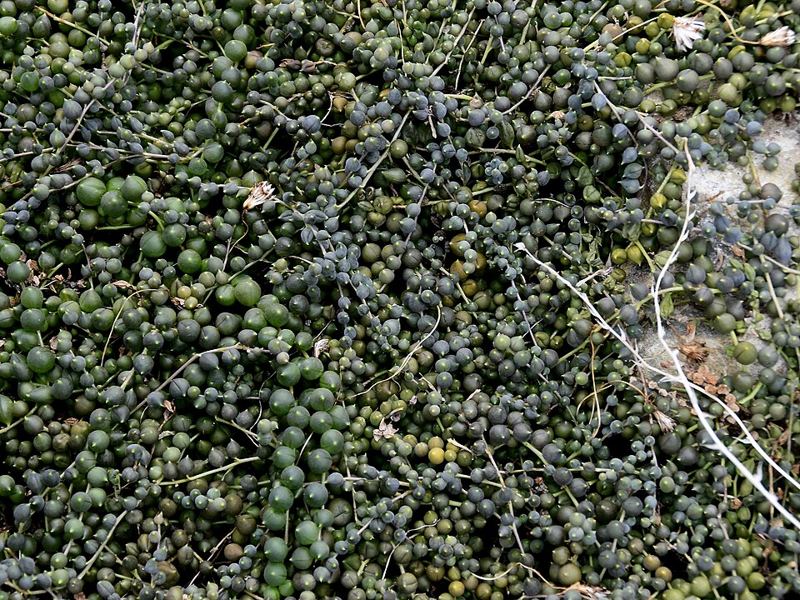
String of pearls (Curio rowleyanus, also sold as Senecio rowleyanus) is a trailing succulent that wants bright light, a very well-draining mix and a light hand with water. UW-Madison Extension describes it as a tender evergreen succulent from the dry eastern Cape of South Africa, in the daisy family, and says it is relatively low maintenance, needing only bright light, well-drained soil and infrequent watering. Root rot from overwatering is, in UW-Madison’s words, the most common cause of death. NC State Extension lists the plant as toxic to humans and pets.
Light
UW-Madison says string of pearls needs only bright light. It points out that in its natural habitat the plant often grows under bushes or between rocks, which gives it some protection from intense sunlight. NC State is more specific: bright indirect light when grown indoors, and partial shade when grown outdoors. Our list of bright indirect light plants covers other plants for the same window.
Water
The two extension sources do not agree here, so it is worth seeing each.
UW-Madison
NC State
One warns against too much water and the other against too little, so check the soil rather than following a fixed schedule. Our guide to watering houseplants compares watering rules across plants.
Soil and pots
UW-Madison recommends a very well-draining, soilless mix such as a cactus mix, with extra pea gravel, sharp sand, grit or pumice added. It also says to use a shallow container, and that clay is better than plastic or ceramic because it dries the soil faster. UW-Madison says to repot every year or two, or to fertilize lightly in spring. Our repotting guide has the steps.
Temperature
NC State says warm temperatures of 70 to 80°F in summer and cool temperatures of 50 to 60°F in winter are best. UW-Madison gives a winter rest of 55 to 60°F. Because the plant is frost tender, UW-Madison says to bring it indoors before the first frost if you put it outside for summer.
Propagation
Both sources say the usual method is stem tip cuttings, 3 to 4 inches long. UW-Madison and NC State say growing from seed is uncommon.
Size and varieties
NC State says the trailing stems can grow up to 3 feet long, and gives a mature size of 1 to 2 feet tall and 1 to 2 feet long. UW-Madison says a variegated form with wide white stripes also exists.
Common string of pearls problems
Pets
NC State Extension lists string of pearls as toxic to humans and pets. UW-Madison gives more detail: the leaves are slightly toxic, ingestion may cause vomiting or diarrhea, and the sap may irritate skin. Our guide to pet-safe houseplants covers other plants and how we cite pet information.
A simple routine
- Give it bright light. Bright light (UW-Madison); bright indirect indoors (NC State).
- Plant in a gritty mix and a shallow clay pot. Cactus mix with grit or pumice, in clay that dries faster (UW-Madison).
- Water infrequently. UW-Madison says infrequently and warns about overwatering. NC State says not to let it dry out completely.
- Give it a cool winter. 50–60°F in winter (NC State), 55–60°F (UW-Madison).
- Bring it in before frost. It is frost tender (UW-Madison).
Grow these next
If you like succulents that tolerate dry soil, jade plant and haworthia are two others with simple routines. For a trailing plant that is more forgiving of low light, try pothos.
More houseplant care guides
For side-by-side comparisons, see humidity for houseplants, easy houseplants and how to fertilize houseplants.
Frequently asked questions
How often should I water string of pearls?
The two sources disagree. UW-Madison Extension says infrequent watering and warns that root rot from overwatering is the most common cause of death. NC State Extension says never to let the plant dry out completely.
How much light does string of pearls need?
UW-Madison says it only needs bright light, and notes that in its native habitat it often grows under bushes or between rocks that give some protection from intense sun. NC State says bright indirect light indoors and partial shade outdoors.
Is string of pearls toxic to pets?
NC State Extension lists it as toxic to humans and pets. UW-Madison says the leaves are slightly toxic and that ingestion may cause vomiting or diarrhea, and that the sap may irritate skin.
How do I propagate string of pearls?
UW-Madison and NC State both point to stem tip cuttings, 3 to 4 inches long, as the usual method. Seed is uncommon.
How long do the stems get?
NC State says trailing stems can reach up to 3 feet long, and gives a mature size of 1 to 2 feet tall and 1 to 2 feet long.
Sources
- String of Pearls (Senecio rowleyanus), University of Wisconsin-Madison Extension Horticulture
- Curio rowleyanus (Senecio rowleyanus), NC State Extension Plant Toolbox
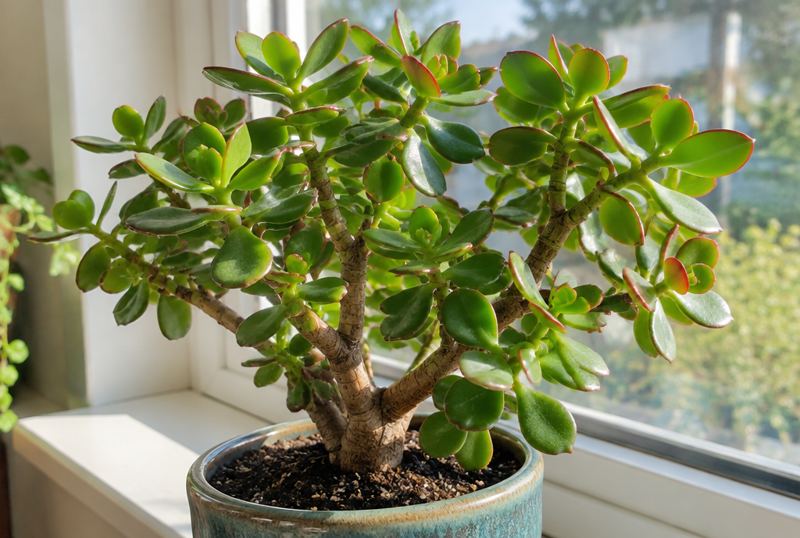 Jade Plant
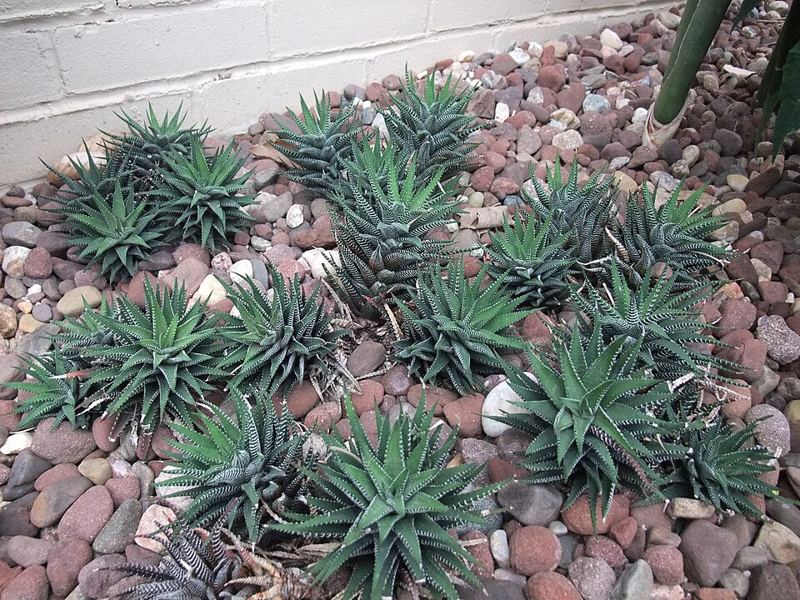 Haworthia
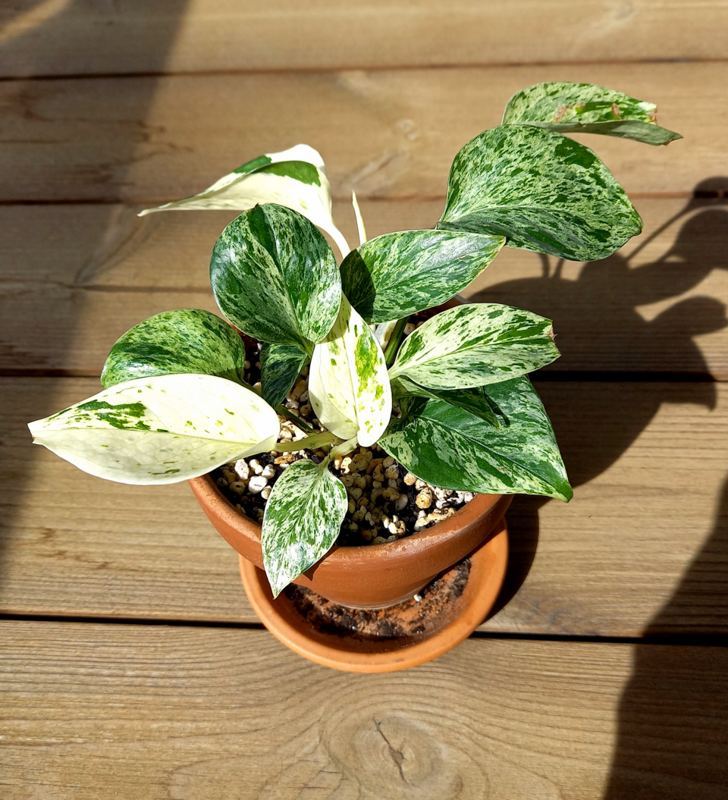 Pothos