

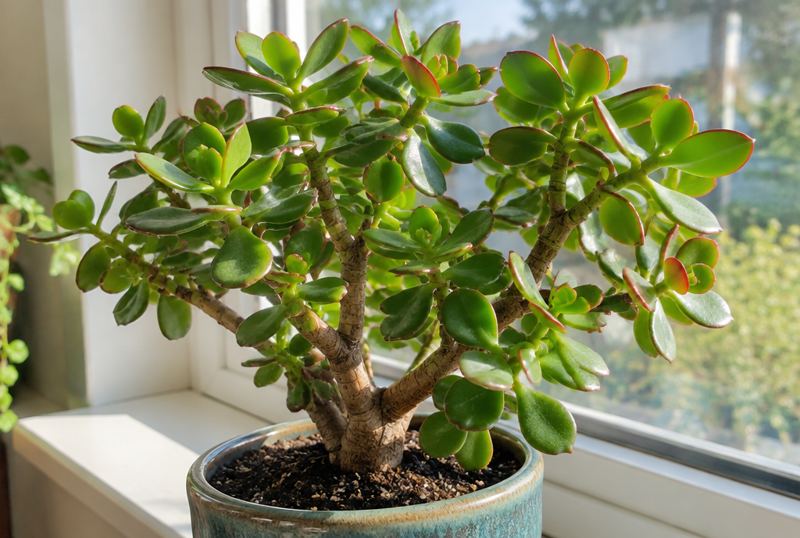
Jade plant (Crassula ovata) is an easy succulent that wants a bright window, soil that dries out between deep waterings and a pot that drains fast. UW-Madison Extension calls it an easy-to-grow succulent that stores water in its leaves, stems and roots, which is why it forgives a missed watering better than an overwatered one. It does best with four or more hours of direct sun a day, and it must come indoors before freezing weather. The ASPCA lists jade plant as toxic to dogs, cats and horses, so think about where you set it if pets share your home.
Light
UW-Madison says jade does best with four or more hours of direct sun, but will survive in bright, indirect light. The plant tells you when the light is short: UW-Madison says inadequate light produces a plant with deep green leaves and drooping stems. If yours has gone dark and floppy, a brighter spot is the first thing to try. Our list of direct-sun houseplants shows other plants that share this window.
Water
UW-Madison puts it simply: as with almost all succulents, jade does best when the soil is allowed to dry out between deep waterings. Water thoroughly, let the pot drain, then wait. In winter, when UW-Madison says the plant is semi-dormant, restrict water. UW-Madison warns that overwatering will cause the leaves to drop and the stem to rot, and Penn State says root rot may result if the soil does not drain quickly or the plant is overwatered.
Penn State also points out that porous pots, meaning unglazed clay, let the soil dry faster than glazed or plastic ones. If you tend to overwater, that is a useful trade. For a side-by-side look at how often different plants want water, see how often to water houseplants.
Soil and pots
UW-Madison says jade needs well-drained conditions and does best in well-drained, high-porosity potting mixes designed for succulents or cacti. To improve the drainage of a standard potting mix, it suggests adding extra perlite or sharp sand before potting. Penn State says well-drained soil is a must.
Jade copes with a snug pot. UW-Madison says individual plants can be grown for many years while root-bound, although it is best to repot them every two to three years, or when a plant becomes top-heavy and susceptible to tipping over. Our repotting guide covers the steps.
Temperature and humidity
SDSU Extension says temperatures from 60 to 75°F are ideal. UW-Madison says the plant is tolerant of a wide range of temperature and humidity, and may even tolerate light frost but will be killed by freezing conditions. If you put it outdoors for the summer, UW-Madison says it must be brought indoors before the first frost.
The same source says a cool winter rest, near 55°F, encourages the plant to bloom. That is the figure UW-Madison gives for bloom, not a requirement for keeping the plant alive.
Feeding and pruning
Penn State says to apply a balanced liquid houseplant fertilizer 2 to 3 times in spring and summer to encourage growth, but not to over-fertilize, because that may make the plant leggy. If you repot, Penn State says to wait four months before fertilizing.
Both Penn State and UW-Madison say jade benefits from pruning. Penn State says to prune in spring to keep the plant compact, and that pinching the stem tips about 1/8 inch above a leaf pair helps it stay bushy. UW-Madison says pruning also helps build the thick trunk the plant is known for.
Propagation
UW-Madison says jade is especially easy to propagate from stem or leaf cuttings, and that it can also be grown from seed. When taking cuttings, it says to let the pieces dry for a few days so the cut surface heals over and is less likely to rot, then insert them into dry, well-drained soil. The pruning you do in spring gives you cuttings for free.
Size and varieties
Penn State says that in its native range jade is a shrub reaching up to 6 feet and living up to 100 years, with leaves 1 to 3 inches long. Penn State names ‘Baby Jade’ as a smaller cultivar that may reach about 12 inches, and SDSU says there are over 300 cultivars of jade plant in all.
Common jade plant problems
UW-Madison says jade has few pests, but mealybugs are the most common. The extension sources say to wipe them off with rubbing alcohol on a cotton swab, and name spider mites as an occasional pest.
Pets
The ASPCA lists jade plant as toxic to dogs, toxic to cats and toxic to horses. It gives the toxic principle as unknown and lists vomiting, depression and incoordination as signs. SDSU Extension also warns to keep cats and dogs away from the plant. Our guide to pet-safe houseplants covers more plants and how we cite pet information.
A simple routine
- Give it the brightest window you have. Four or more hours of direct sun is best (UW-Madison).
- Water deeply, then wait. Let the soil dry out between waterings, and restrict water in winter (UW-Madison).
- Use a fast-draining mix and pot. A succulent or cactus mix, with extra perlite or sharp sand if needed (UW-Madison). Clay dries faster (Penn State).
- Prune in spring. Pinch the tips to keep it compact (Penn State), and root the trimmings as cuttings (UW-Madison).
- Bring it in before frost. Freezing kills it (UW-Madison).
Grow these next
If you like a low-water succulent, the aloe vera plant is another that wants the soil to dry between waterings. Haworthia is a smaller, lower-light option, and string of pearls trails from a shelf.
More houseplant care guides
For side-by-side comparisons, see how to fertilize houseplants, easy houseplants and bright indirect light plants.
Frequently asked questions
How often should I water a jade plant?
UW-Madison Extension says jade plants do best when the soil is allowed to dry out between deep waterings, and that overwatering will cause the leaves to drop and the stem to rot. It also says to restrict water in winter, when the plant is semi-dormant.
How much light does a jade plant need?
UW-Madison says jade does best with four or more hours of direct sun but will survive in bright, indirect light. It adds that inadequate light produces a plant with deep green leaves and drooping stems.
Is jade plant toxic to cats and dogs?
The ASPCA lists jade plant as toxic to dogs, toxic to cats and toxic to horses. South Dakota State University Extension also says to keep cats and dogs away from it.
How do I propagate a jade plant?
UW-Madison says jade is especially easy to propagate from stem or leaf cuttings. It recommends letting the cut pieces dry for a few days so the cut surface heals over before they go into dry, well-drained soil.
How big does a jade plant get?
Penn State Extension says that in its native range jade reaches up to 6 feet and can live up to 100 years, with leaves 1 to 3 inches long. A compact cultivar, 'Baby Jade', stays near 12 inches.
Sources
- Jade Plant (Crassula ovata), University of Wisconsin-Madison Extension Horticulture
- Jade Plant: A No-Fuss Houseplant, Penn State Extension
- Jade Plant Houseplant How-To, South Dakota State University Extension
- Jade Plant, ASPCA Animal Poison Control
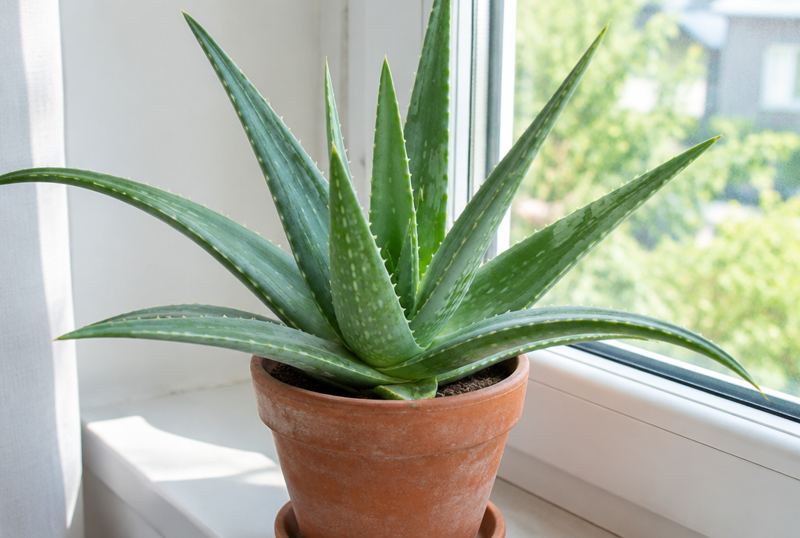 Aloe Vera
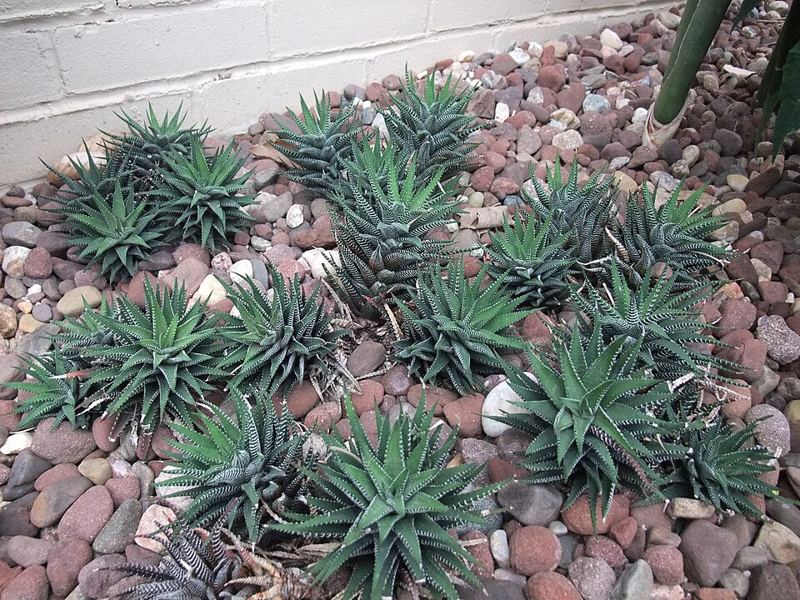 Haworthia
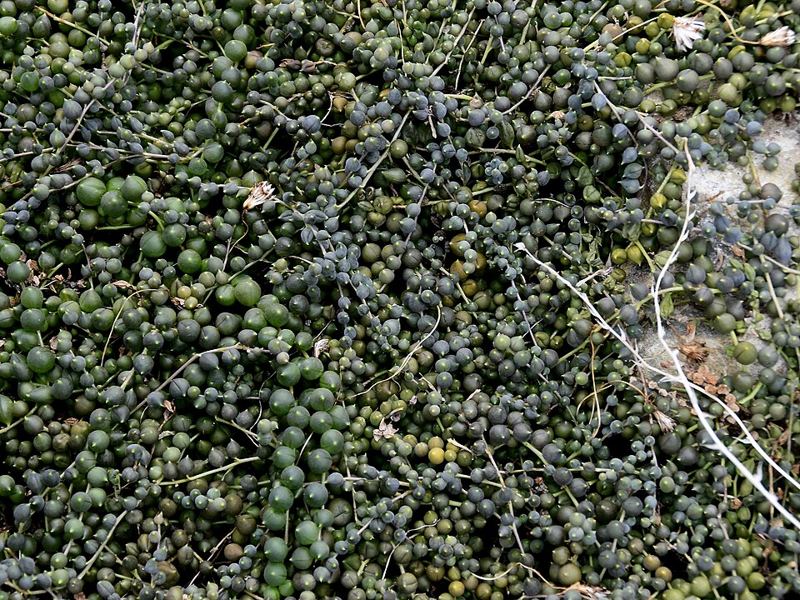 String of Pearls