

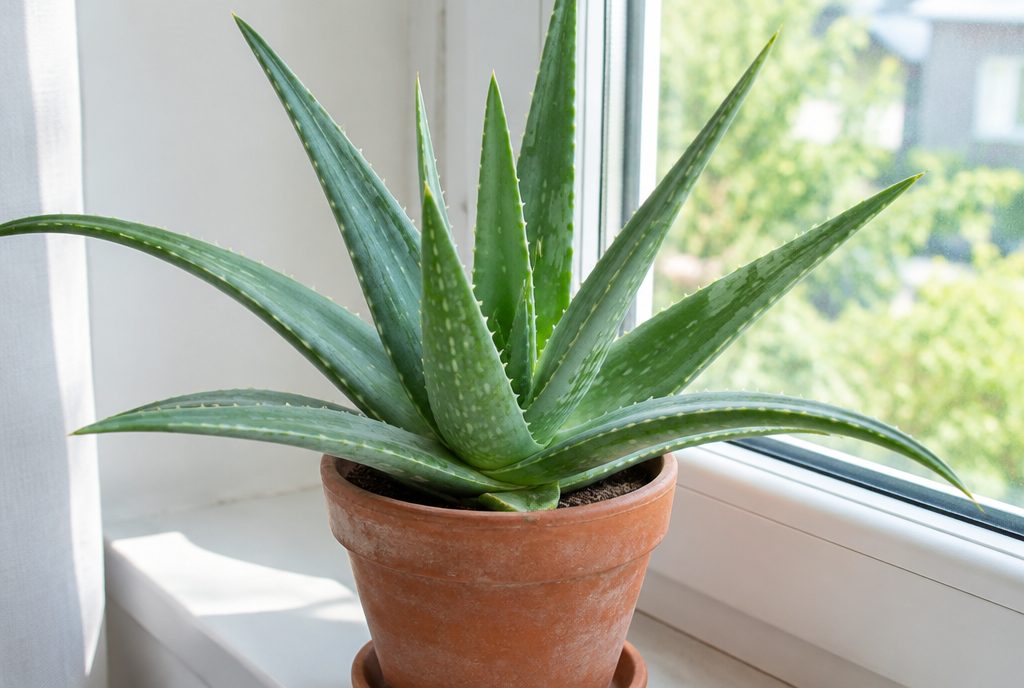
The ASPCA lists aloe as toxic to dogs and toxic to cats, and also toxic to horses. It names saponins and anthraquinones as the toxic principles and lists vomiting, lethargy and diarrhea as clinical signs. That makes aloe vera a plant to place out of reach if your pets chew. This page sits under our aloe vera care guide and reports what the ASPCA says, using its own wording where we can.
What the ASPCA says
The ASPCA’s plant page for aloe states the status in one line:
Toxicity: Toxic to Dogs, Toxic to Cats, Toxic to Horses
Beyond the status, the page gives two more details we recorded:
- Toxic principles: saponins and anthraquinones.
- Clinical signs: Vomiting (not horses), lethargy, diarrhea.
The page lists the scientific name as Aloe vera, so you can search the ASPCA database using it. You can read the entry yourself on the ASPCA aloe page.
The line about the gel
The same ASPCA page also says that the gel is considered edible. We report this because it is on the page, and because it is easy to misread. It does not turn the plant into a pet-safe one: the same page lists the plant as toxic to dogs and cats and names the toxic principles. We do not know from the passage we recorded who the gel is considered edible for, or how that statement relates to pets, so we do not draw a conclusion from it. Treat the toxicity status as the one to act on.
Dogs, cats and horses
The ASPCA’s status line covers three species: dogs, cats and horses. For clinical signs it adds the qualifier (not horses) after vomiting, so vomiting is listed for dogs and cats but not horses. Lethargy and diarrhea carry no such qualifier. For the purposes of a household with cats and dogs, the ASPCA treats both the same, and so do we.
What the extension sources add
The three extension sources we use for aloe care are NC State, Penn State and UF/IFAS. None of them has a pet toxicity passage in what we recorded, so this page leans on the ASPCA alone. Penn State’s article does say aloes are extremely drought tolerant and susceptible to root rot, which is about care rather than pets.
What the sources do not say
The ASPCA page as we recorded it does not give a dose, a timeline or a way to predict how severe a reaction will be. It does not rank the risk to cats against dogs, and it says nothing about a pet licking the sap or chewing a leaf versus eating a lot. We will not add details the sources do not give, and we are not vets.
We also do not describe aloe as “pet safe.” The ASPCA lists it as toxic.
What to do in practice
- Keep it out of reach. If your cat or dog chews houseplants, put the aloe where the pet cannot get to it, or choose a different plant. This is common-sense advice rather than a claim from our sources.
- Know the plant's name. If a pet does eat some, tell the vet or poison line it was aloe, Aloe vera, and what signs you have seen.
- Call for help rather than waiting. Contact your veterinarian or the ASPCA Animal Poison Control Center. They can advise on what to do for your particular animal.
Other plants we cover
Pet status differs a lot from plant to plant, and we only report what the ASPCA or an extension source states. The ASPCA also lists the snake plant, peace lily and pothos as toxic, and our pothos page covers one of them. The spider plant page covers one where two ASPCA pages disagree. Back to the aloe vera care guide.
Frequently asked questions
Is aloe vera toxic to cats?
Yes, according to the ASPCA, which lists aloe as toxic to cats. Its plant page reads: Toxicity: Toxic to Dogs, Toxic to Cats, Toxic to Horses.
Is aloe vera toxic to dogs?
Yes, according to the ASPCA, which lists aloe as toxic to dogs as well as cats and horses.
What makes aloe toxic to pets?
The ASPCA names saponins and anthraquinones as the toxic principles.
What signs does the ASPCA list?
The ASPCA plant page lists clinical signs of vomiting (not horses), lethargy and diarrhea.
What should I do if my pet chews an aloe plant?
Call your veterinarian or the ASPCA Animal Poison Control Center. This is general safe advice, and a professional can say what your pet needs.
Sources
- Aloe, ASPCA Animal Poison Control