

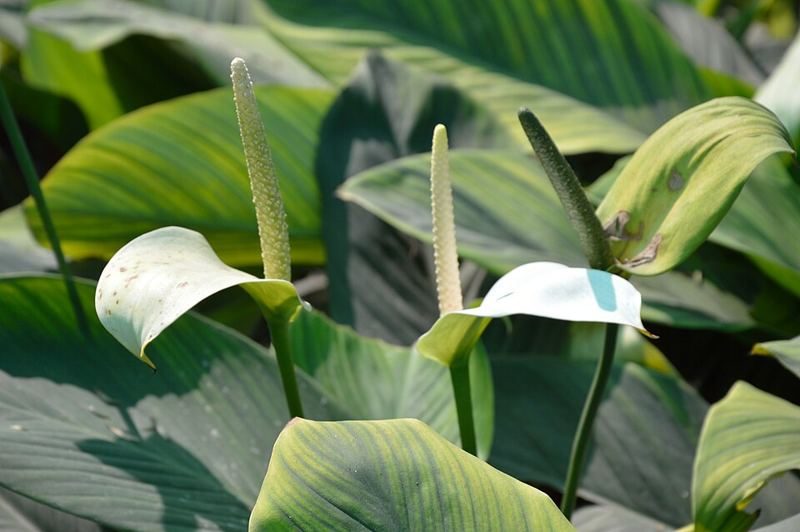
Clemson names one cause of yellowing directly: soil that is allowed to dry out excessively, which makes the plant wilt and the leaves and edges turn yellow. That is the clearest yellow-leaf statement in our sources. Other documented problems, such as overwatering, fertilizer burn and pests, affect the plant in ways that may show up as yellow or brown leaves, though the sources do not always say so. This guide works through them in order. It sits under our main peace lily care guide.
1. The soil dried out too far
Clemson says that if the soil is allowed to dry out excessively, the plant will wilt, and the leaves and edges will turn yellow. A wilting plant with yellow edges and a pot that feels light or dry is the picture this describes. Clemson’s general rule is that soil should be kept moist but not soggy and allowed to dry out slightly between waterings, so the aim is “slightly” dry, not bone dry. UF/IFAS EDIS says to keep it moist.
2. Overwatering and root problems
Clemson says root and stem diseases are the most common peace lily problem and are usually associated with overwatering. It also warns that standing water in a saucer leads to root rot. The sources do not say what yellowing from root rot looks like, and they do not tell you how to recognize a rotted root. If the soil is soggy, the pot sits in water, or the plant wilts even though the soil is wet, overwatering is the first thing to rule out. Do not water again until the soil has dried slightly (Clemson).
A pot that is too large can also keep the mix too wet. Clemson warns that using too large a pot may keep the potting mix too wet and lead to root rot. Our repotting guide covers pot size.
3. Fertilizer burn
Clemson says overfertilizing peace lilies can cause the leaf tips and roots to burn and turn brown, and that the edges of the leaves can turn brown from overfertilization or from excessive drying. Its feeding advice is a balanced liquid houseplant fertilizer such as 20-20-20 every six to eight weeks in spring and summer at one-quarter strength. UF/IFAS EDIS recommends a low dose three times per year. If you have been feeding more than that, ease off.
4. Pattern clues: veins that stay green
Clemson notes that leaf tissue between the veins may turn yellow while veins remain green. The sources do not say why, and they do not link it to a single cause. We mention it because a plant with this pattern is describing something different from yellow edges, and it is worth telling your extension office about if the plant keeps declining.
5. Light
Clemson says peace lilies tolerate low light but grow best in bright indirect light, and that direct sun’s heat will scorch the foliage. Scorching is damage from too much sun, which is not the same as yellowing from low light, and our sources do not describe low-light yellowing. If the plant sits in direct sun, move it back.
6. Pests
Clemson says peace lilies have few insect pests, but fungus gnats, mealybugs, spider mites and scales can be problematic. UF/IFAS EDIS lists mealybug and scale, and in another entry mites and scale. Check the undersides of leaves and the stems when you water. The sources give no treatment, so we do not either.
What to do next
- Feel the soil and look at the saucer. Dry and wilting points to under-watering; soggy soil or a full saucer points to overwatering (Clemson).
- Adjust the water. Moist but not soggy, drying out slightly between waterings, and never standing in water (Clemson).
- Look at your feeding. One-quarter strength every six to eight weeks (Clemson), or a low dose three times a year (UF/IFAS EDIS).
- Check the light and the pot. Bright indirect light, no direct sun; a pot one to two inches larger than the last one (Clemson).
- Inspect for pests. Look for fungus gnats, mealybugs, spider mites and scales (Clemson).
What our sources do not tell you
Our sources do not give a leaf-by-leaf diagnostic chart. They do not say how to tell which cause is behind a particular yellow leaf, whether to remove yellow leaves, or how to rescue a plant with rotted roots. If the plant keeps declining after you have worked through the list, take a photo to your state extension office or master gardener helpline. Return to the peace lily care guide for the full routine, or see how the pothos handles yellowing for comparison.
Frequently asked questions
Why are my peace lily leaves turning yellow?
Clemson says that if the soil is allowed to dry out excessively, the plant will wilt and the leaves and edges will turn yellow. It also names overwatering as the usual cause of the most common problem, root and stem disease, so check the soil and the roots.
Do yellow leaves mean I am overwatering?
Not necessarily. Clemson links overwatering to root and stem diseases and links excessive drying to wilting and yellow edges. Feel the soil first, because the two causes look different in the pot.
What does it mean if the tissue between the veins is yellow?
Clemson says leaf tissue between the veins may turn yellow while veins remain green. It does not give a cause in the passage we recorded, so check light, feeding and watering.
Can fertilizer cause leaf damage on a peace lily?
Clemson says overfertilizing can cause the leaf tips and roots to burn and turn brown, and that the edges of the leaves can turn brown from overfertilization or excessive drying.
Sources
- Peace Lily, Clemson Cooperative Extension, Home and Garden Information Center
- Peace Lily, University of Florida IFAS Gardening Solutions
- Spathiphyllum (EP477), University of Florida IFAS Extension (EDIS)